The Dog Stars
A modern alternative to SparkNotes and CliffsNotes, SuperSummary offers high-quality Study Guides with detailed chapter summaries and analysis of major themes, characters, and more.
Summaries & Analyses
Author Insights
Quizzes
NEWReading Tools
Games
Book 1, Chapters 4-6Chapter Summaries & Analyses
Content Warning: This section of the guide includes discussion of illness, death, graphic violence, cursing, and racism.
Book 1, Chapter 4 Summary
As Hig begins planting his garden with his dog Jasper in attendance, he recalls the trauma of his final moments with Melissa, who died while pregnant with their unborn child. Dying in agony from “dysentery-like nausea and diarrhea” and congested lungs (61), she asked Hig to end her life and her suffering. Crying, he honored her final wish by suffocating her with a pillow: a decision that haunts him to this day. Now, he recalls the details of that moment, reflecting, “Her hand scratched at mine her eyes would not leave my face” (62). Later, when Bangley notices how sad Hig has become, he encourages Hig to take a vacation to the mountains.
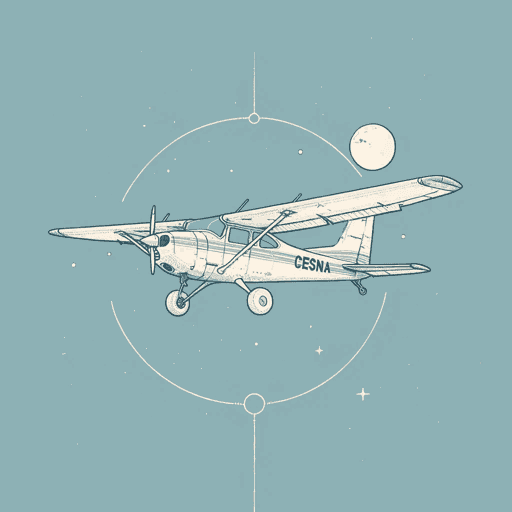
Soon, Hig takes Bangley up on this idea and announces his intention to fly a patrol and conduct a two-to-three-day hunting and fishing trip into the mountains in search of deer and elk. While flying, Hig recalls his friend Mike Ganger’s homemade plane, which Hig flew in the early days of his new life at Erie airport. In those days, Hig would perform tricks in the plane, just to have something to do. Now, he thinks about the beauty of flying, believing that if he “lived moment to moment, garden to stove to the simple act of flying, [he] could have peace” (65). However, he also acknowledges the harshness of his current lifestyle, noting, “It was like I was living in doubleness, and the doubleness was the virulent insistence of life in its blues and greens laid over the scaling grays of death, and I could toggle one to the other” (65).
On another occasion, Hig flies to a nearby truck that he and Bangley discovered, which is filled with Coca-Cola; he plans to replenish the airport’s soda supply. While there, he is ambushed by three men and kills two of them; before dying, one of the two men claims, “The A-rabs. They’re here. Or coming” (85). The third attacker escapes into the fields.
Book 1, Chapter 5 Summary
Bangley critiques Hig’s actions at the soda trailer, condemning his “Boy Scout” instincts toward mercy. He is angry that Hig killed two men and let another escape instead of maximizing the opportunity to interrogate them and learn more about the rumored intruders that they feared. He tells Hig, “We get the beta about A-rabs and what do you do? You plug the fucker […] First intel about a possible real visitor, I mean a visitor with some fucking muscle, a possible goddamn invasion, and you terminate the conversation” (90). Hearing this diatribe, Hig realizes that in Bangley’s mind, the two men can only make so many mistakes before death finally claims them, and the possibility of a new set of intruders has dramatically increased Bangley’s stress. Hig reflects that going to the mountains will be a good way for him to release some of the tension that he feels now.
Book 1, Chapter 6 Summary
Hig takes Jasper along on his hike into the mountains. Along the trail, Hig notices that Jasper is walking unusually stiffly and has trouble keeping up with him. They camp that night at Hig’s favorite spot, and Hig catches five fish and gives one to Jasper, who curls up against him as the two bed down for the night.
In the morning, Hig is heartbroken to realize that Jasper has died in his sleep. Hig buries his beloved dog, raising a pile of stones as a grave marker, then wanders through the wilderness in a daze for several days. Grieving the loss of his last connection to his former life, he quietly contemplates his surroundings, naming many of the trees and animals that have been lost since the pandemic and noting the few that remain. He grimly muses that a person “[c]an get used to killing the way you can get used to a goat on the doorstep. […] The dead goats multiply. You can pull a goat off into the field, but a memory you can only haul into the sun and hope it desiccates” (93). His thoughts then range to the history of the Indigenous tribes in the plains—the Utes, Arapaho, and Cheyenne. He contemplates the wars that arose between these various groups, and the thought of such conflict leads him to wonder why he and Bangley are now so divided. He thinks, “Me versus him […] Everybody out for themselves, even to dealing death, and you come to a complete aloneness. You and the universe” (94).
As Hig hikes, he recalls that before the disaster, the area was full of deer, elk, and fish. Deeply moved by his memories, he feels compelled to hug a tree, then waxes nostalgic as he considers his deep sense of loss. Hig also fears that with each trip he takes alone, Bangley might come to the conclusion that he can survive more easily without Hig to burden him. Hig uneasily considers his own weaknesses, then shakes off the dark mood and fishes for a couple hours, embracing this rare moment of peaceful clarity amidst the world’s devastation. He reflects, “Darkness was already in the forest, it filled the little canyon like a slow tide, and the flames deepened it but the sky was still bright with the thinnest blue and I could see two stars” (102).
Book 1, Chapters 4-6 Analysis
Whenever Hig makes his forays into the wilderness with the loyal Jasper at his side, Heller invokes a version of the protagonist that is the truest to Hig’s previous existence, in which the man simply enjoyed the blessings in his life and appreciated the world around him. With his lyrical recitation of the names of America’s trees and animals, Hig demonstrates his deep love for the quiet havens of the wilderness, and his clear, simple appreciation for his surroundings has the dual effect of celebrating America’s landscapes and emphasizing the marked absence of people in the aftermath of the pandemic. In this way, Hig’s love for nature is blended inextricably with his sadness over the changes in the world, for even as most of the wilderness remains intact, so much of his previous life has been irrevocably lost.
In Chapter 6, the death of Jasper allows Heller to further delve into the nuances of Hig’s grief, and the narrative develops The Haunting Effect of Dreams and Memories through the protagonist’s morose contemplations of traumatic events both past and present. Yet even before his dog’s death severs him from his last few connections to the world he once knew, he is constantly reliving the trauma of the flu epidemic—particularly his role in his wife’s euthanasia—and it is clear that even after nine years, he has not yet managed to fully process or move on from this event that shattered his life. Now, newly bereft once again after Jasper’s death, Hig finds himself grieving the myriad lost threads of his life, and his thoughts about the loss of his wife and unborn child blend seamlessly with his broader contemplations of ecological changes and historical conflicts until his inner monologue becomes a philosophical commentary on the current state of humanity.
Throughout this complex grieving process, he remains transfixed by the wilderness that has become his own personal sanctuary, basking in The Transformative Beauty of Nature. Notably, whenever he survives a new ordeal in this post-apocalyptic world, he yearns for the quiet solitude of the mountains and uses these interludes to both escape and recharge. This behavioral pattern continues to set Hig apart from Bangley, whose motivations prove to be much more basic and brutal. As Hig struggles to find a balance between his own contemplative tendencies and Bangley’s brutal survival tactics, the protagonist chafes beneath the triple pressures of the world’s external threats and his own private anguish and unexpressed grief.
On a more pragmatic level, Hig’s violent encounter with the trio of intruders at the soda trailer has the effect of advancing the external plot and providing a strong impetus for new dramatic tension between Hig and Bangley, whose approaches to the realities of their shared world often differ. Heller bakes this contrast into the very structure of the novel by juxtaposing Hig’s own account of the deadly encounter with Bangley’s harsh criticism after the fact, making it clear that every scenario tests the effectiveness of the two men’s tension-ridden alliance. In this context, Heller introduces a more specific external conflict with the intruders’ fear of another dangerous group of invaders that is rumored to be heading their way. The man’s overtly racist reference to “the A-rabs” also creates a sense of “othering,” highlighting the pervasive tribalism that now dominates the tattered remnants of humanity, for in Heller’s vision of a post-apocalyptic world, the last vestiges of people’s cultural differences are still keeping disparate groups from banding together. Separated by their mutual fears, they tear at each other and kill one another, failing miserably at the all-important process of Finding New Purpose After Societal Collapse.
Yet despite the implications of these widespread divisions, which threaten to finish off the few human survivors that remain, Hig and Bangley’s underlying camaraderie emerges in wry flashes, even amidst their disagreements. The two men’s mutual dependence also allows them to overcome philosophical differences that would have kept them apart under less dire circumstances, and although Bangley reacts with derision and sharp criticism in the aftermath of Hig’s misadventure at the soda trailer, it is clear that the two men do care about one another. Even their most workaday routines reflect this fact, for before Hig leaves to indulge in his restorative fishing trip, he makes it a point to go on patrol one more time in order to ensure that no intruders are approaching and that Bangley will be safe during his absence. Hig’s own dependence on Bangley’s ruthless but steadfast help can also be seen in the protagonist’s private worries that Bangley may someday decide to put an end to their alliance.

Get in-depth, chapter-by-chapter summaries and analysis from our literary experts.
- Grasp challenging concepts with clear, comprehensive explanations
- Revisit key plot points and ideas without rereading the book
- Share impressive insights in classes and book clubs
Related Titles
By Peter Heller




