The Dog Stars
A modern alternative to SparkNotes and CliffsNotes, SuperSummary offers high-quality Study Guides with detailed chapter summaries and analysis of major themes, characters, and more.
Summaries & Analyses
Author Insights
Quizzes
NEWReading Tools
Games
Book 3, Chapters 1-3Chapter Summaries & Analyses
Content Warning: This section of the guide includes discussion of graphic violence and death.
Book 3, Chapter 1 Summary
In the days before leaving the canyon, Hig takes his time to enjoy the beauty of the area and go fishing. As time goes on, Hig and Cima further discuss their respective histories while gardening. Cima shares her story of how she attended Dartmouth and earned a full scholarship by writing a successful college essay that deliberately contradicted her counselor’s callous advice on the topic. Cima shares her dreams and admits that she still feels as though she betrayed her husband because circumstances prevented her from being with him when he died. During the course of her remembrances, Cima also offers an explanation of how the flu epidemic first spread. She states that the disease was caused by a “[m]utation of a superbug, one of the ones they’d been watching for decades. The rumor was that it was a simple trans-shipment. A courier on a military flight with a sample taking it to our friends in England” (246).
During this brief respite between dangers, Hig fully embraces the beauty of the ranch, reveling in spending time in a hammock, reciting poetry for Cima, and fishing often in the creek. His dreams of magnificent birds and mountains gradually replace his older, more wistful dreams of Melissa and their lost life together. Meanwhile, Pops repairs potholes on the highway so that the road can function as a landing strip for the Cessna when Hig and Cima return from Grand Junction.
Book 3, Chapter 2 Summary
In the end, they all fly to Grand Junction together, with two lambs in tow. Upon seeing the blackened remains of the city, Cima vomits. Upon approaching the airport, Hig messages the tower and is overjoyed to receive a reply, but when he sees the wrecked planes along the runway, he gets the intuition that something is wrong. Just before landing, Hig realizes he’s flying right into a trap and pulls up just before a taut line springs up across the runway in an attempt to cause a wreck. Hig avoids the trap but is now almost out of gas, so with Pops’s agreement, he lands 100 feet past the line, and he and Pops stealthily make their way along the runway to retaliate against their would-be attackers. Pops shoots the person in the tower through the gun port that the group has used to shoot at survivors of the plane wrecks. Upon reaching the tower, Hig and Pops discover the shooter, a man older than Pops, sobbing and holding his guts. The room is full of cats. Suddenly, an anguished woman appears, and Pops kills her. He then interrogates the dying man to ascertain where to find more fuel. Once the man provides him with a location and a key, Pops kills him as well.
They refuel and head toward Erie, stopping in Winter Park to top up their fuel supplies once more. Flying on approach to the airport in Erie, Hig feels “a surge” of fond emotion for Bangley, who “had become [his] family” (291). At the airport, however, they find widespread destruction and see “one half of [the] hangar ripped open as if by a tornado and burned” (291).
Book 3, Chapter 3 Summary
Hig, Pops, and Cima arrive in Erie to find Bangley’s house still standing, but they are appalled to realize that “the windows were shot out and there were scorch marks around the second floor dormer,” along with a “gaping hole in the roof” (293).
Pops thinks that Bangley must be dead, but Hig soon finds his friend covered in blood and badly wounded. Over the next two weeks, with Cima’s medical help, Bangley’s condition gradually improves. Upon recovering slightly to see Cima caring for him, Bangley instinctively calls her “Mrs. Hig,” to which she replies that she is “Dr. Hig.” Cima insists that because Bangley is essentially ICU material, someone must keep watch on him at all times while he recovers. As time goes by, Hig takes Pops out on patrols and finds himself growing closer than ever to Cima. One day, they make love together tenderly, their regard for one another becoming an unspoken promise of something more. Pops claims a house next to Bangley’s place, and the two men strategize together, discussing survival tactics. Bangley describes his battle with the 14 intruders who attacked him, earning Pops’s respect.
As summer rolls into autumn, Hig often drops Cima off to care for the diseased families nearby. Cima informs Hig that the families’ condition is not contagious, and Hig comments on the irony that this misperception has kept potential marauders away. Amazed at the contentment he feels with his new life and broader community, Hig comments that their lives are now “some post-apocalyptic parody of Norman Rockwell” (309). At the end of the novel, Hig recalls his favorite poem, a piece by ninth-century Chinese poet Li Shang-Yin.
Book 3, Chapters 1-3 Analysis
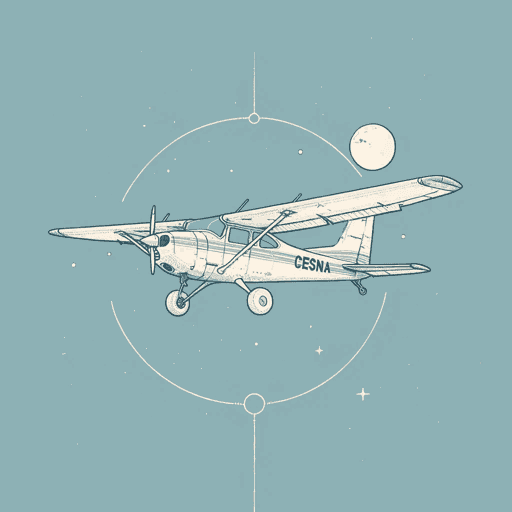
Representing the novel’s climax and denouement, the final three chapters of The Dog Stars combine beauty and brutality in equal measure as the three unlikely friends struggle to survive and return to the relative safety of the airport in Erie. Hounded by deadly circumstances from one danger to the next, they stagger from the box canyon to Grand Junction to Winter Park, and finally back toward the fragile promise of a more peaceful existence in Hig and Bangley’s home territory. Throughout these tumultuous shifts in setting, Heller relies upon the Beast to set the pacing, and the Cessna essentially becomes a plot device to move the characters from one challenge to the next in their arduous journey toward a better home. Yet even as they fly over myriad scenes of destruction—from blackened cities to raging wildfires—they bring with them several symbols of hope. Most notably, the incongruous presence of the lambs, taken from Pops and Cima’s abandoned ranch, suggests the possibility of Finding New Purpose After Societal Collapse and rebuilding a new life from the tattered remains of all that they have lost.
Yet before they can reach this point, they must first contend with a barrage of deadly dangers, and the treacherous couple at the airport in Grand Junction represents the ultimate betrayal in Hig’s mind. For years, his thoughts have returned to the inherent promise in the radio message he once heard, and now that he is faced with the realization that the source of his hope is nothing but a lie and a trap, he is hard-pressed to contain his anger. In many ways, his and Pops’s violent counterattack becomes a bitter expression of their much deeper fury at the injustices of this post-apocalyptic world. This interpretation is further supported by Pops’s ruthless treatment of the pair, for he has no inclination to show mercy toward his would-be murderers. Instead, he follows a course of action that the hard-nosed Bangley would immediately approve: He keeps the dying old man alive just long enough to interrogate him about his fuel sources, then ruthlessly kills him to eliminate the threat entirely. While Hig responds with dismay at this show of violence, the novel as a whole makes no apology for the brutality of the scene, and even the sensitive Hig makes no substantial comment, recognizing the hard necessity of Pops’s actions. Heller also devotes considerable time to describing the doomed couple’s home and quaint hobbies, demonstrating once again the peculiar mix of violence and beauty that pervades the entire narrative.
Notably, the focus of Hig’s journey has been his need to return safely to Erie, and he operates on the naïve assumption that his home will remain an untouched sanctuary in his absence. In his mind, he must simply reach his haven in order to be safe once again from the world’s unpredictability, and he never considers that Bangley might have trouble in his absence. Thus, after surviving a vast landscape of destruction, Hig and his new companions must contend with the unwelcome realization that this same destruction has dogged their steps and followed them home. As Hig plunges into a headlong rush to find his friend, hoping against hope that Bangley is still alive, the very intensity of his emotions forces him to realize the true extent of the bond that he has forged with his quirky comrade over the last nine years. In the aftermath of the crisis, the new community finds its bearings and regains a sense of daily calm and routine, and although Heller chooses to leave many new connections largely unstated, it is clear that in Cima, Hig has finally found a steady romantic companion to help fill the inner void left by his late wife.
The novel closes with Hig describing sleeping beside Cima at night, under the stars, suggesting that their relationship will continue even as Cima continues to heal her own psychological wounds. The fact that Heller ends the novel on a poetic note relieves some of the narrative’s devastation, but Heller deliberately leaves the future open-ended, closing the novel on an ambiguous note that leaves room for the imagination and refuses to spell out an explicit conclusion for the book’s characters. The implication is that in a world shattered by grief, there may be no such thing as a happy ending, but hope endures nonetheless.

Get in-depth, chapter-by-chapter summaries and analysis from our literary experts.
- Grasp challenging concepts with clear, comprehensive explanations
- Revisit key plot points and ideas without rereading the book
- Share impressive insights in classes and book clubs
Related Titles
By Peter Heller




