The Fine Art of Lying
The Fine Art of Lying
A modern alternative to SparkNotes and CliffsNotes, SuperSummary offers high-quality Study Guides with detailed chapter summaries and analysis of major themes, characters, and more.
Summaries & Analyses
Quizzes
NEWReading Tools
Symbols & Motifs
Content Warning: This section of the guide includes discussion of graphic violence, death, and sexual content.
Longfin
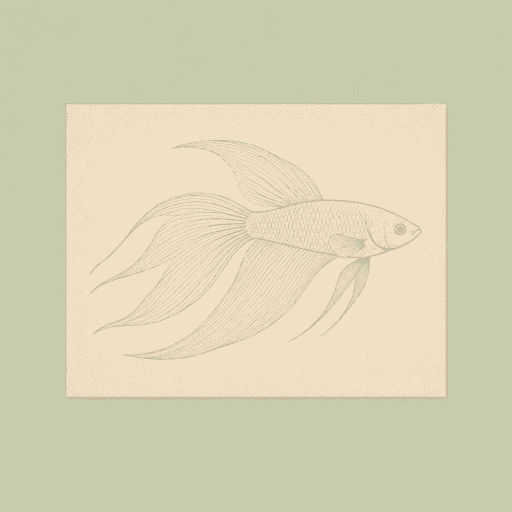
Blake Webley’s painting Longfin is the novel’s central symbol, representing both Clare’s search for authentic identity and the conflict between art’s transcendent power and its vulnerability to corruption. For Clare, the painting initially symbolizes a return to her authentic self, a world of intellectual and aesthetic passion that was lost after she embraced domesticity. Her desire to see it is the catalyst for her affair with Gabriel, making the painting an emblem of her rebellion against the life that has come to define her. Her first physical contact with the canvas is a transgression that feels charged with a powerful, almost living energy, mirroring the illicit thrill of her budding relationship with Gabriel. Through Clare’s perspective, Longfin embodies a personal connection to scholarship, beauty, and the version of herself she fears has disappeared.
As the novel progresses, however, Longfin becomes increasingly detached from the ideals it symbolizes, embodying the theme that Commodification Corrupts Fine Art. The painting becomes a pawn in a high-stakes game of sanctions fraud, blackmail, and ultimately murder. Its value is no longer measured by its artistic merit but by its 18-million-dollar price tag and the strategic leverage it provides to those seeking wealth and influence. Gabriel’s decision to commission a forgery emphasizes how easily authenticity can be sacrificed for financial gain. Ultimately, the painting is the direct cause of Gabriel’s murder, a brutal consequence of its role as a financial instrument. Its journey from a source of personal “rapture” for Clare to the centerpiece of a criminal conspiracy illustrates the novel’s cynical view of the modern art market, where beauty is secondary to an object’s monetary worth. In the end, however, Clare returns to the art world to investigate fraud just as Longfin returns to the Metropolitan Museum, providing hope that both Clare’s role in the world of art and true artistic appreciation can be restored.
Black Reebok Sneakers
The killer’s “nondescript black Reeboks” (108) symbolize the hidden violence that sustains the novel’s world of wealth and privilege. When Clare is hiding under Gabriel’s bed, her view is limited to the intruder’s footwear. The sneakers are a stark, ordinary detail in an otherwise extraordinary and terrifying moment. They lack the elegance and luxury of the art-filled brownstone, grounding the crime in a commonplace object and stripping the violence of any glamour. This detail shatters Clare’s illusion that her relationship with Gabriel exists in a separate, consequence-free sphere of passion and aesthetics. Instead, they represent the ordinary, impersonal reality of violence lurking beneath the polished surface of elite society.
The significance of the sneakers grows as Clare later recognizes the same shoes on Emil, which becomes one of the novel’s most important pieces of evidence. In this way, the shoes stand in for the anonymous enforcer who carries out the dangerous work that wealthy individuals try to keep hidden. Emil is the physical instrument of Tasha’s will, and his ordinary sneakers symbolize the dirty work the ultra-rich pay others to perform, allowing them to remain insulated from the bloody consequences of their schemes. The Reeboks ultimately link Tasha’s carefully cultivated public image to the brutal realities required to protect her interests, underscoring the theme that Wealth Shields Criminality. By focusing on an everyday object rather than a dramatic weapon or disguise, Andrews emphasizes how easily violence can blend into ordinary life when it is concealed behind layers of money, influence, and intermediaries. The sneakers ultimately symbolize the physical force that powerful people can outsource while remaining personally insulated from its consequences.
The Hideout Closet
The little-used closet in the Basts’ East Hampton home is a recurring motif that reinforces the contrast between the Bast family’s carefully maintained public image and the private secrets concealed beneath it. The space is first introduced as a “monster hideout” where Clare and Sadie play, a refuge from imaginary threats. Jed’s warning that it is unhygienic and “filled with mouse droppings” (5), however, subtly foreshadows the unpleasant realities that exist beneath the home’s polished appearance. The closet soon becomes associated with concealment rather than play when Jed secretly keeps the rabbit he bought for Sadie there without telling Clare. Although this deception is relatively minor, it establishes a pattern in which the closet repeatedly serves as a repository for secrets that disrupt the family’s polished image.
This motif culminates in its final, most significant appearance when Clare discovers the stolen Longfin hidden in a wooden crate inside. The repeated use of the closet shifts the reader’s understanding, revealing that what once appeared to be a child’s refuge has gradually become a hiding place for increasingly serious secrets. Andrews reinforces the idea that deception ranges from seemingly harmless omissions to far more consequential acts of concealment. This progression highlights the theme, Wealth Shields Criminality, as the family’s beautiful East Hampton home becomes a place where privilege helps conceal evidence and maintain appearances. By repeatedly returning to the same location, Andrews uses the hideout closet to emphasize that beneath the Bast’s family’s ordinary domestic life lies a growing accumulation of lies, compromises, and evidence that cannot remain hidden forever.

Unlock the meaning behind every key symbol & motif
See how recurring imagery, objects, and ideas shape the narrative.
- Explore how the author builds meaning through symbolism
- Understand what symbols & motifs represent in the text
- Connect recurring ideas to themes, characters, and events