The Maze Runner
The Maze Runner
A modern alternative to SparkNotes and CliffsNotes, SuperSummary offers high-quality Study Guides with detailed chapter summaries and analysis of major themes, characters, and more. For select classroom titles, we also provide Teaching Guides with discussion and quiz questions to prompt student engagement.
Summaries & Analyses
Author Insights
Quizzes
NEWReading Tools
James Dashner on The Maze Runner
In his own words: quotes and insights from the author.Why he wrote it
A childhood nightmare, thirty years in the makingThe image that eventually became the Glade arrived when Dashner was still in primary school, planted by a horror film his parents let him watch far too young. Decades passed before he understood what to do with it.
The first seed of this story was planted when I was 7 or 8 years old. I don’t know if I had bad parents or what, but they let me watch The Shining. The movie ends with a really sweet scene where he’s chasing his son with an axe through this huge garden hedge maze, and it’s snowing and creepy, and [it’s] a great scene. Ever since then mazes have fascinated me, and scared me a little bit.
The maze itself arrived fully formed one night as he was trying to fall asleep, with no character yet attached to it. He treated it not as a setting but as the first living thing in the story, and only then started asking who belonged inside it.
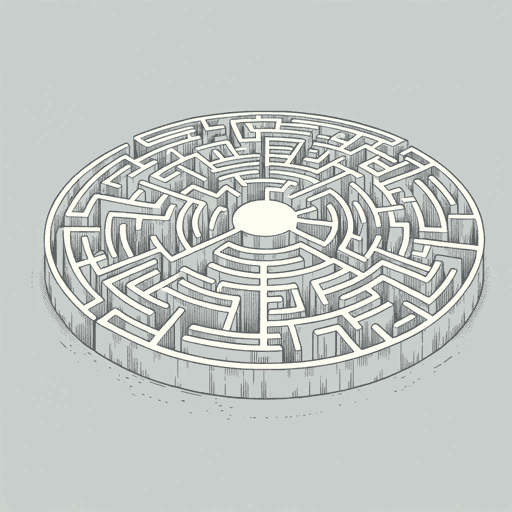
One night I was going to bed and trying to think of some new story to write about; and, I don’t know why, but I thought of this giant maze, and I could see it with the stone walls and the ivy and the archaic look to everything. It really developed in my head; it was like the first character, and I built the world around it.
William Golding’s Lord of the Flies had been on his shelves for years, and Dashner admired it. But admiring a book is not the same as agreeing with it, and he wanted to run the same thought experiment and reach a different conclusion.
I purposefully wrote The Maze Runner to show that I think a group of boys would act differently than how they did in Lord of the Flies: Instead of killing each other and being animalistic, they would form a brotherhood and do whatever it took to protect each other.
That instinct toward collective survival rather than individual brutality is what separates the Gladers, the community of boys trapped in the walled enclosure of the same name, from Golding’s choir-boys-turned-hunters. It also set the moral stakes for everything Dashner wanted the series to argue.
How he wrote it
Scrapping the first draft and starting overDashner finished a full draft around 2005, collected rejections, and shelved it. When his wife persuaded him to return to it, he decided that revising the existing manuscript would cost him more than abandoning it. What followed was not a second pass but an entirely new book.
I literally rewrote it. I just felt like I’d learned so much that trying to edit it was really cumbersome, so I just rewrote the whole thing. It was much more in-depth. I added characters. I added a lot of scenes. It was a lot longer book actually than the original. [paraphrased from audio]
One of the most deliberate structural choices he made in that rewrite was to keep Thomas, the protagonist who wakes with no memories in the Glade, and the reader in exactly the same state of ignorance for the same stretch of pages. The invented vocabulary the Gladers use, words like Griever and Greenie and Shank, was part of the same strategy: not replacements for familiar terms, but signals that the reader has landed somewhere whose rules are not yet legible.
I wanted the reader to feel disoriented with Thomas. So Thomas enters this place, his memory has been wiped. And he’s hearing these strange words, he’s seeing this strange place. And so I think for about the first 30 pages, the reader feels his disorientation. [paraphrased from audio]
The Grievers, the half-mechanical, half-organic creatures that hunt inside the maze at night, came from no genre blueprint. Dashner built them out of whatever made him flinch in ordinary life, and the specificity of the result is what makes them feel genuinely threatening rather than generically monstrous.
These monsters are sort of a combination of all the things I’m scared of in life: slimy stuff—I hate slugs—scary sounds and sharp metal objects. It’s just fun to create my own thing.
Dashner was deep into watching Lost while writing the first draft, and the show taught him something about mystery structure: the creator has to know the answers before the audience does, or the story collapses under its own questions. That discipline carried over to how he envisioned each individual scene, which he has described the same way across years of interviews.
Every scene I ever write, I envision it as if it were a movie. It’s not that I’m literally writing this because I want it to become a film, it’s just how my process works — I see a lot of movies and listen to a lot of movie soundtracks. I see it as cinematically and then I try to get that onto the page.
What he wants us to sit with
Hope inside a grey areaWICKED, the organization that designed the maze, could easily have been written as a standard dystopian regime. Dashner resisted that because he wanted the reader’s discomfort to come not from recognizing evil but from slowly understanding a logic they wish they could dismiss.
I really wanted an organization that didn’t feel like the typical oppressive evil government. They’re not a government at all, in fact, but instead a group of scientists and doctors trying to save mankind. One of the main themes of the entire series is slowly making the reader have empathy for WICKED and understand their desperation.
The moral question WICKED embodies is the one Dashner says he most wanted readers to carry out of the book. He did not want the answer to arrive cleanly.
I love the concept of nothing being purely good or purely evil. I really wanted readers to question whether they could get desperate enough to do certain things. I wanted the lines blurred just enough so they might ask whether the ends ever justify the means.
Dashner’s own framing of the book’s argument runs toward moral complexity, but his editor at Random House saw something else underneath it, something she named before the book found its audience. Her reading held up: the letters that arrived after publication, from readers using Thomas as a model for getting through cancer treatment or bullying or worse, were what he called the most surprising and rewarding thing in his career.
As my editor at Random House said, the reason she fell in love with The Maze Runner was because she thought it was about hope. Under extreme duress and facing outrageous difficulties, Thomas, Teresa, and the Gladers (most of them) never give up.