The Ruins
The Ruins
A modern alternative to SparkNotes and CliffsNotes, SuperSummary offers high-quality Study Guides with detailed chapter summaries and analysis of major themes, characters, and more.
Summaries & Analyses
Quizzes
NEWReading Tools
Symbols & Motifs
Content Warning: This section of the guide includes discussion of death by suicide, suicidal ideation, self-harm, graphic violence, sexual content, cursing, and death.
The Vines
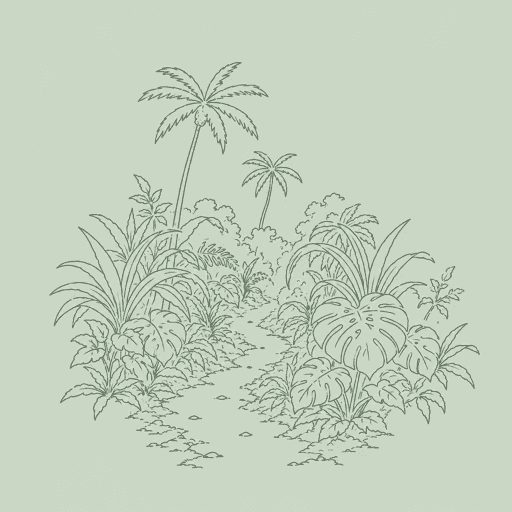
The vines are a symbol representing the hidden parts of the natural world, embodying Nature as an Unknowable and Unstoppable Force. At first glance, the vines are beautiful, with lush green tendrils and striking red flowers. However, this surface appeal masks their true nature, as they slowly reveal themselves as the novel’s primary antagonistic force. As the group spends more time on the hill, they learn that the vines are predatory and sentient, traumatizing and ultimately killing the friends on the hill. They move with intention, consume organic and inorganic matter, mimic human voices, and even reproduce sounds and smells to lure victims. These characteristics elevate the vines to something that cannot be categorized or understood by human logic. Their abilities demonstrate an unsettling awareness that defies expectations of plant life, reinforcing the idea that nature operates according to rules that humans cannot fully grasp.
At the same time, the vines underscore the inevitability and indifference of nature. They simply exist and consume, following their own internal logic to lure the survivors in, trap, and kill them. This is evident in the way that they systematically strip bodies down to bone, consuming all the flesh, while adapting their behavior over time to learn what is edible. Their consumption of Amy’s body, followed by their mimicry of her voice pleading for help, underscores their complete lack of empathy while simultaneously weaponizing human emotion. The vines’ dominance over the environment—driving away animals, eliminating insects, and even forcing the Mayans to maintain constant vigilance—further emphasizes their role as a symbolic representation of nature’s power. Ultimately, they represent a natural force that is both all-powerful and entirely indifferent, highlighting humanity’s vulnerability when confronted with something that cannot be reasoned with or stopped.
The Mineshaft
The mineshaft that the survivors find on top of the hill initially symbolizes hope and the potential for escape, reflecting The Illusion of Control. A manmade object in the midst of the natural world they are trapped in, it reminds them that signs of urbanized civilization once existed there, while also giving them something to explore as a possible escape. Additionally, the phone ringing within appears to offer a connection to the outside world and a potential means of escape. This moment sparks hope and urgency, leading Pablo and later Eric and Amy to risk their safety in an attempt to reach the phone.
Despite the initial draw of the mineshaft, it slowly changes as the true power of the vines is revealed. Eric’s reaction within the mineshaft embodies this change. Initially, he is excited to go into the shaft, so much so that he jumps from the rope the final few feet to join Pablo. However, as he waits down there, he begins to feel the darkness and the vines imposing on him: “He was in a corner of the shaft that the vine had colonized fairly aggressively; his hands kept getting tangled in its tendrils, giving him the eerie sense that the plant was purposefully impeding him” (91). Then, as Amy begins to descend, “his hand was trembling until he struck the first match: he was shaking so much that it immediately fluttered out. He had to take a moment, two deep breaths, working to calm himself, then try again” (91). Although Eric manages to escape the shaft, the minor leg injury he receives there is the source of his downfall, as the vines invade it and ultimately kill him.
Along with Eric’s realization, the symbolism of the mineshaft changes throughout the course of the text—by the end, it symbolizes the invasive strength of the vines. The discovery that the phone was actually the vines mimicking the sound, along with the vines’ effort to lead Amy and Jeff to their deaths in the hole, shows the true nature of the mineshaft. The vines overtake it as they did everything else on the hill, demonstrating their sheer power. What initially seemed like an opportunity for salvation instead becomes another layer of danger, revealing how little hope the characters truly have on the ruins.
The Knife
The knife symbolizes both human agency and the fragile boundary between control and destruction, emphasizing Survival Versus Humanity. As one of the few tools available to the group, the knife initially represents their ability to act, make decisions, and exert some level of control over their circumstances. It is used for practical survival tasks, such as cutting rope, preparing materials, and performing medical procedures. In this sense, the knife embodies the idea that humans can shape their environment and respond to threats through skill and determination with the right tools.
However, as the situation deteriorates, the knife takes on a darker meaning, becoming a tool of violence and desperation. By extension, the knife reflects the moral compromises the characters are forced to make. The amputation of Pablo’s legs is one of the clearest examples: While intended as a life-saving measure, it is brutal, painful, and ultimately futile. The knife also plays a central role in Eric’s psychological unraveling, as he uses it to cut into his own body in a frantic attempt to remove the vines. In these moments, the knife embodies self-destruction, illustrating how the drive to survive can override rational thought and ethical boundaries.
Finally, when Stacy uses the knife to end Eric’s life at his request, she uses their human tool to complete the vines’ will of killing them all. This duality highlights the knife’s role as a representation of human choice, capable of both preserving life and destroying it, while emphasizing how extreme circumstances blur the line between the two.

Unlock the meaning behind every key symbol & motif
See how recurring imagery, objects, and ideas shape the narrative.
- Explore how the author builds meaning through symbolism
- Understand what symbols & motifs represent in the text
- Connect recurring ideas to themes, characters, and events