The Third Policeman
The Third Policeman
A modern alternative to SparkNotes and CliffsNotes, SuperSummary offers high-quality Study Guides with detailed chapter summaries and analysis of major themes, characters, and more.
Summaries & Analyses
Quizzes
NEWReading Tools
Chapters 5-6Chapter Summaries & Analyses
Content Warning: This section of the guide includes discussion of graphic violence and death.
Chapter 5 Summary
Before describing the interaction, the narrator reflects on how his conversation with MacCruiskeen reminded him of de Selby’s theory that a man’s appearance in a mirror reflects him not as he is, but as a younger man, because of the time it takes for light to travel. De Selby claimed to have devised a system of mirrors that repeated the reflection in the right direction and showed himself as a 12-year-old.
MacCruiskeen and the narrator talk, and the former is also appalled that the narrator says he doesn’t have a bicycle. MacCruiskeen takes a small spear and tells the narrator to put his hand out; the weapon draws a small spot of blood on his palm when it is about six inches away, not touching him. MacCruiskeen explains the weapon, which is of his own invention, as having a point “so thin that maybe it does not exist at all and you could spend half an hour trying to think about it and you could put no thought around it in the end” (71).
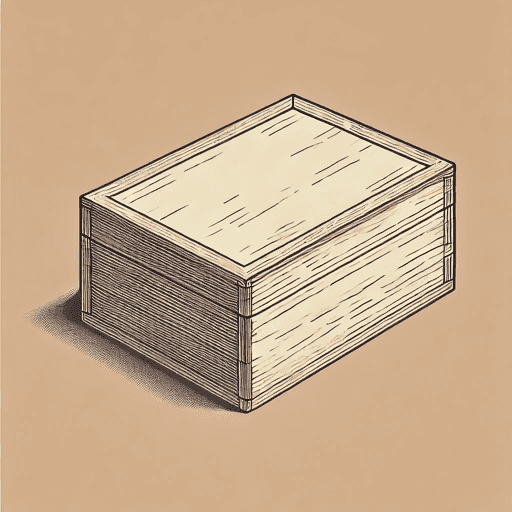
MacCruiskeen shows the narrator a beautiful box he made. He describes the difficulty of deciding what was appropriate to store in it, before deciding on another, smaller box. He continues taking smaller intricate boxes out, finally producing ones that are so small they are invisible. The narrator is afraid and impressed.
Chapter 6 Summary
When the narrator returns to the other room, Sergeant Pluck and Mr. Gilhaney are discussing bicycles. The Sergeant asks the narrator if he would like to help search for Mr. Gilhaney’s stolen bicycle, and he says yes. The Sergeant mentions the eponymous third policeman, Policeman Fox, whom he says has been eccentric, cranky, and hasn’t spoken to anyone since a particular conversation with MacCruiskeen. They go out into the strange countryside, and eventually find the bicycle. Mr. Gilhaney leaves and the narrator and the Sergeant go back toward the barracks.
The narrator asks Sergeant Pluck about the “secret of his constabulary virtuosity” (84) in that he found not only the bicycle, but also all the clues. The Sergeant explains that it is because he stole the bicycle himself. He blames the County Council and suggests that the “Atomic Theory” is at work in the parish. He explains that since everything is composed of flying atoms, interchange can happen and cause people to become something else, like half-human and half-bicycle. In the same way, he says, bicycles can become partly human.
Chapters 5-6 Analysis
Throughout this section of the novel, O’Brien uses extensive dialogue to characterize both the world and the individuals in it, deepening Unknowability as Part of the Human Experience as elements of the text become more overtly absurd and confused. Passages of dialogue emphasize the strangeness of the police barracks and the parish in which it is located. For example, Sergeant Pluck and Mr. Gilhaney have an extended and repetitive discussion on the subject of new inventions related to bicycles, all without reaching any clear point:
‘[The three-speed gear] never stops the way you want it, it would remind you of bad jaw-plates.’
‘That is all lies,’ said Gilhaney.
‘Or like the pegs of a fairy-day fiddle,’ said the Sergeant, ‘or a skinny wife in the craw of a cold bed in springtime.’
‘Not that,’ said Gilhaney.
‘Or porter in a sick stomach,’ said the Sergeant.
‘So help me not,’ said Gilhaney (78).
The passage characterizes the Sergeant as contrary and opposed to the newfangled bicycle invention, with his use of bizarre similes injecting a note of both humor and a sense of the nonsensical into the text. His later revelation that he is the one who stole Gilhaney’s bicycle, and that he did it as a means to slow the collapse of boundaries between Gilhaney and the machine, creates a further sense of surreality and confusion in the narrator’s experiences.
The narrative also continues to play with what is real and what is surreal through its descriptions of landscape and nature. The novel includes descriptions of pastoral beauty that at first seem to lean toward realism. However, O’Brien then subverts such descriptions with anthropomorphism and humor, suggesting that the landscape is more than it appears and amplifying the novel’s uncanny setting. For example, when the narrator, Sergeant Pluck, and Mr. Gilhaney go out in search of the missing bicycle, the narrator reflects on the cows they see in a field: “They watched us quietly as we made a path between them and changed their attitudes slowly as if to show us all of the maps on their fat sides. They gave us to understand that they knew us personally and thought a lot of our families” (81). O’Brien satirizes the small-town, parochial nature of the setting by suggesting that the cows know the humans’ families. The anthropomorphization of the cows reinforces the sense that the narrator has stepped into a realm that is not quite like the life he knew before.
O’Brien also satirizes small-town policing through the dialogue and actions of Sergeant Pluck, introducing the theme of The Agony of Banality and Bureaucracy. At first, the satire is present in the complete focus on bicycles at the expense of all other topics of conversation, reducing the police’s investigative work to something apparently repetitious and relatively inconsequential. Sergeant Pluck consistently becomes distracted from conversations and returns to topics related to bicycles, even when they are discussing other things. As they search for clues about the bicycle’s disappearance, he instructs that Gilhaney should, “Take a look at the roots of that bush, it looks suspicious and there is no necessity for a warrant” (81, emphasis added). Insinuating that a bush could look “suspicious” and that one might in other circumstances need a warrant to investigate a bush satirizes unnecessary bureaucracy in parochial law enforcement settings.
This section of the novel, particularly Chapter 6, also spotlights The Interchange Between Human and Machine theme. The characters offer detailed descriptions of the related science and daily practicalities of humans becoming bicycles. For example, the Sergeant explains in detail how it is similar to the actual phenomenon of atoms from an iron bar being transferred to a blacksmith’s hammer in the course of his work. By extension, according to Pluck, people can “get their personalities mixed up with the personalities of their bicycle as a result of the interchanging of the atoms of each of them” (88). As the theme develops, O’Brien explores questions of what it means to be human and how one’s environment and experience shapes them, while continuously drawing attention to one of the elements present during Mathers’s murder to hint at the narrator’s enduring guilt.

Get in-depth, chapter-by-chapter summaries and analysis from our literary experts.
- Grasp challenging concepts with clear, comprehensive explanations
- Revisit key plot points and ideas without rereading the book
- Share impressive insights in classes and book clubs