The Third Policeman
A modern alternative to SparkNotes and CliffsNotes, SuperSummary offers high-quality Study Guides with detailed chapter summaries and analysis of major themes, characters, and more.
Summaries & Analyses
Quizzes
NEWReading Tools
Symbols & Motifs
Content Warning: This section of the guide includes discussion of graphic violence and death.
Bicycles
Bicycles function as a key motif throughout the novel, reflecting The Interchange Between Human and Machine. They are central to its surrealist tone and representation of hell as an uncanny version of reality. Within the hell world of the police barracks, bicycles are represented as valuable, important objects with human characteristics. The Sergeant’s bicycle is feminine and sensual, with the narrator developing a close affinity and intimacy with her as he escapes the barracks and rides to Mathers’s house, then home.
Bicycles are also represented as dangerous objects. Even though Sergeant Pluck tells the inspector that he has Mathers’s murderer (the narrator) in custody, he does not put him into the cell because he prefers to keep his bicycle in solitary confinement. Pluck describes bicycles acting of their own volition, and the narrator experiences bicycles having moved from the place he saw them last.
The focus on bicycles and their dangerous connotations is related to their role in Mathers’s murder. When Divney and the narrator go out to kill Mathers, the narrator notes that “Divney said that we should bring our spades tied on the crossbars of our bicycles because this would make us look like men out after rabbits” (16). They ride bicycles together to meet Mathers on the road, and Divney hits him with “a great blow in the neck with a special bicycle-pump which he manufactured […] out of a hollow iron bar” (7). Bicycles are thus dangerous both in reality because of their relationship to Mathers’s murder, and within hell because of their ability to take on human characteristics.
Eyes
Eyes and sight form an important motif in the novel, speaking to Unknowability as Part of the Human Experience. The narrator notices Martin Finnucane’s strange eyes early in the novel: “They were very unusual eyes. There was no palpable divergence in their alignment but they seemed to be incapable of giving a direct glance at anything that was straight, whether or not their curious incompatibility was suitable for looking at crooked things” (45, emphasis added). The inability of Finnucane’s eyes to “giv[e] a direct glance at anything that was straight” reflects his dubious and even criminal intentions, as further implied when the narrator notes that his eyes might be better-suited “for looking at crooked things.”
Another key moment for eyes is when MacCruiskeen is preparing to stop Finnucane and the one-legged men from rescuing the narrator. He has painted the bicycle in the incomprehensible color that allegedly made Policeman Fox lose his mind. The men who are working with the Sergeant are blindfolded to avoid the same fate: “The Sergeant and his men are all blindfolded like yourself, it is a very queer way for people to be when they are lying in an ambush but it is the only way to be when I am expected at any moment on my bicycle” (171). This passage includes comedy alongside the ominous suggestion that looking at the color of the bicycle would be extremely dangerous. Covered eyes thus suggest a self-protective impulse to avoid looking at truth or reality.
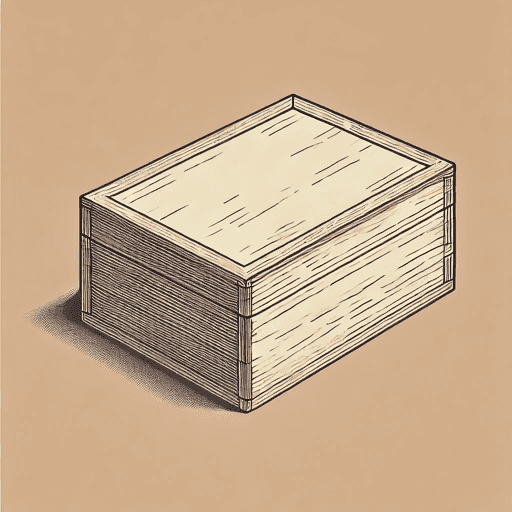
Mathers’s Money Box
Phillip Mathers’s money box appears as a persistent symbol of the narrator’s crime. He thinks about it often, in part because it was an object of hope that ultimately caused his downfall. The money box represents the narrator’s financial motivation for killing Mathers. He needs money to publish his de Selby index, and decides to murder Mathers to get it. The money box becomes an obsession after the crime as well, when Divney refuses to tell him where it is.
It is not only his figurative, but also his literal downfall. The narrator believes he is reaching for it when he sets off the bomb Divney placed under the floorboards in Mathers’s house. In the afterlife, he continues to seek it and is overjoyed when Fox tells him that the money box is at his house and contains “omnium” that will allow him to enact any form of magic. The box in this way shows the narrator’s lack of change: He remains selfishly focused on the material benefits he can get from the box, instead of atoning for his guilt over his crime.

Unlock the meaning behind every key symbol & motif
See how recurring imagery, objects, and ideas shape the narrative.
- Explore how the author builds meaning through symbolism
- Understand what symbols & motifs represent in the text
- Connect recurring ideas to themes, characters, and events