The Third Policeman
A modern alternative to SparkNotes and CliffsNotes, SuperSummary offers high-quality Study Guides with detailed chapter summaries and analysis of major themes, characters, and more.
Summaries & Analyses
Quizzes
NEWReading Tools
Chapters 7-8Chapter Summaries & Analyses
Content Warning: This section of the guide includes discussion of graphic violence and death.
Chapter 7 Summary
The narrator again reflects on de Selby, including his theory that the earth is actually sausage-shaped. Back in the police barracks, the narrator notices a visitor is present. He introduces himself as Inspector Corky and questions the Sergeant about why the station was empty. He then explains that “a man called Mathers was found in the crotch of a ditch up the road two hours ago with his belly opened up with a knife or sharp instrument” (99). The narrator is shocked, but the Sergeant replies that he already knew and that he has the murderer in custody. The narrator realizes Pluck must be talking about him. The inspector asks why the murderer isn’t in the cell, and the Sergeant sheepishly replies that it is because he keeps his bicycle in there.
The narrator asks if it is all a joke, and the sergeant replies that he would be grateful if the narrator would pretend it were, that it would be “a noble gesture and an unutterable piece of supreme excellence on the part of the deceased” (101). The Sergeant tells the narrator he will have to be hanged for his crime, but that he can remain out of the cell in the area “on parole” so the bicycle will not need to be moved. The narrator reminds the sergeant that since he doesn’t have a name, he should be “invisible to the law” (103). The Sergeant is troubled, and begins guessing the narrator’s name.
The Sergeant finally decides that because the narrator doesn’t have a name, his death isn’t actually of any consequence and they can carry out a death sentence. The narrator clarifies: “You mean that because I have no name I cannot die and that you cannot be held answerable for my death even if you kill me?” (105) and the sergeant confirms this to be the case.
MacCruiskeen enters and makes conversation with the narrator, including his concerns about the price of the lumber they will need to build the scaffold for the hanging. MacCruiskeen notes that the last hanging in the parish, 30 years earlier, involved the hanging of a bicycle because the man who committed the crime was mostly in the machine rather than the human body. MacCruiskeen produces another machine he says will “mangle the light.” It makes the sound of a scream, and MacCruiskeen asks the narrator to try to identify what the voice is saying. Both men are unable to do so. He explains a theory about “omnium,” a type of matter similar to an atom, which some people call energy.
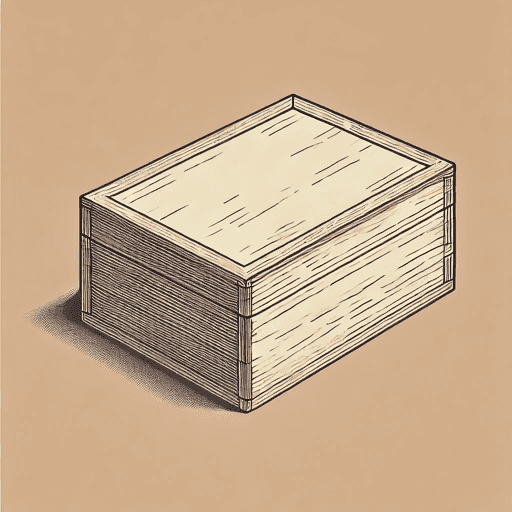
Gilhaney arrives with news about the price of timber, which has gone up. He gets close to MacCruiskeen, but forgets that, like a bicycle, he needs to keep moving or he will lose his balance. He falls into MacCruiskeen and the table, where the latter was working on another tiny box. MacCruiskeen is enraged and instructs the other two mean to get down on their knees and find it. They search, and Gilhaney finally winks at the narrator and pretends to set something on the table. MacCruiskeen shows the narrator where he can sleep for the night.
Chapter 8 Summary
The narrator hesitates before getting into bed, worried that lying down will make the wood from the bed and his prosthetic leg turn his body into wood. Joe impatiently convinces him to lie down. The narrator is immediately relaxed, and meditates on the pleasure of lying down. He thinks about Joe lying down beside him and becomes internally disgusted, thinking that his “diminutive body would be horrible to the human touch—sly or slimy like an eel or with a repelling roughness like a cat’s tongue” (121). Joe hears this thought and becomes very offended, threatening to leave. Joe warns the narrator, “I am your soul and all your souls. When I am gone you are dead” (123). The narrator imagines that he is being hammered into his coffin, before Sergeant Pluck enters the room.
The narrator asks when he will be hanged and is told, “Tomorrow morning if we have the scaffold up in time and unless it is raining” (126). Since he will be dead soon, the narrator asks if Pluck will tell him about the “readings,” mysterious numbers he has heard the policemen talking about. The sergeant shows him to MacCruiskeen’s bedroom and says that there is a magical map of the parish on the ceiling. The map also shows the road to eternity, according to the Sergeant. The narrator asks if they will be able to get back and the Sergeant explains that there is an elevator. They set out down the lane in that direction.
They pass through an overgrown path and to a stone building. They enter, going into a stone box that weighs the narrator, then plummets downward. The narrator is terrified but the Sergeant remarks casually that that was the elevator he was referring to. They walk down a dimly lit hallway, which has a series of small doors that remind the narrator of “ovens or furnace-doors or safe-deposits such as banks have” (135). They come to an airy, circular hall. It is filled with machinery with wires and clock-like objects, which the Sergeant inspects. The narrator hears a loud hammering. MacCruiskeen emerges from behind the largest of the machines.
The narrator asks if this is eternity, and the Sergeant explains that you do not age in this place: “Your pipe will smoke all day and will still be full and a glass of whiskey will still be there no matter how much of it you drink and it does not matter in any case because it will not make you drunker than your own sobriety” (138). The narrator asks about the Sergeant’s bicycle and he pulls a brand-new one from one of the oven-type doors on the walls.
MacCruiskeen opens a cabinet, in which biscuit boxes are raining down. The Sergeant tells the narrator it will show anything one asks to see. The narrator asks for items including blocks of gold, jewels, whiskey, and a new suit. He also asks for a small weapon, and is given an object that will reduce a man to grey powder.
As they leave, the Sergeant explains the importance of the daily readings that relate to the beam, levers, and pilot light in eternity: “Attend to your daily readings and your conscience will be as clear as a clean shirt on Sunday morning” (143). When they approach the elevator again, the policemen warn the narrator not to enter with his bag of valuable objects—if you don’t weigh the same as you did originally, you will be sent downward where none have gone before. The narrator sobs at leaving his new treasures behind and they come back up in the elevator. They go back to the barracks and the narrator goes to sleep.
Chapters 7-8 Analysis
The key twist of the novel is that the narrator has been dead for the majority of the book, highlighting Unknowability as Part of the Human Experience. While there are clues throughout, the novel’s uncanny and surreal tone obscures the reality of the narrator’s situation. Further, O’Brien includes misdirection through the narrator’s focus on his physiological reactions and embodied experiences, which suggest his aliveness.
Chapter 6 includes both a clear clue that the narrator is already dead, and instances of misdirection that suggest the opposite. The narrator, at Joe’s request, asks the Sergeant if it is a joke that he is going to be arrested for murder. The Sergeant replies, “If you take it that way I will be indefinitely beholden to you […] and I will remember you with real emotion. It would be a noble gesture and an unutterable piece of supreme excellence on the part of the deceased’ (101, emphasis added). While the narrator replies “What!” (101), the Sergeant does not further explain his reference to the narrator being deceased, and the narrator does not think more about it. The conversation turns to the narrator’s impending punishment—hanging—and his shock at the “unfairness” of the situation. The narrator’s fear of being “stretched” belies his already-dead state; it shouldn’t matter if he is “killed” if he is already dead. O’Brien thus employs foreshadowing, hinting that the narrator is dead before he admits it to himself.
Throughout the novel, O’Brien also uses physiological descriptions of the narrator’s bodily experience. As he thinks about being killed, the narrator has tears in his eyes and a “lump of incommunicable poignancy” (106) swelling in his throat. The passage recalls the narrator’s insistence earlier in the novel that, while de Selby suggests that journeys are hallucinations, his journey is not because he felt the heat of the sun and the exhaustion of his body from walking. Such vivid physical sensations make the narrator’s state of being alive or dead more ambiguous throughout the novel.
The novel shifts more clearly into surrealism and its afterlife setting in Chapter 8, when the Sergeant takes the narrator through a lane, then down an elevator into “eternity.” The representation of eternity is humorous in evading common tropes associated with heaven, hell, or purgatory. After seeing the map, Joe and the narrator discuss the veracity of the Sergeant’s claims:
In the meantime let us make up our minds that eternity is not up a lane that is found by looking at cracks in the ceiling of a country policeman’s bedroom.
Then what is up the lane?
I cannot say. If he said that eternity was up the lane and left it at that, I would not kick so hard. But when we are told that we are coming back from there in a lift [elevator]—well, I begin to think that he is confusing night-clubs with heaven. A lift! (130).
This passage includes the detail of the ceiling map as the path to eternity, then the portal as a common elevator rather than a mystical portal. The comparison of heaven to a night-club that could be accessed in a lift adds comedy, suggesting that there is something absurd and even anticlimactic about this afterlife.
Rather than explicit natural images—clouds or fire—for the afterlife, O’Brien’s representation emphasizes machinery, reinforcing The Interchange Between Human and Machine: First the elevator, then the wires and clocks, and then the doors. There are continuing allusions to the narrator’s crime, such as the comparison of the small doors to “ovens or furnace-doors or safe-deposits such as banks have” (135, emphasis added). The imagery of “ovens” and “furnace doors” alludes to the fire- and heat-based imagery commonly associated with hell, while the comparison to “safe-deposits such as banks have” invokes Mathers’s stolen money box.
Furthermore, the elevator’s own behavior suggests an awareness of the narrator’s guilt. The narrator is warned that if someone doesn’t weigh the same going back up as they did on the way down, the elevator will take them “downward” where none have gone before. This warning against taking the valuable objects that were not originally his onto the elevator once more invokes the theft, while “downward” suggests a descent into hell. In this way, the machinery around the narrator begins to reflect aspects of his own inner state of guilt.
One of the things the narrator asks to receive in the door is a weapon, and he is given a tool, “That will change any man or men into grey powder at once if you point it and press the knob or if you don’t like grey powder you can have purple powder or yellow powder” (142, emphasis added). This weapon is both hyperbolically fantastical and an example of the closeness between human and machine: The manmade object of the weapon inflicts deadly transformation onto the human body, and “powders” suggest the human body returning to ashes or dust. The colors of the powder also echo Mathers’s earlier dialogue about the “wind colors” present at a person’s birth. Mathers claimed his own color was yellow, which is in turn echoed in the reference to “yellow powder.” The weapon and powder imagery thus once more speak to the idea of violence and guilt, invoking the narrator’s crimes indirectly.

Get in-depth, chapter-by-chapter summaries and analysis from our literary experts.
- Grasp challenging concepts with clear, comprehensive explanations
- Revisit key plot points and ideas without rereading the book
- Share impressive insights in classes and book clubs