This Inevitable Ruin
A modern alternative to SparkNotes and CliffsNotes, SuperSummary offers high-quality Study Guides with detailed chapter summaries and analysis of major themes, characters, and more.
Summaries & Analyses
Author Insights
Quizzes
NEWReading Tools
Background
Series Context: The Princess Posse’s Entry into Faction Wars
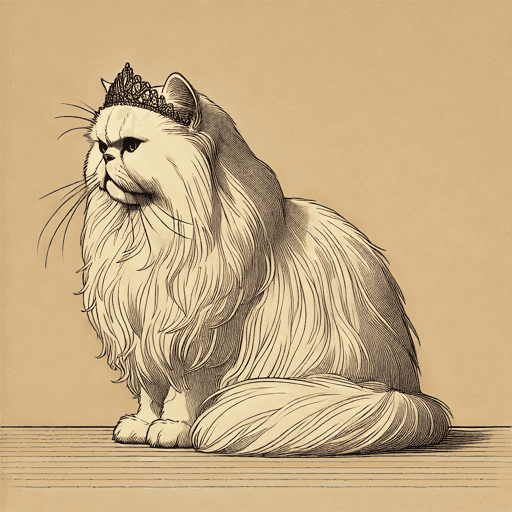
Matt Dinneman’s Dungeon Crawler Carl books are based on the premise that an extraterrestrial consortium called the Syndicate has attacked the Earth to mine it for rare minerals or elements and turned it into an 18-floor dungeon. At the start of Dungeon Crawler Carl, the first novel of the series, Carl is outdoors at 2:00 am on a winter night trying to lure Princess Donut back into the house, when a sudden attack, hereafter known as the Transformation or the Collapse, flattens all the buildings on Earth, killing everyone indoors. The remaining few million people are given a choice by the Borant Corporation—a Syndicate member entity to whom Earth has been leased for mining—to either stay on the surface and fend for themselves, or enter the dungeon.
In the dungeon, built like a funnel, the survivors or crawlers must descend through increasingly dangerous floors and fight occupying alien factions while the galaxy watches for entertainment. As Carl takes the option to enter the dungeon, the AI running the game grants sentience to Princess Donut. Carl and Donut now become players in a reality game, collecting loot, spells, and effects to “level up” and hook in their audience, their survival depending on ratings and the largess of their sponsors.
Entering new levels of the funnel in the successive novels, Carl and Donut gather allies in the form of other crawlers and NPCs, such as Mordecai, their game-guide and potion-maker. In the Dungeon Crawler Carl universe, science is highly advanced, making effects such as transformation and regeneration a physical reality. Thus, Donut becomes a talking, intelligent cat, while Katia, a fellow crawler, acquires a shapeshifting changeling form.
In the Faction Wars, the site of This Inevitable Ruin, eight alien-led armies compete to control a central castle in the city of Larracos, but the game structure has been destabilized by resistance from Carl’s team—the Princess Posse—and other human "crawlers". Complicating matters further, non-player characters (NPCs) have become sentient and formed their own faction, Team Retribution, to defend Larracos. Carl is operating under a constraint from a previous floor, in which a magical binding dictates that of Donut and Katia, only one can leave the ninth floor alive. To resolve this, Katia plans to accept a deal to become an attendant to a goddess on the twelfth floor, a choice that will seal her fate but allow Donut to continue. Carl, however, fears that the game will throw a loophole, making both Katia and Donut perish on the ninth floor. Carl’s survival is further challenged by his unwilling symbiosis with Shi Maria, an ancient spider-like entity now inhabiting a tattoo on his chest (in events in The Eye of the Bedlam Bride). As the Faction Wars begin, the other eight attacking teams form a powerful “Bloc” alliance, declaring war on both the Princess Posse and Team Retribution, setting the stage for an epic, large-scale conflict.
Genre Context: The Conventions of Literary RPG (LitRPG)
A prime example of the Literary RPG (LitRPG) subgenre, the Dungeon Crawler Carl series gained a massive following through self-publishing platforms before being picked up for traditional publication and a television adaptation. The LitRPG genre integrates the explicit mechanics of role-playing games into its narrative. LitRPG novels are often structured like role-playing games, with level progression, faction-based combat, and rule-bound survival warfare.
The genre is relatively new, but overlaps with the broader game-lit genre, whose origins can be traced back to Orson Scott Card's Ender's Game (1985), in which Andrew “Ender” Wiggins is recruited into a simulation-like war by an international military organization. Books like The Hunger Games (2008) by Suzanne Collins also prefigure the LitRPG genre, focusing on human suffering being turned into a sport. The Way of the Clan (2008) by Dem Mikhailov is considered an early major example of the genre as it introduces the idea of actual people in a role-playing game. Other examples include The Slime Dungeon (2016) by Jeffrey "Falcon" Logue, in which the series is narrated from the point of view of the dungeon itself.
The LitRPG genre lends itself to themes such as existentialist despair, since reality itself can be compared to a game, with a game-master pulling the strings. The genre also satirizes the commodification of human lives, as well as the dangers of artificial intelligence (AI). In This Inevitable Ruin, for instance, the AI breaks the fourth wall by ostensibly addressing the characters in the book: “[H]ere’s a message for all […] reading this […] you should probably keep an eye on the things you unleash, especially when you don’t fully understand what they are” (593), warning humans of the consequences of their “creations,” such as AI itself.
Like in other major LitRPG books, Dinniman uses conventions from video games as core narrative devices to explore themes of power and exploitation. The opening of the ninth-floor bombards Carl with system notifications detailing his leaderboard rank, viewer statistics like “Views: 231 Septillion” (23), and quest updates that frame life-or-death struggles as game objectives. This hyper-gamified reality mirrors the mechanics of modern digital entertainment platforms, such as Twitch or YouTube, where creators’ livelihoods depend on constant performance measured by engagement metrics. Similarly, reality television shows like Survivor place contestants in high-stakes environments where they must perform for both survival and audience approval. By structuring a lethal death sport within the rules of a game, Dinniman critiques systems that quantify and commodify human experience, forcing characters to navigate a world where their existence is judged by statistics and their suffering is packaged as entertainment for a distant, unseen audience.

Get in-depth, chapter-by-chapter summaries and analysis from our literary experts.
- Grasp challenging concepts with clear, comprehensive explanations
- Revisit key plot points and ideas without rereading the book
- Share impressive insights in classes and book clubs
Related Titles
By Matt Dinniman