This Inevitable Ruin
A modern alternative to SparkNotes and CliffsNotes, SuperSummary offers high-quality Study Guides with detailed chapter summaries and analysis of major themes, characters, and more.
Summaries & Analyses
Author Insights
Quizzes
NEWReading Tools
Character Analysis
Content Warning: This section of the guide contains discussion of graphic violence, cursing, and sexual content.
Carl
As the protagonist of the narrative, Carl is a dynamic and round character whose evolution in the series is central to the story’s progression. In this volume, he transitions from a reluctant survivor to a decisive military and political leader, grappling with the immense ethical weight of his newfound power. His reception of the Containment Interface from the Pacifist Network serves as a symbol of this burden. The device, which grants him the ability to trigger a system-destroying nova, forces him to confront the central question of the Resistance and the Moral Cost of Insurrection theme: whether total annihilation is a justifiable response to systemic evil. Paulie, the Residual who delivers the device, articulates this moral crossroads, stating, “If you make this decision, be sure. Be sure it’s your only option…” (12).
Carl’s decision to disconnect the fail-safe rather than use or discard it demonstrates a nuanced understanding of his responsibility, choosing to escalate the conflict with the system AI on his own terms. His journey is also marked by the struggle for control of his own body. The Eye of the Bedlam Bride tattoo, representing the entity Shi Maria, becomes an antagonist within him. The system’s Mind Balance skill represents his fight to maintain his autonomy against Shi Maria’s attempts to seize control of his actions. This struggle parallels Carl’s external war, as he must conquer the enemy within to effectively lead the fight against the enemies without. His physical and emotional resilience is constantly tested, from the pain of Soul Poisoning to the toll of the violent acts he witnesses and commits. Despite the escalating brutality and his own growing power, Carl’s core motivation remains the protection of his found family. This drive is formalized when he becomes the official party leader, a title previously held by Donut. This shift in leadership is a natural progression of Carl’s role as the group’s protector and strategist. His interactions with other characters, from his steadfast loyalty to Donut and Katia to his alliances with former enemies like Juice Box and his mentorship of new assets like Sir Rendlegore, reinforce his position as the emotional and tactical center of the Princess Posse.
Princess Donut
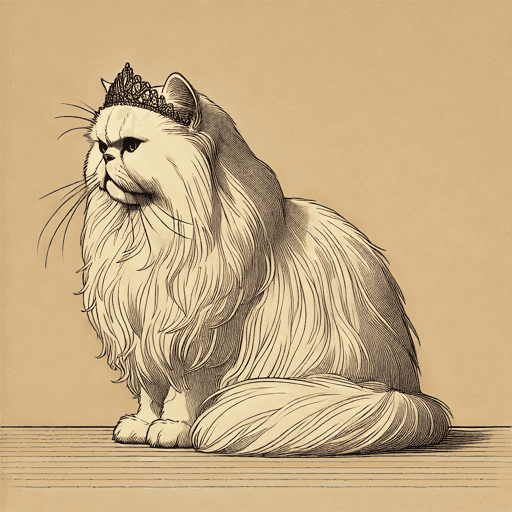
Princess Donut continues her development as a dynamic and round main character, subverting her initial archetype as a pampered show cat to become a formidable military commander and invaluable asset to the rebellion. As a Co-Warlord of the Princess Posse, Donut demonstrates strategic acumen, studying the Faction Wars rule set and making decisive tactical choices, such as immediately forming an alliance with Team Retribution. Her transformation into a more overtly dangerous combatant is solidified by her choice of the “Deathbed Hellcat” class, a long-range assassin specialization that significantly amplifies her offensive capabilities. This evolution is augmented by the powerful celestial items she receives, including the Cloak of the Benevolent Champion and the Tiara of a Thousand Lights. The cloak dramatically increases her durability by raising her lowest stat, constitution, making her a resilient front-line fighter.
Despite her increasing power and her often-abrasive persona, Donut’s primary motivation is the protection and cohesion of her Found Family as a Bulwark Against Nihilism. Her fierce loyalty to Carl, Mongo, and the expanding circle of allies drives her actions. She navigates the horrors of war with a blend of dark humor and surprising moments of emotional depth. Her outrage over the unauthorized “Donut Holes” fan merchandise serves as comic relief while also touching upon the subject of the commodification of existence, highlighting how her very identity is packaged for audience consumption. At the climax, Donut is faced with casting the Atrocity spell, War Crime, a decision that elevates her to a new class, the Oak Fell, and makes her a Champion of the goddess Nekhebit. This moment represents the culmination of her journey in the book, forcing her to wield a horrific power to save her friends and solidifying her status as a key player whose actions have floor-altering consequences.
Katia Grim
Katia Grim is a round, dynamic character whose arc is defined by a deep internal conflict and a life-altering choice. Katia’s central struggle revolves around the Orchid of Eileithyia’s Grace, an item that offers her three potential fates: becoming a celestial attendant on the 12th floor, a massive boost to her constitution, or being made pregnant and ejected from the dungeon. This choice is the key to freeing Princess Donut from the Crown of the Sepsis Whore, placing the burden of her friend’s freedom squarely on her shoulders. Katia’s journey explores themes of sacrifice, autonomy, and the search for meaning in a hostile world.
The narrative delves into her past through a shared dream sequence with Carl, revealing a history of addiction, professional betrayal, and the heartbreaking loss of her prospective adopted daughter, Annie. This backstory contextualizes her initial desire to become a celestial attendant, framing it not as a simple power-up but as an escape from a life of pain and a chance to find purpose in service. Her relationship with Bautista offers a glimpse of potential happiness, yet her past traumas and the pressures of the crawl create tension between them. Ultimately, Katia rejects both service and raw power, choosing the path of new life. Her decision to become pregnant is a commitment to creating a new, unconventional family, directly engaging with the theme of found family as a bulwark against nihilism.
Louis Santiago
Louis Santiago serves as a key supporting character who undergoes significant development, evolving from a source of comic relief into a vital military asset for the Princess Posse. His designation as “Army Air General” and his acquisition of the celestial-tier airship, Party Planner, grant the crawlers a crucial tactical advantage in Faction Wars, highlighting his growing importance (90). His defining characteristic is his earnest and often naive nature, which contrasts sharply with the cynicism of the dungeon. This is most evident in his relationship with Juice Box, the warlord of the NPC team. Their marriage, while strategically motivated to solidify the alliance between their factions, is also infused with genuine emotional depth. Louis’s willingness to enter the union to protect the alliance underscores his loyalty and burgeoning sense of responsibility. This relationship serves as a prime example of the narrative’s exploration of the blurring lines between player and NPC, as Louis forms a bond that transcends the game’s intended boundaries. His capture and the subsequent surgical alterations performed on him by the Madness, where his organs are replaced with biomechanical ones containing the essence of Epitome Tagg, represent a harrowing physical violation, linking him to the motif of Hybridity and Contamination and placing him in a state of vulnerability.
Juice Box
Juice Box is a pivotal character, transitioning from a chaotic antagonist to a crucial, if unpredictable, ally. As the Co-Warlord of Team Retribution, she embodies the dungeon inhabitants’ struggle for autonomy and personhood, making her a central figure in the theme of Resistance. A powerful changeling with memories of hundreds of past lives, she is defined by a mix of immense power, psychological trauma, and a fierce, protective love for Louis. Her alliance with the Princess Posse is instrumental, bridging the gap between crawlers and NPCs and expanding the concept of found family to include the dungeon’s native populations. Her tactical decisions are often brutal and direct, reflecting a worldview shaped by endless cycles of violence and betrayal. However, her relationship with Louis reveals a hidden vulnerability. Their marriage, a political maneuver to secure their alliance, becomes a focal point for her character, as she seeks an emotional anchor in a world designed to foster nihilism. Her ability to transform into figures of deep cosmic horror, such as the entity known as “the Nothing,” demonstrates her profound knowledge of the dungeon’s lore and her capacity for psychological warfare, making her one of the most formidable and complex figures on the battlefield.
The Dungeon Anarchist’s Cookbook Authors
The authors of the Dungeon Anarchist’s Cookbook function as a collective symbol of enduring, intergenerational resistance. Through a series of interludes and in-narrative appearances, the text chronicles a legacy of defiance against the cruelty of the crawl, embodied by the collaborative text that connects them across time. Each author represents a different facet of the crawler experience and the psychological toll of survival. Porthus, the originator, establishes a foundation of hope. Dante exemplifies the moral compromises required, while Tipid is haunted by guilt and the illusion-based horrors of his season. Everly’s story highlights the futility of individual struggle against a rigged system, and York embodies the emotional numbness that can result from trauma. The in-story return of Rosetta, Tipid, and Justice Light as volunteer soldiers transforms their symbolic resistance into direct, military action. Rosetta Thag is a fierce warrior driven by a desire for vengeance against the system and its architects, particularly King Rust. Tipid, despite his past trauma, returns with a renewed sense of purpose. Justice Light, a brilliant but psychologically scarred trap master, dedicates his skills to defending the Posse’s stronghold, his intricate traps representing a meticulous and patient form of rebellion. Together, these authors illustrate that the struggle against the dungeon is not an isolated, individual fight but a communal effort passed down through a shared text and a common goal.
Mordecai
Mordecai primarily serves as a mentor figure and a source of crucial exposition and strategic guidance. As Princess Donut’s manager, his role is to help her navigate the complexities of the dungeon, from class selection to item management. His expertise, drawn from his long indentureship, provides the crawlers with invaluable insights into the game’s mechanics and lore. His transformation into a “Canadian” persona in this book adds a layer of comic relief and reinforces the commodification of human beings, as his identity is whimsically redefined by the system. Mordecai’s near-obsessive excitement over discovering new potions and upgrading his alchemy table reveals a deep passion for his craft, giving depth to his otherwise pragmatic character. He acts as a stabilizing force for the group, offering calculated advice that often tempers the more impulsive decisions of Carl and Donut.
Samantha
Samantha is a supporting character who embodies the absurdity and bleak humor of the dungeon. As a disembodied, sentient sex doll head, her perception of the world is fundamentally distorted, which is played for laughs as Samantha tends to find innuendo in everything. At the same time, she represents the objectification of human beings in the real world, objectified as she is to a body part. Despite her often-disruptive behavior, Samantha occasionally proves to be an asset, as her unique nature as a creature of the Nothing allows her to perform actions no other character can, such as opening the portal to the Temple of Khepri. Her connection to her mother, the goddess Theia, and her strange knowledge of cosmic entities like Kimaris and the Eulogist suggest a deeper, more significant role in the unfolding cosmic drama. Her ultimate sacrifice of her golem body to save Louis marks a moment of genuine, albeit temporary, altruism, revealing a flicker of humanity beneath her chaotic exterior.

Unlock analysis of every major character
Get a detailed breakdown of each character’s role, motivations, and development.
- Explore in-depth profiles for every important character
- Trace character arcs, turning points, and relationships
- Connect characters to key themes and plot points
Related Titles
By Matt Dinniman