What We Did to Survive
What We Did to Survive
A modern alternative to SparkNotes and CliffsNotes, SuperSummary offers high-quality Study Guides with detailed chapter summaries and analysis of major themes, characters, and more.
Summaries & Analyses
Quizzes
NEWReading Tools
Chapter 21-EpilogueChapter Summaries & Analyses
Content Warning: This section of the guide includes discussion of illness, death, graphic violence, physical abuse, and cursing.
Chapter 21 Summary
Hannah sits outside the life raft seething at herself for spending the entire day unable to start a fire despite having a working lighter. Emmy sleeps inside the raft, but Hannah is too anxious to rest and stays awake keeping watch. The dark and the relentless noise from the jungle keep her on edge.
Their dwindling food supply weighs on her. Earlier, Hannah made Emmy eat half a can of tuna before she fell asleep again, and Jackson refused his share, insisting that Hannah eat it all. She knows that she will soon need to catch fish but has no means of cooking them.
Jackson emerges and sits beside her. After a long quiet spell, he tells her that he regrets how their relationship ended. When he says that she should know she was “the one that got away” (223), Hannah asks him to tell her again once they’re safely home. He promises.
Chapter 22 Summary
Hannah falls asleep and has a nightmare in which Captain Keith appears and warns her that the jungle will claim her. A panther lunges from the trees, and she wakes screaming at sunrise.
She discovers that their mesh bag—containing all remaining food, their water bottle, a phone, and the first-aid kit—is gone. Jackson guesses that an animal took it, drawn by the tuna scent.
They go into the jungle for drier wood, and with Jackson coaching her, Hannah lights a fire for the first time. She adds green branches to produce heavy smoke and scrawls the word “HELP” in the sand, lining each letter with dark rocks.
She asks Jackson to look for food while she tends Emmy’s worsening, deep wound with exposed bone at a nearby stream. She then hikes both ends of the beach searching for help: One end terminates at a stone outcropping overlooking a deserted inlet, while the other stretches in an empty line for miles. She concludes that staying put is their best option. The nearby fruit trees have been stripped clean, leaving only three guavas. Back at camp, the incoming tide has extinguished the fire. She rebuilds it farther from the water. Jackson urges her to check Emmy, who has relapsed into high fever with a ruptured, foul-smelling wound. Hannah cleans it at the stream and returns Emmy to the raft. Emmy briefly murmurs “Ben” before losing consciousness. As Hannah finally attempts to rest, she hears a helicopter.
Chapter 23 Summary
Hannah leaps up and waves the helicopter down as it passes overhead—but when she turns to show Jackson, the sky is empty. The helicopter was a hallucination, brought on, Jackson suggests, by extreme exhaustion, dehydration, and hunger. Hannah is shaken by her inability to tell what is real. She remains unable to sleep, and Jackson keeps a close eye on her throughout the day.
That night, she sits alone by the fire, unable to shake the feeling she’s missing something important. A branch snaps, and she spots a figure pacing deliberately inside the tree line. She slips away from the firelight, circles through the jungle, and watches as a man steps out of the shadows, punctures the raft in three places, kicks sand onto the fire, and disappears. Hannah gives chase but loses him in the dark.
The deflated raft and the damage to the fire prove that she didn’t imagine it. Jackson questions why an intruder would only damage the raft rather than attack them directly. When he suggests that she may have hallucinated again, she rejects this with anger. He comforts her, and Hannah remains convinced that someone is still watching them from the jungle.
Chapter 24 Summary
At dawn, Hannah feeds armfuls of green branches into the fire until a dense column of smoke climbs into the sky. She refuses Jackson’s repeated urging to rest, sending him to forage while she tends the fire and checks on Emmy.
When Hannah enters the jungle for more branches, the forest goes abruptly quiet. She spots a flash of bare skin and gives chase, following the figure through dense brush before losing him. She then kicks her own sticker-covered water bottle underfoot, one of the stolen items.
The chase leads her to a crude shelter. Her mesh bag hangs from a branch; the first-aid kit and phone pouch are intact, though the sunscreen is gone. The stolen food cans lie smashed open, and a massive pile of fruit—apparently gathered from every tree near camp—is heaped nearby. Someone has been deliberately stripping the area, making survival more difficult for them.
As she turns to leave, she notices a white button-down shirt inside the shelter that she recognizes. Before the realization fully forms, a branch swings at her head from behind.
Chapter 25 Summary
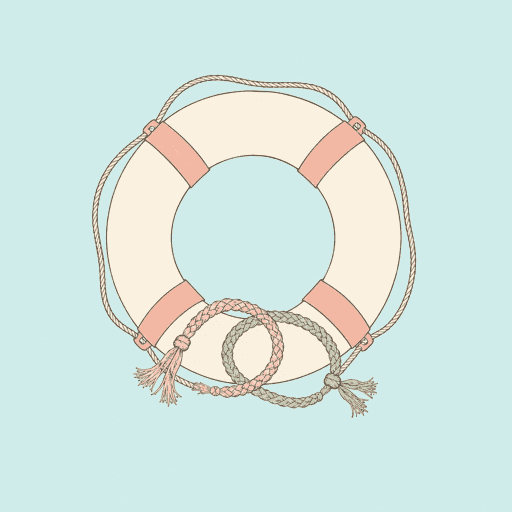
Hannah dodges the blow but slams her head on the ground. Ben stands over her, battered but alive. He confirms that the boat’s emergency flotation ring kept him from drowning.
When she confronts him about the theft and sabotage, he confirms it. His plan was to be the sole survivor and frame Captain Keith for the disaster. Hannah’s smoke signal has forced him to act before rescue arrives.
A prolonged fight unfolds across the beach and jungle. Hannah throws sand in his face and flees, but Ben catches her, pulls her down by the hair, and punches her. She escapes by driving a rock into his temple. He catches her again in the jungle; a fall tears a loose flap of skin from her scalp. At the stone outcropping, Hannah buys time by asking about his plans for Emmy. Ben says that killing her will be regrettable but necessary and promises to memorialize both young women in the story told after their deaths.
When Hannah asks what he will do about Jackson, Ben looks genuinely confused. At that moment, a real helicopter appears, with Hannah’s smoke signal visible nearby. Enraged, Ben drags her toward the cliff’s edge by her hair, above jagged rocks jutting from the surf below. Hannah challenges the logic of his story, and he crouches down and informs her that Jackson isn’t with them because he killed Jackson on the boat.
Chapter 26 Summary
Ben recounts what happened during the second storm. Jackson had Ben’s knife but used it to tie an unconscious Hannah to the boat to keep her from washing overboard, telling Ben plainly that he wouldn’t survive but Hannah would. While Jackson was focused on securing her, Ben grabbed the knife and stabbed him in the neck. A wave rolled the boat; Ben blacked out and woke up alone in the ocean.
Hannah’s denial collapses when she recalls the flotation ring propped at Ben’s camp. Replaying every moment since the beach, she understands: Jackson never physically touched anything; refused every offer of food, water, and sunscreen; and consistently addressed her as “you” rather than “we.” As the inconsistencies fall into place, she begins reinterpreting the days that followed the storm.
When Ben grabs her by the throat, Hannah remembers Jackson urging her not to quit and wraps her legs around his, grabs his ankle, and pulls. He topples backward off the cliff. His scream cuts off when he hits the rocks below, and the surf begins drawing his body out to sea. Hannah vomits and then forces herself back to the beach as a helicopter lands.
While walking, she replays the past days without Jackson in them: only one set of footprints and Emmy lying alone where Hannah had remembered Jackson beside her. Sobbing, she drops beside Emmy just as she stirs. With rescuers spreading across the beach, Hannah tells her they’re going home.
Epilogue Summary
Nearly a year later, Hannah is a student at Linfield University. She receives a travel photo from Emmy, who’s traveling the world. Emmy’s arm infection had been severe enough to nearly cost her the limb, but she recovered and has become a popular travel blogger. Hannah keeps all her social media private, and neither of them has spoken publicly about the ordeal.
Hannah struggles with grief and rarely returns home. Guilt over Jackson’s death makes it difficult for her to face his parents; she had her diploma mailed so that she didn’t have to attend a graduation ceremony held in his memory. Publicly, Ben is regarded as the story’s villain, assumed to have died at sea. Only Hannah and Emmy know that he survived and made it to the island. His body, like Captain Keith’s and Jackson’s, was never recovered.
With the one-year anniversary days away, Hannah is on the phone with her father when Emmy appears on campus—a surprise he helped arrange. Emmy says that she didn’t want either of them to face the anniversary alone and proposes that they spend spring break in Italy rather than attend the somber family memorial, determined not to let Ben continue to influence her plans. Hannah agrees on one condition: no boats. They press their matching, worn friendship bracelets together.
Chapter 21-Epilogue Analysis
The narrative structure of these final chapters relies on Hannah’s strained perception to show the psychological toll of the beach and jungle. Throughout her time on the beach, Hannah depends on Jackson’s presence for emotional support, viewing him as a partner in her desperate efforts to keep Emmy alive. However, Ben’s reappearance leads to the section’s central revelation: He killed Jackson during the storm at sea. Hannah’s subsequent realization that her ex-boyfriend has been a hallucination asks readers to reinterpret the preceding chapters. She recognizes that Jackson never left footprints, never consumed their dwindling supplies, and only supplied the verbal encouragement she desperately needed to hear. The novel frames this hallucination through exhaustion, deprivation, grief, and the pressure of keeping Emmy alive. Her mind conjures Jackson as the voice of encouragement she needs to keep going, turning her unresolved love and grief into a source of endurance. This structural revelation emphasizes that the beach and jungle threaten Hannah psychologically as well as physically, while the delayed reveal makes readers share her confusion before reassembling the truth with her.
The climax of the novel exposes how Ben’s entitlement warps his understanding of accountability, developing the theme of The Corrosive Power of Unchecked Privilege. Having survived the shipwreck by clinging to an emergency flotation ring, Ben methodically sabotages Hannah’s camp, stealing food and puncturing the life raft. When Hannah confronts him, Ben justifies his intent to murder her and Emmy, proposing that he will shape the public narrative to frame Captain Keith. He even offers a disturbing consolation, promising to memorialize the young women in a true-crime documentary upon his return and stating, “I’ll really talk her up when I get home. She’ll be famous” (256). Ben believes that controlling the public narrative will allow him to avoid accountability, showing how completely he treats other people’s lives as material for his own survival story. He perceives the girls’ lives as disposable obstacles to his own future, believing his family’s influence and narrative control will shield him from consequences. His family influence and confidence in his own story prove ineffective once rescue becomes imminent and Hannah refuses to accept his version of events. His subsequent death marks the collapse of the story he hoped to control.
The smoke signal becomes a point of conflict because it threatens Ben’s attempt to control the outcome of the ordeal. For Hannah, the smoke signal represents visibility, rescue, and the hope of getting Emmy home alive. She exhausts herself gathering green branches to create the kind of large signal fire that Ben later describes as “bonfires the size of a fucking car” (253), laboring to produce a beacon that can draw attention to their location. Ben, however, treats the signal as a threat to his self-preservation and carefully plotted narrative. Emerging from the jungle in the dark, he actively kicks sand onto the flames to extinguish her beacon and ensure their prolonged isolation. This struggle over the fire develops The Moral Ambiguity of Survival by showing how the same resource can become tied to rescue, concealment, and control. Hannah’s efforts are directed toward keeping herself and Emmy alive, while Ben’s sabotage is designed to leave no witnesses to contradict him. As the physical conflict moves to the precipice of the jagged rocks, Hannah faces an immediate threat to both her own life and Emmy’s. To prevent Ben from murdering Emmy and herself, she wraps her legs around his ankles and pulls him backward off the cliff. The moment frames survival as morally difficult rather than simply heroic: Hannah acts to stop Ben, but the aftermath still leaves her shaken.
The Epilogue uses Hannah’s and Emmy’s different responses to survival to show that rescue doesn’t end the ordeal’s effects. Nearly a year after the rescue, Hannah attends Linfield University but remains isolated by grief and guilt. She’s unable to walk at graduation because of the planned moment of silence for Jackson, and she also struggles with the idea of attending the anniversary memorial at his parents’ house, demonstrating how Jackson’s death continues to shape her daily life long after the physical danger has passed. When Emmy arrives on campus to propose a spring break trip to Italy—the country she skipped because Ben had ruined it for her—she insists on reclaiming her future. Hannah agrees to the trip, but only on the condition of “[n]o boats.” This boundary shows how the ocean’s meaning has changed for Hannah. Initially presented as a romanticized playground, the water is now linked to betrayal, violence, and irreplaceable loss. Avoiding boats allows Hannah to move forward while still acknowledging what happened to her. By concluding with the survivors pressing their frayed friendship bracelets together, the narrative resists a neatly triumphant resolution. Instead, it shows that surviving an ordeal doesn’t erase its impact; moving forward means carrying grief while still choosing connection and future plans.

Get in-depth, chapter-by-chapter summaries and analysis from our literary experts.
- Grasp challenging concepts with clear, comprehensive explanations
- Revisit key plot points and ideas without rereading the book
- Share impressive insights in classes and book clubs