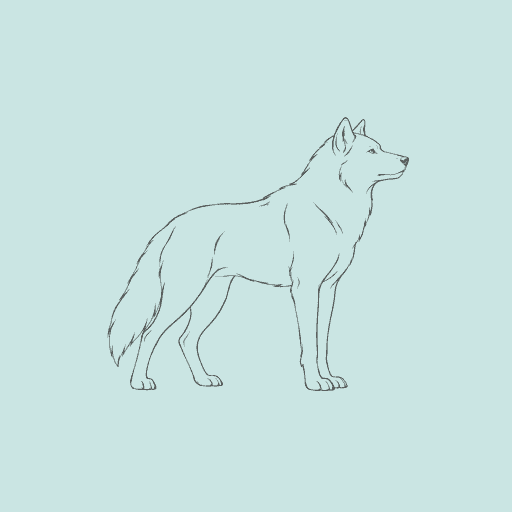
Where Wolves Don't Die
A modern alternative to SparkNotes and CliffsNotes, SuperSummary offers high-quality Study Guides with detailed chapter summaries and analysis of major themes, characters, and more.
Summaries & Analyses
Reading Tools
Chapters 13-26Chapter Summaries & Analyses
Content Warning: This section of the guide includes discussion of racism, animal death, graphic violence, child abuse, child death, illness or death, and physical abuse.
Chapter 13 Summary
As Grandpa Liam drives Ezra and his father, Byron, toward Chief’s Ridge, with Ezra and Buster in the middle and Byron riding shotgun, he tells the story of Adikokan, a sacred place where elder caribou went to die. He explains that wolves and all other animals honored it as a refuge. However, a white anthropologist published the story, leading to an archaeological dig, widespread clear-cutting, and the hunting of the last caribou in the area. Quoting Roger Jourdain, Grandpa Liam says, “You can never trust the white man” (124), expressing his distrust following the exploitation of Indigenous knowledge and destruction of sacred lands.
At the clearing by the logging trail, Byron says goodbye. Grandpa Liam and Ezra, with Buster tucked inside Grandpa’s coat, travel on a Skandic utility snowmobile along the frozen lake and through the woods to a small, unlocked log cabin at Chief’s Ridge. After unloading supplies and completing several chores, Ezra finds the interior contains a Drolet wood stove for heating and cooking, and a wall full of bookshelves. That night, Grandpa Liam reads aloud from an Ojibwe book called Awesiinyensag and strokes Ezra’s hair until he falls asleep.
Chapter 14 Summary
Ezra and Grandpa Liam spend two days setting up their trapline. On the first day, they clear fallen trees and set traps and snares for various animals along a southern trail loop. Grandpa Liam teaches Ezra his system of using a peeled stick to indicate whether an animal may have been caught in a snare from a distance. The next day, they work on the north loop, which circles a large, sacred lake called Manidookaan, or “The Place of Spirits” (138).
Grandpa Liam explains that Manidookaan is where the worlds of the living and the dead meet and that the northern lights are the souls of their ancestors. When Ezra worries he will forget his mother, Grandpa Liam reassures him that her spirit is eternal. He then reveals that the area is called Chief’s Ridge not for a human, but for the alpha wolves whose packs have occupied the ridge for thousands of years. He explains the dynamics of the wolf pack, noting that the alpha leads not by fighting rivals but by understanding and loving all pack members, and tells Ezra the current alpha is a large gray wolf named Ogimaa. That evening, back at the cabin, Ezra begins writing in two notebooks Nora gave him. In one, he jots down notes on the Schroeder case; in the other, he records his memories of his mother, Matt Schroeder, and Nora. As he writes, increasingly vivid memories of his mother return, including the night he first learned about her leukemia diagnosis.
Chapter 15 Summary
On their third day, Ezra and Grandpa Liam check the trapline and have a successful haul, catching a lynx, martens, and several beavers. Grandpa Liam teaches Ezra to retrieve the animals and reset the traps. Back at the cabin, they begin the meticulous work of processing the animals. As they skin and stretch the hides, Grandpa Liam tells Ezra about the one creature in the woods that even the wolf pack fears: an abnormally massive and aggressive black bear known as Chi-awesiinh, or “Chi.” He recounts that two trappers were killed in bear attacks east of the cabin over the past several years and suspects it was Chi, though he cannot say for certain. He assures Ezra they are safe, as the bear is sleeping through the winter and they will pull their traps before it wakes in the spring.
Chapter 16 Summary
A routine develops on the trapline. Ezra discovers that animals are stealing catches from his daily rabbit snares, and Grandpa Liam suspects wolves. As wolf clan, they are forbidden from killing them. Recalling the book Never Cry Wolf, Ezra experiments by walking a wide circle around the snares and dropping urine every ten feet, then walking a second, wider pass and placing small pieces of beaver meat every 10 feet just outside the perimeter. Grandpa Liam then takes Ezra moose hunting. After practicing with his rifle, Ezra waits with his grandfather near a creek. While his grandfather naps, a young bull moose appears, and Ezra successfully shoots it. After making a traditional tobacco offering to thank the moose for its life, they butcher the animal. Grandpa Liam then sends Ezra alone to retrieve the snowmobile and Buster from the cabin before returning to collect the meat. As he arrives at the cabin clearing, Ezra spots four wolves at the edge of the clearing, including a nearly white wolf he recognizes as Ogimaa.
Chapter 17 Summary
Frightened but resolute, Ezra drives past the wolves, retrieves Buster from the cabin, and successfully navigates an unfamiliar route back to his grandfather. After they load the butchered moose into the sled, Grandpa Liam has Ezra make an offering with the moose’s sacred parts—an organ and the animal’s testicles—to ensure the future health of the moose nation, an exchange accompanied by Grandpa Liam’s deadpan humor. Grandpa Liam expresses his pride, telling Ezra he is now a “success as a man” (173). Back at the cabin, Ezra confronts his grandfather, who admits he and Grandma Emma were in Minneapolis the night of the Schroeder fire. He denies any involvement, explaining that Emma’s hand was burned on a bannock pan weeks earlier. He also reveals that Byron sent Ezra away both to keep him safe during the investigation and so he could learn their people’s ways. Liam suggests that Byron questioned Ezra to determine whether he might lie to protect Nora, but Ezra insists she would never hurt anyone.
Chapter 18 Summary
The next morning, Ezra and Grandpa Liam use blocks of ice from the lake to preserve the moose meat in their food cache. Afterward, they discover four hares in Ezra’s rabbit snares, with none of the catches stolen. The wolf tracks circling his marked perimeter suggest the wolves may have accepted his offering. Grandpa Liam is amazed and admits Ezra has taught him something. That night, they watch the northern lights from the frozen surface of Manidookaan. Grandpa Liam makes an offering to their deceased relatives. When Ezra confesses his lingering anger at his father over his mother’s death, his grandfather explains that his mother loved her job at the pulp mill and that neither of his parents could have known the work might make her sick. He reassures Ezra that Byron did his best and loves him deeply.
Chapter 19 Summary
Over the next three weeks, Ezra and Grandpa Liam settle into a steady routine of trapping, processing hides, and maintaining the cabin. The wolves continue to leave Ezra’s snares alone. Before an upcoming visit from Grandma Emma and Byron, Grandpa Liam asks Ezra to create a diversion so he can have private time with his wife. Ezra agrees to take Byron to check the trapline. That night, Ezra sees his grandfather looking at an old photograph of three children but does not press him. The next day, as the planned diversion, Ezra takes his father on the trapline check while Grandpa Liam stays behind with Grandma Emma. While checking fisher traps behind Chief’s Ridge, Ezra discovers Ogimaa, the alpha wolf, with his front left paw caught in a Conibear 160 trap. Byron suggests shooting Ogimaa to prevent further suffering, but Ezra refuses because their wolf clan forbids killing wolves. Ignoring Byron’s warnings, Ezra tackles the wolf and restrains him with his arms and legs while his father releases the trap, freeing the animal.
Chapter 20 Summary
Ezra and Grandpa Liam ride the snowmobile through Bear Pass on Rainy Lake back to the Red Gut reservation for Ezra’s first kill feast. Back at his grandparents’ house, Ezra catches up on schoolwork and messages from friends. He learns that Nora has been interviewed about the Schroeder fire, but the investigation remains open. Before the ceremony, Byron explains the traditional story of Nenabozho and the wolf, who were instructed to follow separate but parallel paths, which is why dogs are kept away from sacred events. Grandma Emma gives Ezra a new ribbon shirt with a silver wolf emblem representing his clan and silver ribbons symbolizing the stars associated with his Ojibwe name, Anangoowinini.
Chapter 21 Summary
The community center is filled with family and community members for Ezra’s feast. Seated in a place of honor, Ezra is ceremonially offered a piece of moose meat by his father. He refuses the first three times, dedicating his thoughts to the needs of children, elders, and the community. After accepting the fourth offer, Grandpa Liam declares that Ezra has transitioned from a dependent child to a provider for his people. Ezra then distributes all the meat from his hunt to everyone present. The elders, including his namesake Chief Daniel Drumbeater, share teachings with him, and he receives many gifts. Amid the celebration, he feels a deep sense of belonging and pride, wishing his mother could have witnessed it.
Chapter 22 Summary
After the feast, Ezra finds his grandmother’s prescription burn cream, dated November 30—weeks before the Schroeder fire—supporting his grandfather’s story. He then meets Nora, and they walk and discuss the investigation. Ezra gives her what he believes is his notebook of case theories. Nora reveals that Luke Schroeder was convicted of manslaughter and served over five years in prison, while Mark had three assault convictions. She worries Matt could still cross the border. Ezra asks her on a Valentine’s Day date, and she accepts. Later, as he prepares for the date, Ezra realizes with horror that he accidentally gave Nora his private journal, which contains all his secret feelings for her.
Chapter 23 Summary
Ezra texts Nora in a panic, but she replies that she has already read his journal, thinking he intended her to. Though the subsequent car ride to a movie in International Falls is awkward for Ezra, Nora seems at ease. In the theater, she reassures him that she loved what he wrote and takes his hand. Over dinner in Fort Frances, Canada, they talk openly. Ezra shares his feelings of shame and anger surrounding Matt and his mother’s death, and Nora comforts him by sharing her own experience of losing her father. That evening, after her mother picks them up, Nora kisses Ezra for the first time.
Chapter 24 Summary
By late winter, Ezra and Grandpa Liam are working in perfect sync on the trapline. On their last trip to Chief’s Ridge, they discover fisher tracks around the cabin and set traps on the shed wall. The next morning, a ferocious fisher attacks Ezra. Grandpa Liam rushes out with a push broom while Ezra seizes the ax, and Ezra delivers the killing blow with the blunt end. Grandpa Liam matter-of-factly explains that this method preserves the valuable hide. They then find another fisher already dead in one of Ezra’s traps.
Chapter 25 Summary
As the trapping season nears its end, Ezra asks his grandfather why he and Grandma Emma never had more children after Byron. The question deeply pains Grandpa Liam, but he decides to share the family’s tragedy. He reveals that he and Emma had two older children, Ethan and Olivia, who were forcibly taken to the Brandon Indian Residential School. At the school, Olivia died of tuberculosis, while Ethan is believed to have died from physical abuse or trauma. The trauma of their deaths was so deep that Liam and Emma retreated into the wilderness to protect their surviving son, Byron, from the residential school system. As he finishes the story, Grandpa Liam weeps, and Ezra comforts him.
Chapter 26 Summary
On their last morning at the cabin, Ezra wakes to find Buster growling and Grandpa Liam loading a rifle. The giant bear, Chi, has emerged from hibernation early and is circling the cabin. After a tense wait, they attempt to leave on the snowmobile but are blocked by a fallen tree. As Grandpa gets the chainsaw, Chi appears. An attempt to scare the bear fails, and it charges. Grandpa Liam sends Ezra up a tree for safety, but Ezra drops the rifle when Chi charges the tree and shakes it violently. To save his grandson, Grandpa Liam attacks Chi with a knife, and the bear viciously mauls him. As Chi continues attacking Liam, Ogimaa and his entire wolf pack emerge from the woods. They launch a coordinated attack, and Chi eventually collapses. The wolves briefly feed on Chi before disappearing, leaving Ezra to climb down and approach his severely injured grandfather, whose fate remains uncertain.
Chapters 13-26 Analysis
The trapline becomes a setting for Ezra’s growing independence, as he develops practical skills and learns to assume greater responsibility. Learning to clear deadfalls, read animal signs, and set traps demands patience, physical endurance, and close attention to the surrounding environment. Through these activities, Liam introduces Ezra to the practical and cultural knowledge central to Raising Children with Cultural Traditions and Knowledge. Ezra begins to exercise his own judgment when he adapts an idea from Farley Mowat’s Never Cry Wolf to discourage wolves from taking rabbits from his snares. Although Liam initially doubts the experiment, its apparent success surprises him, revealing that their relationship allows for learning in both directions. During his first moose hunt, Ezra must act independently while Liam sleeps, drawing on the skills and confidence he has acquired. When Grandpa Liam declares him a “success as a man” (173), his praise acknowledges Ezra’s growing competence and judgment. The experience also gives Ezra a sense of accomplishment at a time when grief and anger continue to trouble him, strengthening his connection to his family’s traditions.
Ezra’s first kill feast marks his transition toward adulthood, placing his achievement as a hunter within the traditions and expectations of his community. The ceremony requires him to refuse the first three offers of moose meat, turning his attention toward the needs of children, elders, and the community before accepting the fourth. By distributing the meat from his hunt, Ezra assumes the role of a provider, giving practical meaning to Liam’s teachings about generosity and communal responsibility. The teachings he receives from the elders, particularly Chief Daniel Drumbeater’s metaphor of the young bull moose, introduce another aspect of maturity. Daniel compares the recklessness of young bulls to the impulsive behavior of young men, a warning that resonates with Ezra’s earlier confrontations and difficulty controlling his anger. The metaphor encourages Ezra to recognize how impulsive decisions can endanger himself and others. The feast also marks a change in Ezra’s relationship with the community: Having spent much of the novel feeling alienated and misunderstood, he now experiences the satisfaction of contributing to others and receiving their recognition.
Grandpa Liam’s teachings about the land and its wildlife reveal the consequences of disregarding Indigenous ecological knowledge and the relationships that sustain the natural world. His account of Adikokan illustrates these consequences through the destruction of a sacred refuge for elderly caribou. After an anthropologist published information about the site without properly acknowledging its Indigenous source, archaeological excavation, logging, and hunting disrupted the area and contributed to the disappearance of its caribou. The story exposes how knowledge shared outside its cultural context can be appropriated and used in ways that harm the very places it describes. Recalling Roger Jourdain’s warning that “you can never trust the white man” (124), Liam connects this history of exploitation to his distrust of outsiders who disregard Indigenous knowledge and sacred places. His explanation of Chief’s Ridge offers a related perspective on the importance of preserving ecological relationships. Named for the generations of alpha wolves that have inhabited the area, the ridge reflects the longstanding presence of wolves within the local ecosystem. Ezra’s biology lessons about wolves as a keystone species help him understand their importance in maintaining ecological balance, complementing Liam’s knowledge of their behavior and habitat. These accounts deepen the theme of Maintaining the Natural World Through Stewardship by exposing the damage caused when human activities disrupt established ecological relationships.
The history of the Canadian Indian residential school system emerges as a source of enduring trauma in the Cloud family’s history. When Grandpa Liam finally shares the story of his older children, Ethan and Olivia, he reveals how their loss has shaped his family’s life for more than forty years. His account of them being forcibly taken to the Brandon Indian Residential School, where Olivia died of tuberculosis and Ethan also lost his life following the abuse he suffered, exposes the devastating consequences of The Lasting Wounds of Indigenous Oppression. This revelation also explains why Liam and Emma retreated into the wilderness to protect Byron, their surviving son, from the residential school system. Their isolation, which allowed them to raise Byron according to their traditions, originated in Liam and Emma’s fear of losing another child. Liam’s admission that his silence prevented Emma and Byron from discussing their grief reveals another consequence of the residential school system: suffering has remained embedded in family relationships. In telling Ezra about Ethan and Olivia, Liam finally shares a part of the family’s history that has remained unspoken between him and Byron. His disclosure breaks this longstanding silence, allowing Ezra to understand the losses behind his grandparents’ decision to live in the wilderness.
The timber wolf Ogimaa becomes an important symbol of kinship and responsibility, connecting Ezra’s clan identity with the obligations he feels toward animals. When Ezra discovers Ogimaa caught in a fisher trap, he risks his own safety to free the animal despite Byron’s warnings, acting on his obligation as a member of the wolf clan. His insistence on helping Ogimaa shows how deeply he has internalized Liam’s teachings, even when following them exposes him to danger. The significance of this encounter becomes clearer during the confrontation with the bear, Chi, when Ogimaa and his pack attack the bear as it mauls Grandpa Liam. The wolves’ intervention echoes Ezra’s earlier rescue of Ogimaa, creating a sense of reciprocity while leaving the animals’ motives open to interpretation. The wolves’ coordinated attack also recalls Liam’s description of the alpha, who “has no special power without his pack” (141), a principle reflected in the pack’s ability to confront an animal far larger than any individual wolf. This display of collective strength parallels the support Ezra receives from his family and community, extending the novel’s exploration of kinship to the natural world. Ogimaa’s role in the narrative thus connects Maintaining the Natural World Through Stewardship with the kinship responsibilities that guide Ezra’s treatment of the animals around him.

Get in-depth, chapter-by-chapter summaries and analysis from our literary experts.
- Grasp challenging concepts with clear, comprehensive explanations
- Revisit key plot points and ideas without rereading the book
- Share impressive insights in classes and book clubs