Acceptance
Acceptance
A modern alternative to SparkNotes and CliffsNotes, SuperSummary offers high-quality Study Guides with detailed chapter summaries and analysis of major themes, characters, and more.
Summaries & Analyses
Quizzes
NEWReading Tools
Background
Content Warning: This section of the guide includes discussion of illness and death.
Series Context: The Southern Reach Series
Jeff VanderMeer’s Acceptance is the third novel in the Southern Reach series, a work of speculative fiction that forms a key artifact of the genre known as “New Weird” literature, with other prominent works in the genre including China Mieville’s Perdido Street Station and Steph Swainson’s The Year of Our War. In 2008, Jeff VanderMeer and his wife Ann VanderMeer edited and published the anthology The New Weird, which aims to define the parameters of the genre.
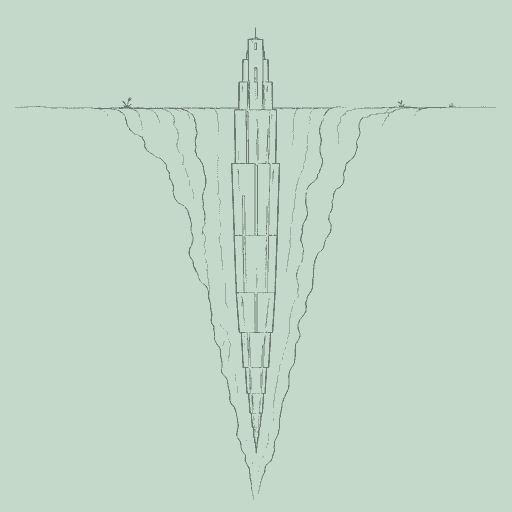
Acceptance concludes the narrative arcs established in its predecessors, Annihilation and Authority, though it was later followed by a fourth novel, Absolution (2024), which functions as both a prequel and a continuation. The first novel, Annihilation, introduces Area X, a quarantined coastal region that has defied human understanding for decades. It follows the 12th government-sponsored expedition into this region, composed of four unnamed women, as they venture into an ecosystem that is both pristine and deeply uncanny. The narrative takes the form of the biologist’s journals, as she in turn reads her husband’s journal from the previous expedition. Her husband and all other members of that expedition returned abruptly, with no memory of where they had been or how they had gotten back. Within a few months, all were dead from cancer. The 12th expedition, too, ends in disaster, with all members dying or being subsumed into the uncanny ecosystem. Only the biologist survives to explore the strange topographical anomaly—a tower-like structure extending into the earth—and confront the alien entity known as the Crawler.
The second novel, Authority, shifts focus to the failing government agency charged with studying the phenomenon. The story is told from the perspective of John Rodriguez, or “Control,” the new director of the Southern Reach, who finds himself navigating a labyrinth of bureaucratic decay, institutional paranoia, and secrets kept by his own superiors. As Control investigates the failed expeditions and the biologist’s strange return, he uncovers the agency’s corruption and incompetence. He conducts interviews with the biologist, who insists that she is not the biologist and wishes to be called “Ghost Bird.” Ghost Bird is a perspective character in Acceptance, where she reveals that she is a copy of the biologist created by the Crawler.
Acceptance brings together the narrative threads of the first two novels by shifting between past and present, revealing the origins of Area X through the stories of the lighthouse keeper who becomes the point of origin for the alien organism that is Area X, the original director of the Southern Reach, and the final journey of Control and the biologist’s duplicate. These first three books, initially conceived as a trilogy, were published in quick succession in 2014. A fourth book, Absolution, was published a decade later, in 2024. In this fourth installment, billed as both a prequel and a sequel, a team of scientists enters the remote, wetland ecosystem that will later become Area X. Their brief is to study alligators, but they are soon attacked by carnivorous rabbits, and all members of the expedition develop symptoms of mental illness. In Acceptance and Absolution, the series evolves from a mystery of what Area X is to an origin story explaining how it came to be.
Geographical or Physical Context: Florida’s St. Marks National Wildlife Refuge
The uncanny landscape of Area X is directly inspired by a real location: the St. Marks National Wildlife Refuge in North Florida. Established in 1931, the refuge is one of the oldest in the United States and covers over 83,000 acres of coastal habitat along the Gulf of Mexico. Author Jeff VanderMeer, who has frequently hiked in the area, draws on its distinct ecosystems to create the novel’s setting. In her introduction to the 10th anniversary edition of the novel, H is for Hawk author Helen Macdonald notes that the coast in the book is a reimagining of “the complex mosaic of habitats that make up the St. Marks National Wildlife Refuge” (xviii). The novel’s descriptions of “sedge weeds and moss” (xvii), cypress swamps filled with “black water,” and vast salt marshes directly reflect the terrain of St. Marks. The refuge’s immense biodiversity, including hundreds of bird species, alligators, and black bears, provides a real-world basis for the teeming, mutable, and overwhelming wildlife of Area X. This grounding in a tangible place amplifies the novel’s unsettling atmosphere. By rooting the bizarre transformations of Area X in a recognizable environment, VanderMeer blurs the boundary between the familiar and the alien, suggesting that the natural world, even one untouched by supernatural forces, contains a power and complexity that can defy human attempts at comprehension and control. The real landscape of St. Marks thus serves as the foundation for the novel’s exploration of nature as an enigmatic and formidable force.
Scientific Context: The Anthropocene and Ecological Anxiety
The concept of the Anthropocene—a proposed geological epoch defined by humanity’s profound and often destructive impact on the planet—provides a critical framework for understanding Acceptance. Popularized by atmospheric chemist and Nobel laureate Paul Crutzen in 2000, the term reflects scientific consensus that human activities like industrialization, pollution, and deforestation have become the dominant forces shaping Earth’s geology and ecosystems. This idea fuels contemporary ecological anxiety, a widespread concern over issues like climate change, mass extinction, and the possibility of irreversible planetary damage. Crutzen and the biologist Eugene F. Stoermer lay out their definition of this epoch in the 2000 paper “The Anthropocene,” published in the International Geosphere-Biosphere Programme’s Global Change Newsletter.
The novel allegorizes these anxieties through its depiction of Area X. The anomalous zone acts as an invasive, transformative presence that mirrors the insidious and overwhelming nature of ecological collapse. As Helen Macdonald writes in her introduction, “one reading of Area X is as a displaced, reworked, urgent version of [the climate emergency]” (xix). VanderMeer himself has endorsed this interpretation, suggesting that “mapping elements of the Anthropocene via weird fiction may create a greater and more visceral understanding” of an era where environmental consequences are felt “in and under the skin” (xv). Area X, therefore, is not merely an alien invasion but a reflection of a world being fundamentally and frighteningly remade by forces that humans have unleashed but can no longer control.

Get in-depth, chapter-by-chapter summaries and analysis from our literary experts.
- Grasp challenging concepts with clear, comprehensive explanations
- Revisit key plot points and ideas without rereading the book
- Share impressive insights in classes and book clubs