Acceptance
Acceptance
A modern alternative to SparkNotes and CliffsNotes, SuperSummary offers high-quality Study Guides with detailed chapter summaries and analysis of major themes, characters, and more.
Summaries & Analyses
Quizzes
NEWReading Tools
Symbols & Motifs
Content Warning: This section of the guide includes discussion of illness and death.
The Lighthouse
The lighthouse is the novel’s central symbol, representing the catastrophic failure of human systems of knowledge and safety when confronted by an incomprehensible power. Traditionally a beacon of guidance and rational order, the lighthouse becomes the point of origin for a world that subverts and dismantles every system of knowledge humans use to try to understand it. For Saul Evans, the lighthouse is initially a refuge where he finds peace in routine, but it becomes the site where Area X’s influence enters him through the immortal plant, initiating the loss of his identity. The Séance & Science Brigade also uses it as a base for their flawed experiments, a futile attempt to rationalize the uncanny.
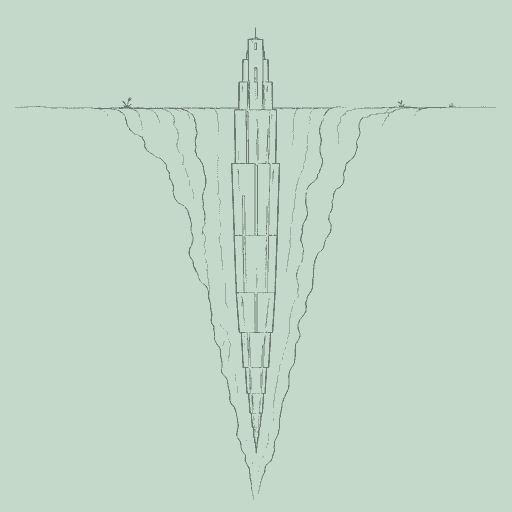
The novel deepens this symbolism through the lighthouse’s uncanny double, the subterranean Tunnel/Tower, an inverted beacon that descends into the earth. While the lighthouse represents humanity’s upward-striving attempt at empirical mastery, the Tunnel/Tower symbolizes a descent into the unknowable. With its ability to produce bioluminescent words in its “skin,”—words that vanish as fast as they appear and are often illegible or incomprehensible—it evokes the biblical Tower of Babel, an allegory for humanity’s futile effort to attain Godlike omniscience. Saul’s final transformation into the Crawler inside this space confirms that both structures serve as conduits for Area X. The repeated destruction of the lighthouses, as in Saul’s vision of a “thousand lighthouses burned to columns of ash” (197), symbolizes the complete collapse of humanity’s claim to understanding and control, leaving only the ruins of its failed attempts.
The Brightness
The recurring internal sensation of a “brightness” is a motif that represents the process of assimilation by Area X, charting the dissolution of the human self into something that transcends it. Far more than a simple infection, the brightness is a form of alien consciousness merging with its host, and each character’s response to it illuminates the novel’s core themes. For Saul, it begins as a “sliver” of light that grows into a sermonizing fire, rewriting his mind. For Control, it manifests as a sickness and a psychic pull that he resists until his final, desperate act of surrender.
The biologist, however, provides the most intimate account, describing how “the brightness had gathered to form a hushed second skin over me, that skin cracking from my opening eyes like the slightest, the briefest, touch of an impossibly thin layer of ice” (158). Her eventual decision to stop fighting and allow it to consume her is a pivotal expression of the theme Acceptance as a Survival Strategy. The brightness functions as the internal, biological marker of Area X’s power, demonstrating that resistance is not only futile but also a misunderstanding of the phenomenon. Survival requires not defeating the brightness but surrendering to the radical transformation it brings.
Journals and Written Accounts
The constant creation, discovery, and ultimate failure of journals, notes, and official reports is a motif illustrating the inadequacy of language to capture and control the reality of Area X. This textual obsession embodies humanity’s rational, bureaucratic approach, which proves entirely inadequate. The Southern Reach is built on this system, generating mountains of data that lead only to confusion and more expeditions, directly serving the theme of The Failure of Knowledge as a Form of Control.
The narrative itself is structured as a collection of these fragmented, unreliable accounts—Saul’s terse log entries, the Director’s memories, and the biologist’s journal. The biologist is herself self-conscious about this futility, reflecting that writing is “like trying to restart an engine that has rested for years, silent and rusting” (155). This meta-commentary suggests that language itself is a broken tool. The most potent symbol of this failure is the massive, rotting pile of expedition journals found in the lighthouse—a century of human observation, analysis, and suffering reduced to a decaying mound that offers no answers. The motif critiques the hubris of believing that an incomprehensible phenomenon can be contained through documentation, highlighting the limits of rationalism when faced with the sublime.

Unlock the meaning behind every key symbol & motif
See how recurring imagery, objects, and ideas shape the narrative.
- Explore how the author builds meaning through symbolism
- Understand what symbols & motifs represent in the text
- Connect recurring ideas to themes, characters, and events