Acceptance
A modern alternative to SparkNotes and CliffsNotes, SuperSummary offers high-quality Study Guides with detailed chapter summaries and analysis of major themes, characters, and more.
Summaries & Analyses
Quizzes
NEWReading Tools
Summary and Study Guide
Overview
Jeff VanderMeer’s Acceptance (2014) is the final novel in the Southern Reach trilogy, a work of speculative fiction that concludes the narrative arcs of Annihilation and Authority. The novel is a key work in the literary subgenre known as the New Weird, blending elements of science fiction, ecological mystery, and body horror. Shifting between multiple timelines, the story reveals the origin of Area X, a mysterious and expanding zone of ecological transformation that has long baffled a covert government agency. The plot follows the intertwined fates of a lonely lighthouse keeper from the past; the secret-keeping director of the agency; a biologist who disappears during one of the agency’s expeditions into Area X; and that biologist’s doppelganger, a duplicate created by Area X, who retains the biologist’s memories while understanding herself as a separate consciousness. All these characters are drawn toward the anomaly’s center as they seek an understanding of its mysteries. The novel explores themes of Acceptance as a Survival Strategy, The Failure of Knowledge as a Form of Control, and The Illusion of a Fixed Identity.
The Southern Reach trilogy brought VanderMeer widespread recognition and became a New York Times bestseller; the first book, Annihilation, won both the Nebula Award and the Shirley Jackson Award. The uncanny landscape of Area X is directly inspired by the St. Marks National Wildlife Refuge in North Florida, an area VanderMeer has frequently hiked. This grounding in a real ecosystem connects the trilogy to contemporary ecological anxiety and discussions of the Anthropocene, a proposed geological epoch defined by humanity’s destructive impact on the planet. In 2018, Annihilation was adapted into a critically acclaimed film directed by Alex Garland.
This guide refers to the 2024 MCD Picador 10th Anniversary paperback edition.
Content Warning: The source text and this guide contain depictions of graphic violence, illness, death, and suicidal ideation.
Plot Summary
Acceptance is the third and final novel in Jeff VanderMeer’s Southern Reach trilogy, following Annihilation and Authority. The story weaves together four narrative strands set across different time periods, all converging on Area X, a mysterious and expanding zone of ecological transformation formerly known as the forgotten coast. The novel’s interleaving timelines gradually reveal how Area X was created, what it wants, and what becomes of the people drawn into its orbit.
The prologue returns to a scene from Annihilation: A character referred to as “you” lies dying on the beach near a lighthouse. She is the Director of the Southern Reach, the covert government agency tasked with studying Area X, and the psychologist of the 12th expedition into Area X. As a woman referred to as the biologist tends to her, she remains conscious of the need to maintain the persona she has created for herself within the agency. After she dies, her consciousness dissolves into the landscape, carried aloft by an alien presence that begins an interrogation she cannot refuse.
The first of the novel’s four rotating perspectives belongs to Saul Evans, a former preacher, and is set years before the creation of Area X. Saul serves as a lighthouse keeper on the forgotten coast. He has found peace in his solitary routine and in a quiet relationship with Charlie, a local fisherman. His tranquility is disrupted by Henry and Suzanne, two members of a fringe research group called the Séance & Science Brigade (S&SB), who hold a permit to conduct experiments around the lighthouse’s largest lens. A nine-year-old girl named Gloria, the bold daughter of a local doctor, regularly visits the lighthouse and distrusts the researchers.
One day, Saul notices a strange glittering at the base of an unfamiliar plant on the lighthouse grounds. When he reaches for it, something enters his thumb through his glove, though no puncture wound appears. Over the following weeks, he develops worsening symptoms: numbness, dark shapes in his peripheral vision, and involuntary fragments of a sermon spilling from his mind. During a prophetic dream, he descends a tunnel beneath the lighthouse and sees green-gold words being written on the walls, words that emanate from his own mouth.
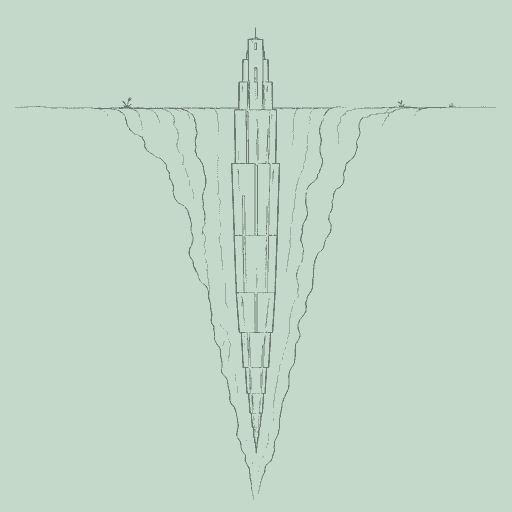
Saul enters the lantern room to investigate an extinguished light and discovers Henry, Suzanne, and an unidentified, armed woman. He forces them out. At the village bar, he spots Henry across the room, and the space darkens and warps around Henry’s figure. After Henry vanishes, the bar descends into horror: The piano player’s fingers shatter against the keys, musicians convulse, and patrons die. Something is broadcasting through Saul on frequencies beyond hearing. He flees to the lighthouse, where the plant is now in full bloom, its white petals radiating light that communicates with light pouring from his own body. He falls into the blossom and loses consciousness. When he wakes, Henry and Suzanne lie dead. Another Henry, impossibly alive, stands above him with a gun, claiming to have killed Suzanne and his own double. They struggle and fall from the lighthouse railing. Saul survives, cushioned by whatever now inhabits him. He drives into the remote wilderness as the transformation crests. His last human thoughts are of Charlie and Gloria. Then his consciousness resets, looping back to the opening lines of his first chapter. Saul has become the origin of Area X, his body the instrument that will write the words on the walls of the topographical anomaly, a living structure that descends like a tower into the earth.
The second perspective, narrated in second person, belongs to Gloria, the director, who was once the girl who played on the rocks near Saul’s lighthouse. After the forgotten coast became Area X, her father concealed her origins. She changed her name to Cynthia, earned a psychology degree, and infiltrated the Southern Reach, only to be discovered by Jim Lowry, the sole survivor of the first expedition into Area X. Lowry, now powerful at Central, the agency overseeing the Southern Reach, used this secret as leverage for decades.
Frustrated by years of failed expeditions, Gloria secretly crosses the border into Area X with Whitby Allen, a sensitive, intuitive Southern Reach scientist whom others view as eccentric. Inside the topographical anomaly, she descends alone and finds Saul Evans fused to the wall, glowing with dark blue light, speaking to her as if she were still a child. She flees. Whitby, meanwhile, encounters and kills his own doppelganger in the lighthouse, where they recover a strange, indestructible plant and a nonfunctional cell phone from the double’s backpack.
When Lowry discovers the unauthorized trip, Gloria is summoned to his facility, where she also meets Jackie Severance, a Central insider whose father, Jack Severence, once ran the S&SB as a covert side project. She keeps her position, but at the cost of deeper entanglement with Lowry. She eventually confronts him and forces him to admit the cell phone is his, from the first expedition, meaning Area X retained and returned it. Diagnosed with terminal cancer, the director conceals her illness and organizes the 12th expedition, selecting the biologist, an antisocial field ecologist whose husband entered Area X on a prior expedition and never truly returned. At the border, the director removes the linguist, whom Lowry has subjected to extreme psychological conditioning, telling the terrified woman she can go home. The director crosses the border one final time, carrying a letter to Saul. The narrative circles back to her death on the beach. The letter, reproduced at the novel’s end, tells Saul it was not his fault and that acceptance moves past denial.
The third perspective follows Ghost Bird, the biologist’s doppelganger created by Area X, who enters Area X through an underwater passage with Control (John Rodriguez), the director’s replacement at the Southern Reach. They walk for days toward a distant island, debating the nature of Area X. Control is deteriorating, infected by a transformative force called the brightness and haunted by psychological programming Lowry implanted.
On the island, they find Grace Stevenson, the former assistant director, who has been living alone for three years, though they believed she had only been gone for a matter of weeks. This reveals that time passes more quickly inside Area X than outside. Grace produces the biologist’s final journal, written over 30 years of solitude. This journal becomes the novel’s fourth narrative perspective, with the biologist—through the frame of the journal—narrating her experiences in Area X. The biologist describes discovering remnants of the S&SB’s operations, finding an owl she suspects is her transformed husband, and using deliberate pain to suppress the brightness within her. She observed alien celestial phenomena that convinced her she might not be on Earth. Ghost Bird, Grace, and Control confront this revelation: If Area X can manipulate genomes and move entire biospheres, camouflaging a sky is trivial. The critical question is not what Area X looks like but what its purpose is.
The biologist arrives at the island as a vast, luminescent creature the size of a hillside, covered in hundreds of glowing eyes. Ghost Bird touches her and, through their shared gaze, recognizes not monstrosity but beauty.
The group returns to the mainland and descends into the topographical anomaly. Ghost Bird confronts the Crawler, the enormous entity that writes words on the tower walls. She plucks a golden sphere from its orbiting halo and receives a vision of Area X’s origin: a catastrophic event destroyed an alien biosphere, and a single engineered organism fragmented across space, eventually becoming inert within the glass of a lighthouse lens. Activated, it began carrying out biological functions whose ecological context no longer exists. Each word on the wall is a world, a conduit to somewhere else. Grace shoots Ghost Bird through the back, but Ghost Bird is unharmed. She turns to find that Control has slipped past her, crawling toward the blinding white light at the tower’s bottom. Gravely injured and transforming, no longer fully human, he leaps into the light, going where the biologist never reached.
Ghost Bird and Grace emerge and walk for days toward the former border. The Southern Reach building is half-collapsed and overgrown, breathing with its own ecology. No soldiers remain, no checkpoints. Ghost Bird takes Grace’s hand, and they walk forward, throwing pebbles at the air to find the outline of a border that may no longer exist. The novel ends with them still walking, the question of what lies beyond left open.

Get in-depth, chapter-by-chapter summaries and analysis from our literary experts.
- Grasp challenging concepts with clear, comprehensive explanations
- Revisit key plot points and ideas without rereading the book
- Share impressive insights in classes and book clubs
Related Titles
By Jeff VanderMeer