Acceptance
A modern alternative to SparkNotes and CliffsNotes, SuperSummary offers high-quality Study Guides with detailed chapter summaries and analysis of major themes, characters, and more.
Summaries & Analyses
Quizzes
NEWReading Tools
Character Analysis
Content Warning: This section of the guide includes discussion of illness, graphic violence, and death.
The Director (Gloria)
The Director, whose birth name is revealed to be Gloria, is a tragic protagonist whose leadership of the Southern Reach is defined by a deep, personal connection to Area X. Because she grew up on the forgotten coast, which later became Area X, her professional mission is inextricably linked to a private, lifelong quest to understand what was lost. This emotional investment compromises her leadership; extorted by Lowry, she becomes complicit in his destructive methods while simultaneously pursuing her own secret agenda. Her identity is fractured among her childhood self, her cold institutional persona, and the secret compulsions that drive her. This internal conflict illustrates The Failure of Knowledge as a Form of Control, as her attempts to manipulate outcomes are consistently undermined by the personal history she cannot escape.
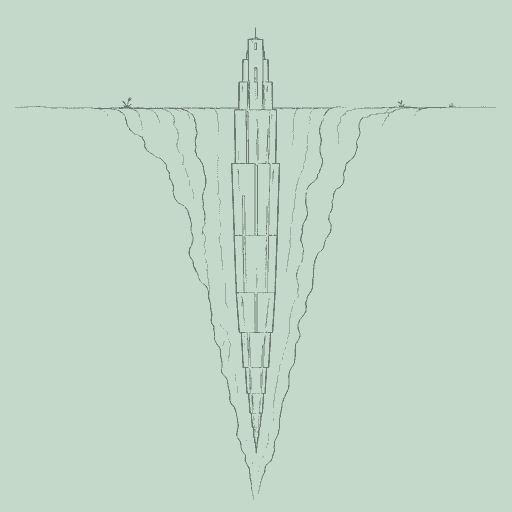
Gloria’s defining trait is her relentless, obsessive drive for answers. This compulsion leads her to undertake an unauthorized, unsanctioned expedition into Area X with the scientist Whitby. This journey is not for the institution but for herself, a desperate attempt to understand what Area X is by descending into the abyss that the scientists term the “topographical anomaly.” The mission ends in trauma when she confronts the transformed lighthouse keeper, Saul Evans, an apparition from her childhood who is now a part of the anomaly itself. This encounter shatters any illusion of control she might have possessed. Her subsequent decision to lead the 12th expedition herself, while concealing a terminal cancer diagnosis, is a final, fatalistic act. It is a surrender not to Area X, but to her own past and the impossibility of her mission. Her death near the lighthouse is portrayed as a kind of release. She feels a “strange relief mixed in with the regret” (3), finally coming to rest after a life spent fighting an incomprehensible force.
Ghost Bird
Ghost Bird, a doppelgänger of the 12th expedition’s biologist, serves as a primary protagonist and embodies the theme of The Illusion of a Fixed Identity. Created by the Crawler, she begins her existence in a state of purgatorial confusion, burdened by memories that are not truly her own. Her journey is one of self-creation, as she consciously works to build an identity separate from that of her human original. She navigates Area X not as a scientist imposing order, as the biologist was, but as a native organism guided by instinct and an innate connection to the environment. This approach allows her to perceive the territory as a functioning ecosystem rather than a hostile anomaly to be conquered. She tells Control, “You’ve never walked through an ecosystem that wasn’t compromised or dysfunctional, have you?” (32), highlighting the limited perspective of humans, who have only experienced ecosystems damaged and distorted by human activity.
Her relationship with Control is central to her development. She acts as his reluctant guide and protector, as she is much better equipped to survive within Area X than he is. Her instinctual connection to Area X—unlike most humans, she does not view Area X as an adversary or try to resist it—makes her an embodiment of Acceptance as a Survival Strategy. However, she resists his attempts to connect with her on a human level, as that would mean accepting a past and an identity she rejects. Her goal is not to reclaim a lost humanity but to forge a new existence. This is why she insists her purpose is not to provide a resolution. When Control suggests she might be the answer the Director was looking for, she corrects him: “I’m not an answer. I’m a question” (37). Her encounter with the transformed biologist, the monstrous leviathan, is a pivotal moment. Instead of recoiling in horror, she recognizes a kinship, a shared post-human state. Ghost Bird represents the potential for a new form of life, one that finds its purpose not in resisting Area X, but in becoming a part of it.
Control (John Rodriguez)
John Rodriguez, or Control, begins the narrative as the archetypal institutional man, an agent sent from the mysterious Central to impose order on the failing Southern Reach. His name is deeply ironic, as his story chronicles the complete and total loss of control over his mission, his environment, and his own self. Manipulated by both his mother, Jackie Severance, and his handler, Lowry, Control’s initial confidence is built on a foundation of lies and secrecy. As he investigates the Southern Reach, his faith in the system erodes, revealing the rot at its core and forcing him to confront the catastrophic ineffectiveness of bureaucracy against an incomprehensible force.
Control’s journey into Area X with Ghost Bird marks the complete deconstruction of his identity. He serves as a foil to Ghost Bird; where she is instinctual and adaptive, he is analytical and resistant, clinging to the fragmented report written by Whitby as an anchor to his rational worldview. His infection by the “brightness” initiates a terrifying biological transformation that mirrors his psychological collapse. He initially fights this change, viewing it as a corruption of his humanity. However, through his interactions with Ghost Bird and his direct experiences with the alien landscape, he slowly moves from resistance to a state of surrender. His final act is a conscious choice that embodies the theme of acceptance as a survival strategy. By willingly jumping into the light at the bottom of the tower, he abandons his mission of control and embraces his own dissolution, completing his transformation from an agent of a failed institution into a part of the unknowable.
Saul Evans
Saul Evans, the lighthouse keeper, is a gentle, solitary figure who becomes the tragic catalyst for the events that create Area X. A former preacher, he finds a quiet peace in the practical, inward-looking duties of maintaining the lighthouse, a life that contrasts sharply with his former need to project himself onto the world. His character is defined by a quiet decency, evident in his tender romantic relationship with Charlie and in his paternal affection for the young Gloria. His life on the forgotten coast is a self-imposed exile from a past he found hollow, and his contentment adds pathos to his eventual fate.
The turning point for Saul is his accidental infection by a fragment of an alien entity, an event unknowingly observed by Henry of the Séance & Science Brigade. This contact initiates a slow, terrifying transformation that manifests as both physical illness and prophetic, sermon-like visions that he cannot control. The words that pour from him are not his own, but the genesis of the script that will later cover the walls of the tower. His descent culminates in a violent climax at the lighthouse, after which he transforms completely into the entity known as the Crawler. Saul’s story is one of forced, unwilling assimilation. He does not choose his fate but has it thrust upon him, making him the foundational tragedy upon which the mystery of Area X is built.
James Lowry
James Lowry is the primary antagonist, a shadowy and manipulative figure from Central who orchestrates the Southern Reach’s failures from a distance. As the sole survivor of the first expedition, his psyche is shaped by his traumatic encounter with Area X. Instead of seeking understanding, he becomes obsessed with control and containment, viewing himself as the top military commander in a war against Area X. He embodies the theme of the failure of knowledge as a form of control, using extortion, psychological conditioning, and brainwashing to maintain his power and ensure that each expedition serves his hidden agenda. He holds the Director’s secret past over her head, forcing her to be complicit in his increasingly destructive plans.
Lowry’s motivations are rooted in his own unresolved trauma. His militaristic language—vowing to “coil things so far up inside Area X's brain, things that'll have a sting in the tail. That'll draw blood. That'll fucking make the enemy know we're the resistance” (133)—is a pathological attempt to fight back against the force that broke him. He relives his own horrifying experience by projecting it onto others, creating damaged, unreliable agents and perpetuating a cycle of disaster. He is a man trapped by his own past, whose refusal to accept what happened to him makes him a corrupting influence on everyone he touches.
Grace Stevenson
Grace Stevenson, the Assistant Director, functions as the Director’s pragmatic and loyal second-in-command. She is a grounded, capable administrator who often serves as an “external moral compass” for the increasingly obsessed Director (48). While she aids the Director in her clandestine plans, her loyalty is ultimately to the well-being of the Southern Reach and its staff. When the border expands and the institution collapses, Grace’s resilience and training allow her to lead a small group of survivors into Area X. Her survival there for three years transforms her into a hardened, paranoid, but still capable leader.
On the island, Grace represents a form of human endurance that stops short of the radical transformation embraced by the biologist or Ghost Bird. She adapts to survive but clings fiercely to her human identity and her memories of the world she lost, symbolized by the worn photograph of her girlfriend. Her initial distrust of Control and Ghost Bird stems from this hardened perspective; she has learned that in Area X, nothing can be taken at face value. She is a crucial narrative link, bridging the final days of the Southern Reach with the endgame inside Area X.
Whitby Allen
Whitby is a brilliant scientist whose holistic theories about Area X are far more insightful than the rigid doctrines of the Southern Reach science division. He correctly intuits that Area X acts “a bit like an organism” and that it has its own motivations (43), providing the Director with the intellectual framework to justify her unorthodox methods. Eager to test his ideas, he willingly joins the Director on her secret mission into Area X, an experience that proves psychologically devastating. His violent encounter with his own doppelgänger in the ruined lighthouse is a literal manifestation of the psychological fragmentation caused by the anomaly, leaving him a broken and haunted man.
After his return, Whitby becomes a tragic figure, his genius overshadowed by trauma. He retreats into his work, but his behavior becomes increasingly eccentric, exemplified by his clandestine care for a mouse he keeps in the Southern Reach building. His account of the immortal plant blooming in the night, an event with no other witnesses, further blurs the line between his genuine insight and potential hallucination. Whitby serves as a cautionary tale about the intellectual and psychological costs of confronting a reality that defies human comprehension.
Henry and Suzanne
Henry and Suzanne are members of the Séance & Science Brigade, a group attempting to study the strange phenomena of the forgotten coast. They represent a flawed and arrogant fusion of superstition and science, dictating statements into bulky tape recorders and speaking of concepts like “necromantic doubling” and “ghost energy.” Their presence is intrusive and unsettling to Saul, and they act as unwitting catalysts in his transformation. It is Henry’s obsessive search for a supernatural anomaly at the lighthouse that leads him to discover, and likely facilitate, the alien presence that infects Saul. Their eventual deaths inside the lighthouse serve as a grim testament to the danger of their amateurish meddling with forces far beyond their understanding.
The Biologist
Though she only appears in her transformed state, the original biologist is a powerful presence in the novel. Having fully embraced the “brightness,” she has become a massive, alien leviathan that is more a force of nature than a character. This monstrous yet beautiful creature embodies the ultimate outcome of acceptance as a survival strategy, representing a complete dissolution of the human self into a new, sublime form of life native to Area X. Its consciousness is vast and unknowable, and its periodic appearances are instinctual, elemental events rather than acts of aggression. For Ghost Bird, the biologist is both a terrifying precedent and a point of connection, a mirror showing the transcendence that she too may achieve. This possibility both inspires and terrifies her.
Charlie
Charlie is Saul Evans’s partner, a local fisherman whose presence in the narrative grounds Saul in a world of simple, human connection. He is pragmatic and loving, offering Saul a refuge from the isolation of his duties at the lighthouse and the increasingly strange intrusions of the Seance and Science Brigade. His character embodies the modest contentment that Saul loses, serving as a reminder of what is destroyed when Area X is born.

Unlock analysis of every major character
Get a detailed breakdown of each character’s role, motivations, and development.
- Explore in-depth profiles for every important character
- Trace character arcs, turning points, and relationships
- Connect characters to key themes and plot points
Related Titles
By Jeff VanderMeer