Acceptance
Acceptance
A modern alternative to SparkNotes and CliffsNotes, SuperSummary offers high-quality Study Guides with detailed chapter summaries and analysis of major themes, characters, and more.
Summaries & Analyses
Quizzes
NEWReading Tools
Prologue-Part 1Chapter Summaries & Analyses
Content Warning: This section of the guide contains discussion of graphic violence, illness, and death.
Part 1: “Range Light”
Prologue Summary: “000X: The Director, Twelfth Expedition”
The Director of the Southern Reach lies dying on a beach in Area X, propped against a crumbling wall near the lighthouse. Blood leaks from a gash in her forehead and from her shoulder, wounds from a confrontation in the tower. A familiar voice whispers, asking if her house is in order, but she ignores it.
The biologist, a member of the 12th expedition, appears and gives her water. The Director asks about the surveyor, who remains at base camp. As they talk, the Director loses the ability to speak. The biologist apologizes, takes a tissue sample from the infected shoulder, and searches the Director’s pockets, finding a journal, a gun, and a letter. She expresses anger at the Director for withholding information, then leaves.
The Director’s consciousness dissolves into the landscape, taken up by an alien presence. She soars over Area X—over lakes, marsh, and sea—before wheeling back toward the lighthouse. Looking down, she sees her own body leaking green light. A voice tells her she is not down there but up here, and an interrogation will continue until she surrenders every answer.
Part 1, Chapter 1 Summary: “0001: The Lighthouse Keeper”
The narrative shifts back in time by many years. On a cold winter morning, Saul Evans, the lighthouse keeper, walks to the lighthouse after spending the night at his partner Charlie’s cottage. A former preacher who fled his ministry in the north, Saul has found peace in the practical work of maintaining the lighthouse and its grounds.
At the lighthouse, he finds two members of the Séance and Science Brigade waiting: Henry and Suzanne. The pair investigates both scientific and paranormal phenomena and has permits to conduct research in and around the lighthouse, though Saul finds them tiresome. They discuss theories about the beacon, mentioning a phenomenon they call “necromantic doubling,” though they don’t explain what this means. Saul positions them inside the lantern room, deliberately placing them on a rug that conceals a trapdoor to a hidden room that houses the obsolete machinery that controlled the light in a pre-electronic era.
While working on the grounds, Saul encounters Gloria, a nine-year-old girl who often visits the lighthouse. She claims her ancestors lived where the lighthouse now stands and says she doesn’t like the brigade members or their strange equipment.
Later, Saul notices something glittering at the base of a plant. When he reaches for it, something seems to pierce his thumb, though he finds no mark or puncture. Henry appears suddenly, scanning the ground eagerly, and his questioning leaves Saul unsettled.
Part 1, Chapter 2 Summary: “0002: Ghost Bird”
The narrative shifts forward to a time after the failure of the 12th expedition. On their third day in Area X, Ghost Bird and Control walk through the marshes during winter. The man calling himself Control is the new Director of the Southern Reach. His name is John, but he insists on being called Control, which Ghost Bird views as a self-protective gesture. Ghost Bird is a copy of the biologist who entered Area X in the 12th expedition. The biologist did not return from that expedition, but a physically identical duplicate returned in her place. This duplicate calls herself Ghost Bird.
Ghost Bird reflects on her journey. She felt truly alive only when she and Control emerged from the ocean into Area X, an experience that proved she was a new being rather than the biologist’s duplicate. At dusk, she experiences visions of a starfish acting like a compass, drawing her onward.
Ghost Bird spots an orange flag tied to a reed in the marsh. They investigate and find a skeleton in the mud, seemingly part human and part some other animal, possibly a pig. Ghost Bird recognizes it as belonging to the psychologist from the 12th expedition, whose body was transformed before her death. Its advanced decay is unnatural for the time frame, suggesting that Area X accelerates decomposition. Ghost Bird senses a living energy emanating from the skeleton’s eye sockets, as if Area X itself is examining her through them.
Control quotes from a report by Whitby, a Southern Reach scientist, about humanity being condemned or ignored by Area X. Ghost Bird dismisses much of it as nonsense, arguing that Area X operates on biological principles humans barely comprehend and may not even recognize human consciousness. As they continue walking, storks above them wheel in synchronized patterns across the sky.
Part 1, Chapter 3 Summary: “0003: The Director”
Years before the 12th expedition, the Director of the Southern Reach maintains two refuges from her demanding job: weekends at Chipper’s Star Lanes, a bowling alley and bar where she disguises herself as a long-haul trucker, and rooftop sessions with her closest friend in the Southern Reach, assistant director Grace Stevenson, where they brainstorm ideas about Area X, using private nicknames for its features.
As data from Area X grows increasingly incomprehensible, Jim Lowry—a survivor of the first expedition now working at Central—exerts growing control over the Southern Reach. He holds leverage over her: He knows she grew up on the forgotten coast, which became Area X, a secret that would end her career.
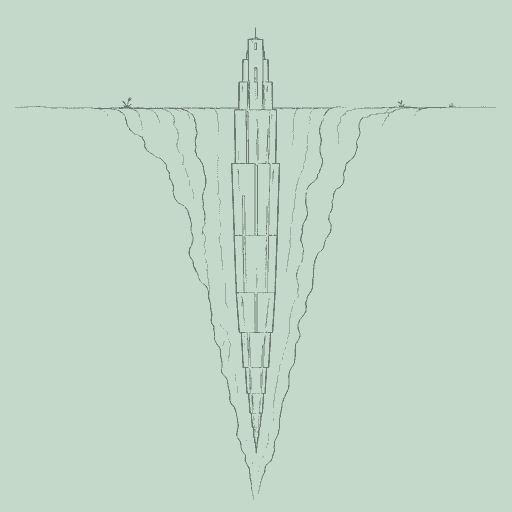
The Director proposes a secret trip into Area X to Grace. Though Grace helps plan it, she cannot accompany her. Whitby eagerly volunteers. They cross the border through a corridor of shooting stars and distortion, and inside Area X, the Director recognizes landscapes from her childhood. They reach the topographical anomaly—an inverted tower that descends into the earth, its walls made of living flesh. The Director notices that it breathes slowly, as if asleep. Whitby refuses to descend.
The Director enters alone, descending spiral stairs lined with words that appear on the walls in glowing blue and then disappear. She does not read the words, as she believes that their purpose is to distract and disorient her. Deep inside, she finds a human figure fused to the wall: Saul Evans, the lighthouse keeper from her childhood. As she touches him, she experiences a strange, invasive sensation in her head. Though he doesn’t open his eyes, she senses that he recognizes her. He warns her to get off the rocks because the tide is coming in—an echo of a warning he issued to her when she was nine years old and playing on the rocks at the shore beside his lighthouse. From below, a vast light rises. Saul’s eyes open. Above, Whitby screams.
Part 1, Chapter 4 Summary: “0004: The Lighthouse Keeper”
A week after the incident with the plant, Saul spends a night with Charlie at the lighthouse and reflects on the increasingly unnerving Séance and Science Brigade.
The next day, Gloria visits and tells Saul he seems different. She mentions that Old Jim, the village bar’s proprietor, reported a fire on the abandoned Failure Island. Using the lantern room telescope, Saul confirms that the ruined lighthouse on the island is burning. In the lantern room of his own, functioning lighthouse, he also discovers glass fragments on the floor and a small fissure in the lens—damage he believes Henry and Suzanne have caused.
When Saul confronts them about the lens damage, they deny responsibility. A volunteer named Brad Delfino arrives, and Henry and Suzanne insist on a group photograph. Henry reveals that he knows Saul used to be a preacher. Just before the photo is taken, Suzanne tells them to say “no secrets.” Saul notices black spots drifting in his vision and feels increasingly uneasy about the strange couple.
Part 1, Chapter 5 Summary: “0005: Control”
Control recalls their violent arrival in Area X. They exploded from an underwater corridor into a school of fish, which were attacked by a massive shark. As Control began to drown, Ghost Bird pulled him to the surface and resuscitated him, then immediately insisted on going to the island rather than the lighthouse.
Now, on their third day, Control is sick and disoriented, following Ghost Bird through the marshes. He quotes from Whitby’s report to engage her; she brushes this off, arguing that Area X operates on principles humans barely grasp.
Their discussion grows tense when Control questions whether she is a compromised copy. Ghost Bird challenges him to use hypnosis on her if he doubts her. He admits he’s lost and following someone he doesn’t truly know. She says she would tell the original biologist she made mistakes but that she loves her, and that Ghost Bird must work things out for herself.
The tension breaks when a strange, ribbon-like presence appears high in the sky. Ghost Bird forces Control down as a terrible whispering pierces through him. When the presence vanishes, a storm follows, raining dark tadpole-like things that disappear into the soil. Afterward, they continue walking closer together than before.
Part 1, Chapter 6 Summary: “0006: The Director”
The Director and Whitby, having survived their encounter in the topographical anomaly, reach a place she used to visit when she was a child. Back then, she called it the farthest point as a child—a place where she once felt utterly alone and at peace. The feeling fades as they arrive at the ruins of her mother’s cottage, now just a floor and two walls overgrown with vegetation.
Inside, she finds evidence that people lived there even after Area X was created. She reflects on her mother, who would have fought or fled if possible, and remembers watching her walk the beach at night as if searching for answers. She finds no message, nothing she had hoped for. Frustrated and upset, she pushes past Whitby and heads for the lighthouse.
Part 1, Chapter 7 Summary: “0007: The Lighthouse Keeper”
Saul reflects on his failed ministry and how he fled south after realizing he valued the performance of preaching more than its meaning. A week after the plant incident, he experiences numbness and sees ambiguous and unexplained objects in his peripheral vision. He visits Trudi Jenkins, Gloria’s mother and a doctor, who finds no mark from the supposed sliver but notes his elevated blood pressure and slight fever.
Returning to the lighthouse, Saul sees a pulsing red light coming from Failure Island. That night, while monitoring the beacon, he falls asleep and has a vivid nightmare. He dreams that the moon is dying and plummeting to Earth while bodies litter the landscape. Henry appears, speaking words into his mind about God’s new kingdom. Inside the lighthouse, Saul finds a vast tunnel spiraling down. As water rushes in and the moon falls, he descends underwater, where he sees fiery green-gold words being written on the walls—words coming from his own mouth, unraveling his brain.
He wakes sitting outside the lighthouse with no memory of getting there as a sermon about sin and death pours out of him involuntarily.
Part 1, Chapter 8 Summary: “0008: Ghost Bird”
After the storm, Ghost Bird and Control reach the coast near the island. They find evidence of a military confrontation: abandoned weapons, burned vehicles, and bones in old uniforms, with massive gouges in the landscape as if something monstrous had emerged from the sea. On the shore, they discover a rowboat that appears to have been waiting for them.
Despite Control’s hesitation, Ghost Bird insists that they row to the island before dark. The ruined lighthouse dominates the island’s skyline. As dusk falls, Ghost Bird whispers that she feels watched.
They reach the broken dock, follow a worn path through the overgrown grounds, and enter the lighthouse. Inside, by matchlight, they see a figure sitting halfway up the spiral staircase—a Black woman in army fatigues aiming a rifle at them. She says, “Hello, Control,” but ignores Ghost Bird, who recognizes her from the Southern Reach: Grace Stevenson, the assistant director.
Part 1, Chapter 9 Summary: “0009: The Director”
Shortly after her unauthorized trip into Area X, the Director is summoned to Lowry’s secret facility—a former military base with replicas of the lighthouse and base camp. Lowry confronts her about crossing the border, reminding her that he holds leverage over her because he knows that she grew up on the forgotten coast and concealed this during her hiring.
Flashbacks confirm that the Director’s childhood name was Gloria—the same Gloria who played on the rocks near Saul Evans’s lighthouse when she was nine. She changed her name to Cynthia to infiltrate the Southern Reach, but Lowry discovered her secret during her interview and covered her tracks in exchange for information and favors. Over the years, he used this leverage to control her, building his own influence in the organization. Eventually, he supported her bid for director, believing that he would be able to run the Southern Reach in secret through her.
Jackie Severance, a powerful figure from Central, arrives and asks the Director to tell her what happened on the trip. They decide to classify the trip as never having happened. The Director receives a six-month suspension, but she and Whitby will keep their jobs, with the stipulation that the Director will be held responsible for any trouble Witby causes in the future. Lowry will control training for the next expedition.
During her suspension, the Director is haunted by memories of the lighthouse in Area X. She remembers that Whitby went upstairs and fought what he claimed was his doppelgänger; she found him bloody in the watch room, surrounded by journals, with no trace of the supposed duplicate. In what Whitby claimed was the duplicate’s backpack, they found a strange plant and a damaged cell phone.
Part 1, Chapter 10 Summary: “0010: Control”
Control wakes on the lighthouse landing to find Grace reading his salvaged pages from Whitby’s report. When he tries to retrieve them, she presses a gun to his head and demands to know if he is real, warning him not to use names and saying she can recognize Lowry’s conditioning.
After lowering the gun, Grace reveals that she drugged Ghost Bird with a sedative and recounts the fall of the Southern Reach: Central abandoned them, and she shot the Director’s returning doppelgänger. She led survivors to the mainland lighthouse following prior orders, but the plan failed—some personnel transformed, others struck out for the tunnel and vanished, and factions formed. When Control asks why she didn’t return across the border, Grace shouts that there is no door anymore.
Ghost Bird wakes, seemingly unaffected by the sedative, and immediately asks if Grace has seen the biologist. Grace grows evasive, then asks Control if he knows how long she (Grace) has been on the island. She reveals that she has been there for three years, shocking both Control and Ghost Bird, whose understanding is that only two weeks have passed since the border shifted.
Ghost Bird says she doesn’t believe her. Grace pulls out a sheaf of yellowing, handwritten pages and throws them at Ghost Bird’s feet, identifying them as the biologist’s last will and testament.
Prologue-Part 1 Analysis
The novel’s interleaving timelines emphasize The Illusion of a Fixed Identity. The narrative shifts between the Director’s covert operations, Ghost Bird’s present navigation of the marsh within Area X, and Saul’s peaceful life at the lighthouse on the Forgotten Coast—a peace that is about to be shattered by the earliest stirrings of what will become Area X. Saul’s prophetic dream, in which he descends a flooded tunnel and involuntarily recites an alien sermon, marks the gradual overwriting of his consciousness. The dream’s vivid imagery—a dying moon, corpses littering the landscape, fiery words emerging from his own mouth—prefigures the biological horror to come. Conversely, Ghost Bird acknowledges her status as a duplicate of the original biologist and feels truly alive only after emerging into Area X. By juxtaposing these separate but overlapping storylines, the text illustrates that identity is not a fixed state but a permeable and ongoing process shaped by environmental forces. Ghost Bird embraces her constructed nature rather than resisting it, building a new self apart from her predecessor. She walks the marshes with an instinctive confidence that Control lacks. Saul’s forced metamorphosis, however, represents a tragic erasure of his human individuality. This juxtaposition reinforces the narrative’s broader exploration of post-human existence, demonstrating how human consciousness is ultimately assimilated by a vast, unreadable ecological system.
Within this unreadable system, the symbol of the lighthouse exposes the theme of The Failure of Knowledge as a Form of Control. A beacon symbolizing rational order and empirical mastery—a fixed point of light allowing ships to navigate dangerous waters in darkness—the lighthouse is perverted by Area X into a site of infection and instability. In Saul’s timeline, the Séance & Science Brigade uses the structure to conduct flawed, arrogant experiments on the uncanny. Members Henry and Suzanne damage the lens and speak in hypnotic tones, treating the building as a laboratory for pseudo-scientific investigation. Later, the Director and Whitby undertake an unauthorized expedition to the topographical anomaly—a subterranean inversion of the lighthouse—which yields only trauma after Whitby’s violent encounter with his own duplicate. The covert nature of the Director’s trip, driven by her hidden childhood connection to the forgotten coast, further demonstrates how institutional frameworks fracture when confronted by an incomprehensible reality. Lowry’s manipulation of the Director from his secret facility at Central embodies the same destructive mindset: He treats people as programmable tools to force answers from Area X, a habit that will become even clearer in subsequent chapters, as he directs the training of the scientists who will comprise the 12th expedition. This failure of authority underscores the limits of human knowledge, suggesting that established systems of power, which rely on deception and domination, are fundamentally unequipped to manage crises that reject conventional logic.
Just as the lighthouse fails to impose spatial order, the recurring motif of journals and written accounts highlights the futility of language in capturing the reality of Area X. As he navigates the unpredictable marshland, Control clings desperately to the fragmented pages of Whitby’s theoretical report, quoting sections to Ghost Bird in an attempt to make sense of their environment. Meanwhile, the Director’s descent into the anomaly brings her face-to-face with Saul fused to the wall, illuminated by “a dark blue glow that emanates from within” (57). His words to her—“You need to get off the rocks. The tide’s coming in” (58)—are the same words he said to her when she was the nine-year-old Gloria playing at the shoreline near the lighthouse. This echo collapses the temporal distance between the Director’s childhood and her present reality, making clear that her past remains integral to her identity despite the radical changes that have taken place around and within her.
Finally, after revealing Area X’s unpredictable distortion of time, Grace produces the biologist’s yellowing journals. The reliance on these physical documents represents a desperate attempt to impose a human narrative over a mutable, invasive environment. Saul’s transformation turns language into a biological contagion, stripping it of its rational utility and weaponizing it against his own mind. Set against a backdrop directly inspired by the teeming biodiversity of Florida’s St. Marks National Wildlife Refuge, this textual obsession emphasizes that humanity’s profound impact on the natural world has unleashed forces that can no longer be controlled or entirely deciphered by scientific documentation. The recurring failure of these records mirrors contemporary anxieties about human impacts on natural ecosystems.
While written language fails to catalog the anomaly, the motif of the brightness establishes an internal biological marker of assimilation that necessitates the theme of Acceptance as a Survival Strategy. The Director fights this assimilation until her dying moments on the beach, where her consciousness is depicted “dissolving into the wind” under the pressure of an alien interrogation (7). Control similarly resists the brightness pulling at his mind, seeking comfort in old hierarchies and missions while enduring violent hallucinations. In contrast, Ghost Bird intuitively accepts her connection to Area X. Upon discovering the rapidly decaying skeleton of the moaning creature she encountered alive during the 12th expedition, she senses an alien regard studying her through the bones but remains composed, navigating the dangers of the landscape instinctively. The stark contrast in how characters respond to this internal pull illuminates the test this environment imposes on all those who enter it. Resistance, whether through the Director’s strict adherence to her cover identity or Control’s intellectualization, only deepens their suffering. Ghost Bird’s lack of opposition allows her to integrate more successfully with the wilderness. The narrative thus subverts traditional survival tropes by presenting assimilation as a necessary evolutionary tactic in the face of an overwhelming ecological remaking.

Get in-depth, chapter-by-chapter summaries and analysis from our literary experts.
- Grasp challenging concepts with clear, comprehensive explanations
- Revisit key plot points and ideas without rereading the book
- Share impressive insights in classes and book clubs