Acceptance
A modern alternative to SparkNotes and CliffsNotes, SuperSummary offers high-quality Study Guides with detailed chapter summaries and analysis of major themes, characters, and more.
Summaries & Analyses
Quizzes
NEWReading Tools
Part 3, Chapters 11-19Chapter Summaries & Analyses
Content Warning: This section of the guide contains discussion of graphic violence, illness, death, and suicidal ideation.
Part 3: “Occulting Light”
Part 3, Chapter 11 Summary: “0011: Ghost Bird”
Ghost Bird reflects on the biologist’s journal, feeling both anger and awe at inhabiting another’s memories. She decides she is a viable mutation, not an anomaly.
At dusk on the island, Grace says they have all been like astronauts. Ghost Bird has read the biologist’s journal but distrusts accounts she hasn’t witnessed herself. She asserts that they cannot be on Earth, given the time distortion. Grace confirms this was a Southern Reach theory. Control suggests a wormhole; Grace dismisses this theory as absurd and urges him to be more subtle in his thinking. Control realizes that they were wrong when they thought that objects degraded rapidly in Area X—instead, time itself moves faster. He is angry, unable to comprehend why this information was not made available to previous expedition teams. Grace explains that the Southern Reach lacked reliable data because returning expeditions were so damaged. Ghost Bird adds that time dilation likely intensifies when Area X shifts.
Control questions the reliability of the biologist’s conclusions. Grace validates the theory through her own observations: Like the biologist, she has seen strange stars and rifts in the sky. Grace proposes that Area X itself is an organism or group of organisms, and the important questions concern the organism’s purpose and how to survive within it. Control insists that Area X’s only purpose is to destroy humanity, but Ghost Bird is unconvinced. She theorizes that the border functions as a membrane that sends anything touching it elsewhere, and that Area X’s transformations might be a form of communication humans cannot comprehend.
From the window, Ghost Bird observes ruined buildings and fresh crosses and wonders whether other people followed Grace to the island and died. She feels increasingly separate from Grace and Control. Control spirals into a rant about secrecy at Central; Ghost Bird comforts him until he subsides.
Ghost Bird asks where the biologist is now. Grace confirms that she is alive and coming to the island. A deep sound rises as the biologist materializes on the hillside; she has become a vast, luminous creature that topples trees as it approaches. Grace and Control flee downstairs while the enormous form pushes against the lighthouse, its song nearly unbearable.
Ghost Bird remains at the window. The creature’s back reaches the windowsill, revealing whale-like features, barnacles, scars, and hundreds of glowing, flower-like eyes—Ghost Bird’s own eyes staring up at her. She reaches through a shimmering layer and touches the creature’s skin. In that instant, she sees herself through the biologist’s perspective across multiple locations and horizons. She understands that the creature is not monstrous but beautifully designed, capable of living on land and in the sea, of traveling between remote places without regard for borders.
Part 3, Chapter 12 Summary: “0012: The Lighthouse Keeper”
Saul dreams of burning lighthouses on a monster’s head and wakes with fever, head pressure, and verse spilling into his thoughts. Charlie is away for another week on a night-fishing job. Hearing whispering in the lighthouse, Saul takes an ax and climbs the dark stairs, noticing the lens has gone silent—the light is out.
In the lantern room, he finds Suzanne, Henry, and an unfamiliar woman in an overcoat and red scarf near the extinguished lens. He turns on the lights and confronts them with the raised ax. Henry tells him to go back to sleep. Saul accuses them of trespassing and turning off the light. Henry approaches and urgently whispers for him to leave. Suzanne speaks in a hypnotic tone, commanding Saul to put down the ax and sleep. Resisting, Saul swings the ax into the floorboards and orders them out. Henry agrees to leave; the woman gives Saul a mysterious smile as they descend. After switching the lens back on, Saul finds no sign of them outside—only a faint motorboat running without lights and a pulsing red dot from the island.
Henry reappears alone at the door. He confesses that he made the hole in the lens because he believed there was “something” inside. He did so without Suzanne’s knowledge because Suzanne does not share his conviction that some spiritual presence haunts the lighthouse. He accuses Saul of knowing the truth about the lighthouse and keeping it secret. When Saul asks about the strange woman, Henry tells him to forget he saw her, then walks away into the night.
Part 3, Chapter 13 Summary: “0013: Control”
Control lies amid debris from the wall the biologist-creature destroyed, playing dead as the creature probes the room. The creature forces him to see Lowry’s manipulations and his mother’s complicity, along with hazy childhood memories, then rejects and withdraws from him. Control weeps on the floor, feeling that control is meaningless.
Later, Grace finds him and returns his father’s carving. On the landing, Control is overwhelmed by their distance from Earth and wonders if Central monitored his childhood memories. He recalls two lost days at Central before his assignment, which his mother dismissed as paranoia. Grace bandages his injuries and confirms that he can still move. When Control asks what the biologist shared with Ghost Bird and what side she is on, Ghost Bird reveals that the biologist destroyed the convoy. Grace confirms this and explains that she has learned to avoid the creature. Control suggests they give in and wait as the biologist did; Ghost Bird replies that the biologist earned the right to choose her fate.
Ghost Bird suggests that they need another way out besides the hole in the sea. Tearing pages from Whitby’s document, Control proposes that they go back into the tower and neutralize the Crawler. Ghost Bird calls it a “suicide mission,” but Control clings to the hope that the director believed the Crawler could be changed. Grace says they have one advantage no one else had: Ghost Bird, the sole copy of the director’s last plan.
Part 3, Chapter 14 Summary: “0014: The Director”
The Director receives a framed photograph from Lowry, showing the Director as a child with the lighthouse keeper and his assistant. His note makes clear that he intends to extort the Director, since the photograph is evidence that she grew up inside what is now Area X. She orders Grace to pull all files on Jackie Severance and her son, John Rodriguez (identified as “Control” in the Ghost Bird chapters), to find their connection to Lowry.
She reflects on returning from Area X with an indestructible plant and a nonfunctional cell phone. The plant is found to be unkillable; samples go to Central and Lowry. At a status meeting, Whitby suggests it is not actually a plant. He later shares theories about quantum mechanics and inter-organism communication. The old phone cannot be made to work, and Lowry insists she keep it.
Lowry announces another eleventh expedition—that is, another expedition in what will come to be called the eleventh cycle of expeditions—with a device implanted in the psychologist’s brain to enhance his memory and enable Lowry to surveil the team. Twelve months later, the expedition returns, but they are no longer themselves, and their memories are hazy; 18 months later, all are dead of cancer. Morale worsens. Jackie Severance begins visiting regularly as Central’s emissary, questioning the Director.
The Director paints the words from the topographical anomaly on a hidden wall in her office and draws a map of Area X, including the Southern Reach itself. Grace finds her painting and expresses concern. The Director tells Grace she is ordering the last eleventh expedition’s bodies exhumed, and Grace offers to help paint the map. On the rooftop, Grace asks if this is all part of a plan, and the Director lies that it is. She dreams of a centuries-long war between Central and Area X.
Part 3, Chapter 15 Summary: “0015: The Lighthouse Keeper”
While walking on the beach, Saul experiences a vision of a burning object falling from the sky, creating a massive wave that destroys him. At the vision’s center, he sees the eight-leaved pattern of the strange plant that pricked his thumb. The vision ends, leaving the world restored but Saul deeply shaken.
He sits by a tidal pool on the rocks, trying to recover. Gloria finds him there. After sitting together in silence, they have a lighthearted conversation, and Gloria tells Saul what the lighthouse teaches her: to work hard, keep clean, be honest, and be nice to people. They begin using first names with each other for the first time.
Gloria says she is leaving to stay with her father for two months because her mother lost her second job. As her mother arrives to pick her up, Saul helps Gloria to her feet. She says goodbye and asks him to save the tidal pool for her. As she runs off, Saul impulsively shouts for her not to forget him and to take care of herself. She waves and says something he cannot hear before disappearing. In the tidal pool below, Saul observes a fish with a small red crab in its mouth.
Part 3, Chapter 16 Summary: “0016: Ghost Bird”
Ghost Bird, Control, and Grace reach the mainland by boat in late afternoon. They observe the lighthouse, scorched by fire, with its lens extinguished. Grace explains that the border commander burned it along with the journals inside, though Ghost Bird senses that Grace is still withholding details. Grace tosses the biologist’s island account and journal through the open door, and they move on without entering.
As they travel inland, Control and Grace discuss what they miss. Grace mentions standing on the Southern Reach rooftop with the Director, making plans. Ghost Bird feels increasingly separate from them and contemplates her allegiance to the Director and the lighthouse keeper. She muses that the biologist’s transformation was the only correct response and that language is ultimately futile.
They discuss Grace’s theory that walking across the border leads somewhere different than going through the door. Ghost Bird recalls the devastation she saw in the corridor into Area X and wonders if it was real. As they travel through the marsh, they smell burning, and Ghost Bird sees something moving through the sky that the others cannot perceive.
Part 3, Chapter 17 Summary: “0017: The Director”
One spring day, about four months after the last eleventh expedition member died, the Director sees Whitby by the swamp lake, washing a small brown mouse with intense care. She reflects on his apparent recovery over recent months.
She asks about the mouse, and he says he found it in the attic at home. Whitby then reveals that the immortal plant bloomed the previous night in the storage cathedral—a translucent white flower that disintegrated within an hour. He took no photos because he thought it would last longer.
The Director instructs him to write a report for her eyes only and tells him he cannot bring the mouse into the building again. She visits the storage cathedral in a purification suit and examines the plant, finding no evidence of a flower—only residue that later tests as pine resin from a previous sample. She wonders if the bloom existed only in Whitby’s mind and decides to put the plant under constant surveillance. She recognizes she is chained to Whitby just as Lowry is tethered to her.
A week later, at a bar, she reflects on Whitby’s choice not to name the mouse, comparing it to Southern Reach expedition protocol of referring to expedition members by their roles rather than their names, which leads her to consider the files for a 12th expedition, with the biologist’s file on top.
Part 3, Chapter 18 Summary: “0018: The Lighthouse Keeper”
Saul’s journal mentions wildlife sightings and more sermon fragments. Feeling better after his illness, he goes to the village bar, where Charlie has saved them a table before his night-fishing trip. Charlie mentions catching strange sea creatures he threw back, then tells Saul that a friend saw the Science and Séance Brigade on Failure Island loading boxes into motorboats heading west along the coast.
Saul feels watched and spots Henry standing across the room by the door. As Saul stares, the room darkens, light gathers around Henry, and the band’s music distorts. Saul feels vertigo and a return of the symptoms he felt shortly after being pricked by the strange plant. He forces himself to look away, and the room returns to normal. When he looks back, Henry is gone.
Worried by Saul’s odd behavior, Charlie asks if he is okay. Struck by a premonition, Saul urges Charlie to leave for his trip. He holds Charlie for an extra moment, trying to preserve the feeling, before Charlie departs into the night.
Part 3, Chapter 19 Summary: “0019: Control”
In a feverish state the night before reaching the topographical anomaly, Control thinks about the biologist unlocking something inside him and the light at the tower’s bottom. Lying on pine moss with Ghost Bird holding him, he tells Grace it would not have mattered if she had told him everything at the Southern Reach. He recalls his father’s advice about passion and knowing when to move on.
In the morning, they see smoke and fire on the horizon and hear sounds like gunfire. In a reflection on the water, Control sees a distorted vision of soldiers attacking one another. Grace and Ghost Bird debate who should descend into the tower; Ghost Bird insists she should go alone.
At the entrance to the topographical anomaly, Control takes command. He orders Grace to stand guard at the top with the rifles and tells Ghost Bird she will accompany him but that he will lead the way. He sets a three-hour limit; if they are not back by then, Grace is released from responsibility. Grace agrees and warns them to hold on to whatever is in their heads now, because going down may leave nothing of it.
Control wonders what is coiled in his head and how it will affect the outcome, noting that his true goal is not to reach the Crawler but to understand the brightness that came with him. Control and Ghost Bird descend into the tower.
Part 3, Chapters 11-19 Analysis
The encounter between Ghost Bird and the transformed biologist enacts the same blending of science and spiritualism prefigured by the Séance & Science Brigade. The biologist’s new form represents an evolutionary progression, but one so far beyond anything yet seen on earth that it embodies religious and spiritual notions of transcendence and the sublime. When the biologist arrives at the island as an enormous, luminous creature covered in glowing eyes, Ghost Bird reaches out to touch the entity and recognizes “the glory of good design” (196). She experiences a shared gaze that allows her to perceive herself through the creature’s multiple shifting perspectives across various locations and horizons. The massive form possesses whale-like features, barnacles, scars, and hundreds of flower-like eyes—all replicas of Ghost Bird’s own, since Ghost Bird herself is a replica of the biologist. This profound connection illustrates the theme of The Illusion of a Fixed Identity. By recognizing the inherent beauty in the biologist’s radically altered state, Ghost Bird embraces her own nature as “a viable mistake—a mutation” (185), distancing herself emotionally from the fully human anxieties that plague Control and Grace. The dissolution of the boundary between the original human and the Area X-native entity signals that assimilation into this ecosystem expands the self rather than erasing it. She understands that the creature “could transition not just from land to water but from one remote place to another, with no need for a door in a border” (196). In other words, the biologist has transcended the limitations that have defined humans’ interactions with Area X from the beginning. This psychological integration aligns with the broader theme of Acceptance as a Survival Strategy, demonstrating that transcending conventional human form is a highly effective adaptation. In a landscape that fundamentally alters biological reality, survival requires relinquishing inherited limitations in favor of radical ecological integration.
The recurring internal sensation of the brightness operates as an invasive biological and psychological marker that forcefully dismantles the host’s autonomy. In the present timeline, Control feels the brightness attempting to escape his bones following the biologist’s psychic intrusion, leaving him fundamentally weakened. The creature’s probe forces him to confront repressed, hazy memories of Jim Lowry’s psychological conditioning, revealing how his internal reality has been externally manipulated. He weeps on the floor amid debris from the wall the creature destroyed, abandoning the control that has become his identity, as represented in his chosen name. Similarly, in the past, Saul Evans endures worsening sensory distortions: Fragments of strange sermons leap into his mind unbidden, and he experiences a frightening hallucination in which the village bar physically warps and darkens around Henry. The brightness acts as an active, assimilating agent that bypasses physical defenses to overwrite the mind entirely. Control’s physical deterioration and Saul’s dizzying loss of cognitive stability emphasize the severe physiological toll of resisting this transformative power. Area X mirrors the insidious, overwhelming nature of environmental collapse, wherein humanity is subjected to planetary forces it has carelessly triggered but can no longer regulate, survive, or withstand without undergoing profound biological alteration.
The Southern Reach’s reliance on bureaucratic procedure completely fractures when confronted by Area X, highlighting The Failure of Knowledge as a Form of Control. The Director attempts to manage an inexplicable, unkillable plant specimen and Lowry’s aggressive psychological conditioning of the last 11th expedition through secretive meetings, purification protocols, and hidden maps charting Area X directly onto the agency’s walls. She paints the glowing words from the topographical anomaly across an entire office wall and sketches a detailed map of the zone. When Whitby claims that the immortal plant bloomed in the storage cathedral—producing a translucent white flower that disintegrated within an hour and left no physical residue or evidence behind—the Director must question whether the event was a genuine biological anomaly or a hallucination born of psychological trauma. She puts the plant under constant surveillance but learns nothing definitive. These institutional mechanisms prove useless against an ecosystem that defies empirical study. This epistemic breakdown—a breakdown not only of knowledge but of the underlying systems of thought that make knowledge production possible—is crystallized when Grace casually tosses the biologist’s final journal into the charred ruins of the lighthouse, abandoning the text entirely. The disposal of the journal underscores the inadequacy of human language and scientific documentation. Writing and data collection become empty rituals. The failure of these investigative tools exposes how organizations built on hierarchical deception inevitably collapse when forced to navigate an environment that rejects human reasoning.
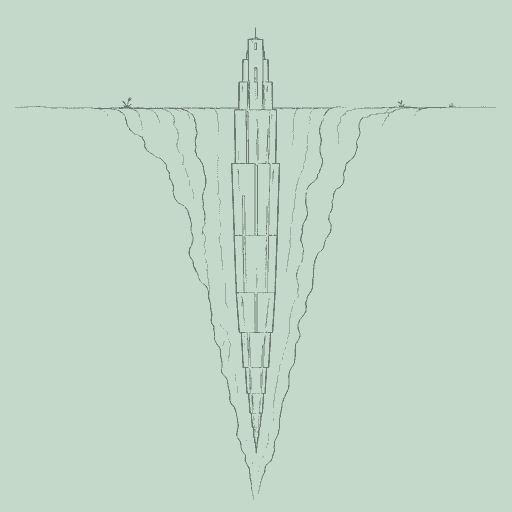
The physical decay and pervasive dread surrounding the lighthouse underscore the collapsing boundary between human reality and the expanding anomaly. The narrative structurally interweaves Saul’s past, where the fringe Séance & Science Brigade sabotages the lighthouse lens, with the present timeline, where Ghost Bird and Control approach the same structure, now scoured by fire with its light extinguished. The border commander burned the building along with the journals inside, though Grace withholds the full details from her companions. Stripped of its traditional function as a beacon of order and navigational knowledge, the symbolism of the lighthouse transforms, and it becomes a focal point for contagion and “madness,” deranging the same geography it once tamed. Saul’s prophetic nightmare of a “thousand lighthouses burned to columns of ash” foreshadows the totality of this structural failure (197). The repeated desecration of the building across timelines emphasizes that human attempts to illuminate, categorize, or master the unknown are inherently doomed. As Control and Ghost Bird turn their backs on the ruined building to descend into the subterranean topographical anomaly—an uncanny, inverted mirror of the tower—the narrative shifts the overarching focus of the trilogy. The structure ceases to be a mere landmark for field exploration and instead becomes the origin point for Area X’s colonization of the natural world.

Get in-depth, chapter-by-chapter summaries and analysis from our literary experts.
- Grasp challenging concepts with clear, comprehensive explanations
- Revisit key plot points and ideas without rereading the book
- Share impressive insights in classes and book clubs
Related Titles
By Jeff VanderMeer