Acceptance
Acceptance
A modern alternative to SparkNotes and CliffsNotes, SuperSummary offers high-quality Study Guides with detailed chapter summaries and analysis of major themes, characters, and more.
Summaries & Analyses
Quizzes
NEWReading Tools
Part 3, Chapter 20-EpilogueChapter Summaries & Analyses
Content Warning: This section of the guide contains discussion of graphic violence, illness, death, and suicidal ideation.
Part 3: “Occulting Light”
Part 3, Chapter 20 Summary: “0020: The Director”
The Director prepares to interview the biologist, one of 10 remaining candidates for the 12th expedition. She, Grace, and Lowry each advocate for their preferred candidates, while Jackie Severance shows no interest. The interview takes place in a borrowed office that Lowry’s team has redecorated to create what he claims are subliminal effects on candidates.
During the interview, the Director asks the biologist a standardized set of questions, including whether she has violent tendencies. She recalls unconfirmed intelligence linking the biologist to an assault on men who were harming an owl. The biologist states that she would kill if necessary for self-defense or to protect the mission. When asked about her husband, she says her goal is to find Area X itself, not to learn what happened to him.
The Director reviews the other finalists: a dependable surveyor, an empathetic anthropologist, and a linguist whom Lowry favors for her absolute loyalty. She recalls discussing with Whitby how keeping the biologist isolated and on edge might induce a natural biochemical state that could give her an instinctive connection to Area X before arrival. The Director feels that the biologist somehow reminds her of Area X.
At a bar, the Director decides to protect the biologist from Lowry at any cost. She privately reflects on her terminal cancer diagnosis and chooses to forgo treatment and join the 12th expedition instead.
Later, Grace shows her a line item from Jack Severance’s closed files reading “Payment request—SB, Project Serum Bliss.” The Director speculates that this ambiguous piece of evidence links the Séance & Science Brigade to Central and may explain Jackie Severance’s alliance with Lowry.
Part 3, Chapter 21 Summary: “0021: The Lighthouse Keeper”
At the village bar one evening, Saul experiences an unusual, intense hunger and consumes two large meals. After most patrons have left, his senses become distorted. He hears a pulse in his head, his sense of smell intensifies, and ordinary details seem unnaturally amplified.
The bar erupts into horror. The proprietor, Old Jim, plays piano so violently that his fingers break and bleed. One patron’s voice emerges from another’s body while blood drips from the first patron’s ear. Patrons slump unconscious or dead. Saul feels something hovering over him and broadcasting through him. People begin crawling across the floor, bashing their heads against glass, their bodies breaking apart.
Saul flees outside, unsure whether he’s hallucinating. The world outside the bar appears completely normal. He hears inhuman screams behind him but refuses to look back. He starts his pickup and drives toward the lighthouse.
Part 3, Chapter 22 Summary: “0022: Ghost Bird”
Ghost Bird descends the tower stairs with Control following behind her, moving toward a confrontation with the Crawler. When they reach it, the creature is enormous and shockingly physical—a translucent, roughly bell-shaped being with orbiting rings of strange organisms, writing its message on the wall with a single human-like arm. Ghost Bird steps into its field and takes hold of a golden sphere that detaches from its uppermost halo. The sphere emits a burst of light that penetrates her body, initiating a vision of Area X’s origin: a cataclysm that destroyed a distant biosphere, a fragmented organism that drifted through space and lay dormant in the lighthouse lens until it was released (by Henry, of the Séance and Science Brigade, when he cracked the lens), then began executing a biological function whose purpose had been lost with the annihilation of its species. Grace appears and shoots Ghost Bird, but the bullet passes through her without harm. Ghost Bird sends Grace away, then discovers that Control is no longer with her. She worries that he has slipped past her, heading deeper toward the blinding light below.
Part 3, Chapter 23 Summary: “0023: The Director”
Following Grace’s discovery, the Director reinvestigates the Séance & Science Brigade and the lighthouse but finds no record of Henry or Suzanne, two figures from her childhood who she remembers made Saul uneasy. Jackie Severance becomes unreachable. When Grace confronts her about obsessively reviewing files instead of running the agency, the Director snaps, but they later reconcile over bourbon on the rooftop. After days of mounting frustration, the Director decides to confront Lowry in person.
One month before the 12th expedition, she travels to Lowry’s headquarters. Jackie Severance assures her the biologist has experienced minimal interference from Lowry’s conditioning program, though he has focused heavily on the linguist. The Director coaxes Lowry into giving her a tour of his facility, which includes a miniaturized landscape, a fake lighthouse filled with empty journals, and a mock tunnel decorated with photographs from Area X.
Walking along the shore, the Director shows Lowry the “Project Serum Bliss” line item. He admits the Séance & Science Brigade was a covert Central project run by Jack Severance to monitor fringe groups on the forgotten coast, with Jackie’s help, and that this connection allowed him to find the childhood photograph of the Director in Central’s files. He denies that the brigade facilitated Area X’s creation, but the Director does not believe him.
She confronts him with a photograph of the cell phone found in Area X, accusing him of lying about it. When he stonewalls her, she threatens to expose the Séance & Science Brigade connection. Terrified by her suggestion that Area X wants to communicate with him, Lowry admits the phone is his. He says the first expedition was like passing through a door into a realm of spirits and stalks away. The Director knows she will never see him again.
Part 3, Chapter 24 Summary: “0024: The Lighthouse Keeper”
Saul arrives at the lighthouse to find the beacon dark and the phone lines dead. Armed with a flare gun, he climbs the stairs, which are covered in moisture and a fuzzy green phosphorescence. At the top, he discovers that the trapdoor to the watch room is open with light emanating from below.
Looking down, he sees an enormous mound of papers and notebooks. Growing from them is the plant from the lighthouse grounds, now bearing a pure white blossom that emits intense light. Saul feels light leaking from his own body in response to the flower. He is pulled forward and falls into the brilliance.
He wakes on the watch room floor. The plant and papers have vanished, replaced by what appear to be the dead bodies of Henry and Suzanne, which bear no visible wounds. Climbing back to the lantern room, he is confronted by a living Henry holding a gun. Henry claims Suzanne wanted to kill him and that he killed her and then himself, though he suggests something supernatural may have been involved.
Saul, experiencing a sense of dissociation, advances toward Henry. Henry shoots him in the shoulder, but Saul feels no pain. He rushes Henry, and they grapple toward the railing. Henry seems to pull them both over the edge while simultaneously accusing Saul of pulling them and begging him to stop. They plummet from the lighthouse together.
Part 3, Chapter 25 Summary: “0025: Control”
Gravely injured and transforming after his encounter with the Crawler, Control descends the tower stairs in extreme pain. He reflects that a hallucination of his mother held no power over him and that he has forgiven her. He understands the Crawler’s harm was unintentional—true communication between humans and Area X is impossible, as any commonality between the two species occurs only at Area X’s most primitive level.
As he continues down, he transforms further, aware that he is no longer fully human. He feels Whitby’s presence as a friend and Lowry’s as a lingering tormentor. He clutches his father’s carving, his only remaining talisman.
Reaching the bottom of the ancient stairs, he sees a blinding white light shaped like a plant. The biologist never made it this far, but he has. The identity of “Control” falls away, and his father’s carving drops from his hand onto the steps, joining the artifacts left by his predecessors.
Now simply John Rodriguez, son of a sculptor and a woman who worked in secrets, he feels the heat beneath his paws. He elongates down the final stairs and jumps into the light.
Part 3, Chapter 26 Summary: “0026: The Director”
Two weeks before the 12th expedition, the old cell phone from Area X mysteriously appears in the Director’s purse at home. That night, she hears scuttling in her kitchen. Investigating with an ax, she sees the phone moving across the floor, though it freezes when she looks directly at it. She retrieves it—the melted leather makes it feel warm and skin-like—and locks it in a metal box.
Panicking, she gathers all her research notes, takes them outside into a storm, and burns them on her grill. The act brings no relief. She collapses in the mud and rain, screaming at the darkness, before recovering and resolving to see her plan through alone.
Afterward, she stops investigating the Séance & Science Brigade and the lighthouse. At the bar, she realizes that the woman she knows as the Realtor is not actually a realtor—another regular confirms she lost her job a year ago. In the final days before the expedition, the Director moves the cell phone to her desk at the Southern Reach, keeping it as a secret memento.
Part 3, Chapter 27 Summary: “0027: The Lighthouse Keeper”
Saul wakes on the beach below the lighthouse beside Henry’s crumpled but still-living body. He realizes something protected him, transforming his fall into a gentle descent. He walks to the tidal pools and discovers that the beach is now covered with garbage, wreckage, and pollution that was never there before. The stars appear to streak across the sky at impossible speeds.
Henry appears beside him, silent, then walks away and collapses on the beach. Saul feels the transformative force inside him about to overwhelm him. To protect the coast, he gets in his truck and drives deep into the remote pine forests.
A flood of inexplicable images fills his mind: an immortal plant, falling rabbits, a woman touching a starfish, Henry receiving a signal from space. He collapses in the wilderness as the force anchors him to the ground and takes him over completely. His last human thought is to project a three-word message back toward the sea.
Some time later, he wakes on a cold winter morning, walking toward the lighthouse on an ordinary day.
Part 3, Chapter 28 Summary: “0028: Ghost Bird”
Ghost Bird and Grace walk away from the topographical anomaly, leaving the Crawler and the words behind. Ghost Bird believes Control’s entry into the light at the tower’s base was a catalyst for change and mourns his absence.
The climate in Area X has shifted from winter to hot summer. They encounter no one, and the animals seem unwary. After camping overnight, they reach the former border. The Southern Reach’s white tents are covered in mold, the army outpost is ruined, and there are no soldiers or checkpoints.
A day later, they arrive at the Southern Reach headquarters. The building is dilapidated, partially burned, and overgrown, with storks and ibises nesting on the collapsed roof. Ghost Bird senses that the building has become its own living ecosystem and that entering would be a mistake. They decide not to search for survivors.
Grace expresses fear that the world as they knew it may be gone. Ghost Bird reassures her, and they begin walking forward, throwing pebbles into the air to find the invisible outline of a border that may no longer exist.
Epilogue Summary: “000X: The Director”
The Director sits at her desk in darkness just before departing for the 12th expedition, a letter to Saul in her pocket. Whitby enters with his mouse. She has a moment of panic, and he helps her to her feet. She instructs him to stay behind and record whatever happens while Grace runs the agency.
She travels with the expedition team to the border. In the mission control tents, she watches the other members undergo final conditioning on monitors. The linguist is trembling and breaking down under Lowry’s program. The Director recognizes that Lowry conditioned her as a taunt—a substitute for the Director herself.
Choosing not to sacrifice the linguist, the Director enters the room, takes her hand, and tells her she can stand down and go home. As she speaks these words, her consciousness leaves her body and floats above Area X. Area X has finished questioning her. Her body is now on the beach with her possessions scattered around it.
Her consciousness exists for a moment before becoming nowhere and everywhere.
The full text of her letter to Saul follows. In it, she absolves him of blame, expresses appreciation for his constancy, and acknowledges that she is trying her best while caught up in something beyond understanding. She signs it as Gloria.
Part 3, Chapter 20-Epilogue Analysis
The closing chapters of the novel illustrate the ultimate collapse of bureaucratic attempts to manage the inexplicable, highlighting the theme of The Failure of Knowledge as a Form of Control. In a moment of despair, the Director gathers all her extensive research notes, takes them outside into a storm, and burns them on her backyard grill. The act brings no relief. She collapses in the mud and rain, screaming at the darkness, before recovering and resolving to see her plan through alone. She later recognizes that her remaining, unorganized documents at the agency are as useless as a “garbage heap.”
Lowry’s mock training facility reveals the futility of his efforts to force Area X to reveal its secrets. The space features a fake lighthouse filled with entirely blank notebooks, miniaturized landscapes, and a tunnel decorated with photographs. To the Director, these items are little more than toys—the best that Lowry’s approach can hope to produce is a hollow simulacrum of the mystery that remains permanently beyond his reach. Like the Director’s burned notes, Lowry’s blank notebooks demonstrate that the Southern Reach’s methodology is fundamentally empty. The Director’s frantic destruction of her notes signifies her realization that rational, language-based systems cannot map or contain Area X. Her actions mark a conscious rejection of the long deception of institutional confidence. In a broader sense, this collapse of human understanding allegorizes the ecological anxieties of the modern world. Just as contemporary institutions struggle to address anthropogenic climate change and all its far-reaching repercussions, the Southern Reach’s obsessive documentation proves useless against a natural force that defies empirical mastery, leaving human governance defenseless against an environment it can no longer regulate.
As institutional frameworks disintegrate, the narrative shifts inward to dismantle The Illusion of a Fixed Identity, using the symbol of the lighthouse to stage this biological and psychological dissolution. Once a beacon of rational order and safety, the lighthouse becomes the epicenter of Saul’s violent unraveling. After the beacon mysteriously goes dark, Saul climbs the stairs to find the watch room trapdoor open, with light emanating from below. He discovers an enormous mound of papers and notebooks, from which grows the strange plant, now bearing a pure white blossom that emits intense light. Saul feels light leaking from his own body in response to the flower and is pulled forward, falling into the brilliance. Later, after surviving a plummet from the railing while grappling with Henry—an incident in which Henry seems to pull them both over while simultaneously accusing Saul of doing it—Saul drives into the deep wilderness, where an alien presence begins to “anchor him to the ground” (325). The lighthouse is thus repurposed from a human sanctuary into a conduit for terrestrial infection. Saul’s physical and mental overwriting—marked by visions that readers of the series will recognize as imported from other consciousnesses and timelines, such as an immortal plant, falling rabbits, a woman touching a starfish, and Henry receiving signals from space—illustrates the terrifying permeability of the individual self. He does not simply die; he is reformatted into the Crawler, losing his human boundaries to become part of a vast, unreadable topography. This loss of individuality decenters the human subject, positioning the breakdown of identity as an inevitable integration into a sublime and frighteningly complex ecosystem.
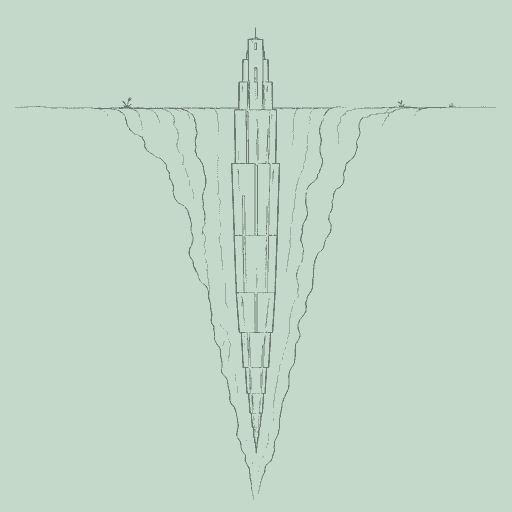
The physical mechanism of this post-human integration is represented by the motif of the brightness, which forces characters to confront Acceptance as a Survival Strategy. Throughout the narrative, assimilation into Area X is marked by this internal radiance, and Control’s final descent into the subterranean tower exemplifies the necessary surrender to it. Gravely injured and acutely aware that he is no longer fully human, Control stops fighting the transformation. He reflects that a hallucination of his mother held no power over him and that he has forgiven her. He understands that the Crawler’s harm was unintentional—true communication between humans and Area X is impossible, given the vast evolutionary gulf between the two organisms. Reaching the bottom of the ancient stairs, he sees a blinding white light shaped like a plant. The biologist never made it this far, but he has. The identity of “Control” falls away, and his father’s carving drops from his hand onto the steps, joining the artifacts left by his predecessors. By discarding this talisman and shedding his institutional identity, he achieves a state of clarity that eluded him while he operated under the Southern Reach’s mandates. The brightness consumes his old self, but his leap of faith—his body already transforming into something beyond the human, as he feels the heat “under his paws” is framed as an evolutionary transcendence (313). VanderMeer uses Control’s leap to subvert traditional survival narratives that champion human dominance and violent resistance. In an environment fundamentally altered by alien ecological forces, true survival is decoupled from bodily preservation. Instead, endurance means abandoning the illusion of control and willingly submitting to an unknowable, radical state of biological change.
The novel’s nonlinear narrative structure converges in the Epilogue to emphasize the enduring power of human connection amidst this radical environmental transformation. The text weaves the Director’s final bureaucratic maneuvers together with her cosmic dissolution, culminating in her choice to spare the terrified linguist from the 12th expedition’s psychological conditioning. In the mission control tents, she watches on a monitor as the linguist trembles and breaks down under Lowry’s program. She enters the room, takes the linguist’s hand, and tells her she can stand down and go home, an act of compassion that frees the Director from her own guilt. Her consciousness floats above Area X, and the narrative presents the full text of her hidden letter to Saul, which absolves him of responsibility for his role in the zone’s creation. Meanwhile, Ghost Bird and Grace walk toward a vanished border, accepting their new reality. By interleaving the Director’s physical death with her final acts of empathy, the structure offers her a moment of grace and redemption just as she leaves her life and identity as the Director/Gloria behind to merge with the universal consciousness, both nowhere and everywhere. The letter bridges the decades-long temporal gap between Saul’s infection and the Director’s demise, creating a localized anchor of meaning within a fractured timeline. While the trilogy chronicles the complete overriding of human biospheres and bureaucratic power, this culmination insists that personal accountability and empathy persist.

Get in-depth, chapter-by-chapter summaries and analysis from our literary experts.
- Grasp challenging concepts with clear, comprehensive explanations
- Revisit key plot points and ideas without rereading the book
- Share impressive insights in classes and book clubs