Gilded
Gilded
A modern alternative to SparkNotes and CliffsNotes, SuperSummary offers high-quality Study Guides with detailed chapter summaries and analysis of major themes, characters, and more.
Summaries & Analyses
Quizzes
NEWReading Tools
Part 2Chapter Summaries & Analyses
Content Warning: This section of the guide references graphic violence, child death, and illness or death.
Part 2: “The Hunger Moon”
Part 2, Chapter 7 Summary
As winter evening falls, Serilda is troubled by the memory of an eyeless night raven she saw earlier, considering it a bad omen. During dinner with her father, she tries to hide her anxiety, but he senses something is wrong. They exchange small talk before a knock interrupts them. Serilda opens the door to find a well-dressed ghost with an iron chisel protruding from his left eye socket. Her father slams it in panic, recognizing one of the Erlking’s servants. Serilda insists on being civil and reopens it. The ghost formally summons her on behalf of the Erlking, and her father realizes that her original story was true.
Outside waits a carriage resembling a cage, its bars formed from a beast’s intricately carved rib cage, drawn by two bull-like creatures called bahkauv. Serilda prepares to leave while her father packs food, cautioning her that the Erlking’s charm masks cruelty. Inside the carriage, a skull lantern provides warmth. The carriage lurches into the night.
Part 2, Chapter 8 Summary
The carriage travels along the Sorge River before entering the Aschen Wood. Serilda watches through the curtains as darkness thickens around them, feeling the primal fear that mortals do not belong here. She distracts herself by talking to the skull lantern.
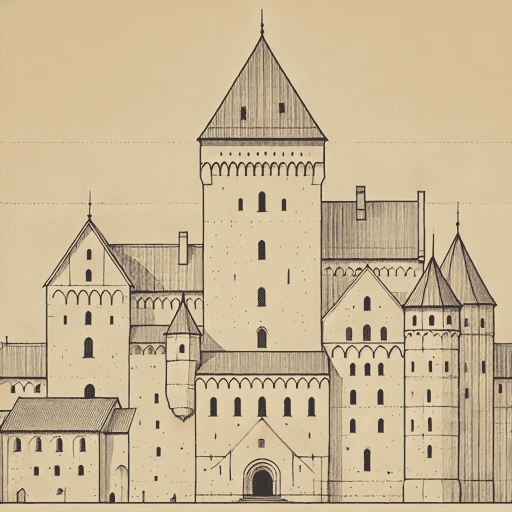
Emerging from the forest, the carriage approaches a large lake with a walled city and castle. She realizes the castle sits on an island as they cross a long bridge to reach it. In the courtyard, a hellhound breaks free from its kennel and charges her. She scrambles onto the carriage roof. The Erlking appears and kills the beast with his crossbow, then attributes the incident to a poltergeist—a word he speaks with distaste.
He approaches Serilda and explains she has arrived at Adalheid Castle, which he has claimed from the royal family. He leads her toward the keep, ordering the hunt prepared once their business concludes.
Part 2, Chapter 9 Summary
Serilda follows the Erlking into the keep, which resembles a grand hunting lodge. The great hall displays taxidermied bodies of magical beasts, including a massive mounted rubinrot wyvern above the fireplace. In the dining hall, the Erlking coldly examines Serilda and shows her a mounted hercinia bird, describing his plan to add two moss maidens’ heads beside it. He reveals he knows she lied—no one would gather straw in winter without gloves—and accuses her of mocking him and playing him for a fool.
When Serilda denies it, he gives her a test: spin a room full of straw into gold by one hour before sunrise. If she fails, he will kill her and her father and mount their heads on his wall. He orders a ghost named Manfred to take her to the dungeons.
Part 2, Chapter 10 Summary
Manfred drags a protesting Serilda toward the dungeons, warning that attempting to flee will only make the Erlking enjoy the chase. Inside her cell, she finds a large pile of straw, a spinning wheel, and empty bobbins.
She regrets her farewell with her father and realizes she left his packed food in the carriage. She attempts to spin repeatedly, but the straw breaks and fails to form thread. Defeated, she collapses into sobs. A boy’s voice asks what she is doing to the spinning wheel. She looks up to see a copper-haired boy of about her age with wild tangled hair, freckles, and simple clothes, sitting atop the straw pile.
Part 2, Chapter 11 Summary
The boy, Gild, claims he appeared through magic. He jokingly suggests Serilda must be a witch who summoned him, and when his teasing continues, she grows angry, reminding him she’s facing certain death. Gild is impressed when she confesses she lied about her ability to spin straw into gold. He offers to spin the gold in exchange for her locket, claiming the girl in its portrait seems familiar. Reluctantly, Serilda agrees to the bargain.
When Gild tries to walk through Serilda to reach the spinning wheel, they collide. He is stunned by her solidity and warmth, admitting he has never met a living person before—he can pass through ghosts but finds touching them disagreeable.
Part 2, Chapter 12 Summary
Gild begins spinning, and Serilda watches in awe as straw transforms into glistening gold thread. As they work, his fingers purposefully brush hers, creating a spark between them. To pass the time, she offers to tell a story. She begins a tragic tale: the Erlking kidnaps a princess to give to his lover, the huntress Perchta. The princess’s brother pursues them to Gravenstone Castle and kills Perchta with an arrow. Choosing revenge over saving his love, the Erlking kills the princess with a gold-tipped arrow while his hellhounds maul the prince.
Part 2, Chapter 13 Summary
Gild is horrified by the tragic ending, insisting fairy tales should have happy endings. Serilda counters that not all stories are happy, pleased she made him feel something. She notices he has finished spinning all the straw into gold.
As footsteps approach, Gild instructs Serilda to verbally confirm the task is complete to seal their magical bargain. He lifts her hand and presses it tenderly to his cheek in thanks, noticing the ring on her finger. The key turns in the lock, and Gild vanishes.
The Erlking enters, inspects the gold, and apologizes for doubting her. He deflects her questions about her mother and calls her a refreshing oddity. He says it’s a shame—if it weren’t for her unusual eyes, she might have been beautiful. He orders the gold taken to the undercroft and has Manfred settle her in the north tower. In a luxurious bedchamber, Manfred warns that the Erlking treats everyone like a cat playing with a mouse. He leaves her alone with the door to her chamber unlocked. Serilda is too exhausted to attempt escape and falls asleep.
Part 2, Chapter 14 Summary
Serilda wakes to find the luxurious bedchamber decayed into a cold, dusty ruin. The entire castle has reverted to its abandoned state, and she realizes the luxury was an illusion of the magical realm. She’s now returned to the mortal world.
Fearing she has slept for a century, she explores the ruins. A nachtkrapp watches her from the great hall. A drude—a small, horned, winged nightmare creature—attacks, slashing her cheek. Its touch induces a horrifying vision of Gild’s and her father’s heads mounted on the dining hall wall. An unseen force slams the drude away, allowing her to escape. She flees through the labyrinth and a ruined throne room before reaching the courtyard, crossing the crumbling bridge to the town. Looking back, Adalheid Castle is nothing but ruins in the mist.
Part 2, Chapter 15 Summary
In the morning light, the town of Adalheid bustles with a lively market. The townspeople react to Serilda’s appearance with fear and suspicion. She lies, claiming to be a scholar’s assistant studying ruins. An elderly woman directs her to the Wild Swan public house.
Inside, she meets Lorraine, the proprietor, who notices her golden eyes and the fresh scratch on her cheek. After Serilda’s initial lies prove unconvincing, she tells the truth: the Erlking summoned her to spin straw into gold and then released her. Lorraine is astonished that the king let her go and offers to arrange transportation to Märchenfeld with a farmer named Roland.
Part 2, Chapter 16 Summary
Lorraine’s daughter, Leyna, who’s been dared by friends to speak to the mysterious stranger, approaches Serilda, who offers to tell her story in exchange for breakfast. The town librarian, Frieda, arrives and has a flustered, flirty interaction with Lorraine. Leyna points out their obvious mutual attraction and mentions she hopes her mother finds a second great love with Frieda.
To fulfill her bargain, Serilda tells Leyna a new story: her mother was taken by the Erlking, and she came to Adalheid seeking revenge. The tale sends a chill through her. Frieda returns and gives Serilda an old regional history book before she departs.
Part 2, Chapter 17 Summary
Serilda endures an unpleasant wagon ride with Roland and 23 aggressive chickens before walking the final miles home. Her father rushes out and embraces her, overcome with relief that she’s returned. Over dinner, she recounts a slightly embellished version of her ordeal. Her father is terrified, certain the Erlking will summon her again.
He confesses that when Serilda was very young, her mother was lured away by the Wild Hunt—her body was never found. He admits he feels he trapped her mother in domesticity with his wish. Serilda wonders if her mother’s spirit could be trapped in Adalheid Castle. Her father reveals his plan: they must flee before the next full moon, the Crow Moon, and go south to Verene where the Hunt cannot follow. Serilda worries the Erlking’s nachtkrapp spies are watching, but she agrees.
Part 2, Chapter 18 Summary
As the Crow Moon approaches, Serilda and her father prepare to flee. He works in Mondbrück, secretly selling their belongings, while she spreads a cover story about attending the spring market. Walking to the schoolhouse, Serilda has an awkward encounter with Thomas. She’s happy to hear he’s engaged to marry someone else and realizes she’s no longer in love with him.
At the school, she offers the Adalheid history book to the schoolteacher, Madam Sauer, who accepts it but scolds Serilda for what she considers her latest hoax about the Erlking and warns her not to invite misfortune by telling lies. Serilda tells her she will be gone for the Crow Moon.
Part 2, Chapter 19 Summary
Serilda feels deep sadness about leaving the five children—Anna, Hans, Nickel, Fricz, and Gerdrut—her only true friends. She helps them make effigies of the seven gods for the upcoming Eostrig’s Day festival. When the children ask for a story, she begins a tale about a royal family in a castle by a lake, but her imagination feels blocked. Realizing she wants the truth about Adalheid rather than more fabrications, she asks the children to finish it instead. Their narrative dissolves into an argument.
Lost in thought, Serilda yearns for answers about the castle, Gild, and her mother. When asked if she will join the festival parade, she cannot bring herself to tell them she is leaving forever and repeats her cover story about the Mondbrück trip.
Part 2 Analysis
In this section, the dual nature of Adalheid Castle symbolizes the novel’s thematic engagement with The Façade of Beauty and the Nature of Monstrosity. On the night of the full moon, Serilda first experiences the castle as an opulent fortress on the magical side of the veil, richly decorated with the Erlking’s taxidermy trophies of magical creatures and populated by a staff of ghosts. The next morning, she wakes in the mortal realm to find the luxurious estate reduced to an empty ruin that feels “as though it had sat abandoned and untouched for a hundred years” (118). This stark contrast mirrors the Erlking’s deceptive nature, contrasting his polished, aristocratic exterior with his moral decay. The opulent illusion masks a legacy of death and suffering. By severing the link between physical beauty and moral goodness, this environmental shift subverts traditional fairytale paradigms, aligning instead with darker Germanic folklore that presents the supernatural as an inherently predatory force cloaking brutality in enchanting glamour.
Serilda’s imprisonment demonstrates both The Power and Peril of Storytelling. Her frantic lie to protect the moss maidens culminates in her confinement in the dungeon, where she faces execution if she fails the Erlking’s test. The introduction of Gild reinforces the dual significance of spinning straw into gold. Serilda complements Gild’s literal ability to spin straw into golden thread by spinning a tragic narrative about the Erlking, his paramour Perchta, and a murdered prince as Gild works. Gild’s magical thread and Serilda’s improvised tale establish a common ground between them, laying the groundwork for their love story. In Meyer’s retelling of the Rumpelstiltskin tale, the motif of spinning becomes an intricate metaphor for the burdens of imagination and the real-world consequences of deception, proving that narratives possess the power to entrap and emancipate their creators.
The magical bargain struck between Serilda and Gild highlights Finding Agency Within Restrictive Boundaries as a central theme in the story. Facing imminent death, Serilda must negotiate with the mysterious poltergeist, eventually trading her gold locket for his life-saving magic. Despite her reluctance to part with the heirloom, the exchange results in a magical bond that fulfills the Erlking’s impossible demand. By engaging in this transaction, Serilda finds agency within the rigid constraints imposed by the Erlking. She lacks the magic to spin the gold herself, yet she utilizes the rules of magical bargains to forge an alliance that saves her life. This dynamic establishes the foundational logic of the duology’s magical universe, wherein characters are routinely locked into rigid boundaries by curses or magical bargains. To survive, they must subvert oppressive rules from within, transforming desperate trades into the basis for cooperation and resistance.
In the closing chapters of this section, Serilda’s evolving relationship with her own narratives shifts her character’s focus from defensive fabrication to seeking historical truth. When her students ask for a story during their festival preparations, Serilda attempts to invent a tale about a castle by a lake but suffers an imagination block. She abruptly stops, realizing she no longer wants to “keep spinning outlandish fabrications” (181). Her inability to casually invent a fairy tale about the castle reflects the trauma of her recent imprisonment, her newfound awareness of the genuine horrors surrounding the ruins, and her unresolved questions about Gild. The protective facade of her playful lies collapses under the weight of tangible violence. This internal pivot transitions the protagonist from a passive spinner of yarns into an active seeker of truth.

Get in-depth, chapter-by-chapter summaries and analysis from our literary experts.
- Grasp challenging concepts with clear, comprehensive explanations
- Revisit key plot points and ideas without rereading the book
- Share impressive insights in classes and book clubs