Gilded
Gilded
A modern alternative to SparkNotes and CliffsNotes, SuperSummary offers high-quality Study Guides with detailed chapter summaries and analysis of major themes, characters, and more.
Summaries & Analyses
Quizzes
NEWReading Tools
Part 6Chapter Summaries & Analyses
Content Warning: This section of the guide references graphic violence, child death, and illness or death.
Part 6: “The Awakening Moon”
Part 6, Chapter 47 Summary
On the day of the Awakening Moon, Serilda stands in the neglected garden of her family’s mill, knowing she may never return. She addresses a nachtkrapp perched in her mother’s hazelnut tree, then walks to her favorite spot by the river. Sensing three nachtkrapp watching from the shadows, she delivers a message for the Erlking: she is not his possession, and this choice is her own. She pulls a vial from her pocket and drinks the potion inside. A nachtkrapp dives at her, scratching her palm and knocking the vial away, but it is too late. As her vision blurs and her pulse slows, she fumbles for an ash branch she left by the riverbank, but her grip fails. She sees the Awakening Moon rising before closing her eyes and releasing the branch.
Part 6, Chapter 48 Summary
Serilda’s spirit separates from her body, and she watches herself die peacefully. Her spirit begins to dissolve until she sees Velos, the god of death, beckoning from across the river with a lantern. She steps forward but feels the ash branch underfoot and, remembering Madam Sauer’s warning not to let go, grips it and tethers herself to the mortal world. As a spirit, Serilda spends hours unable to interact with the living. After nightfall, the Wild Hunt arrives and finds her body. The Erlking dismounts and kneels over her corpse once before the hunt departs. At dawn, Madam Sauer revives Serilda, who discovers the Erlking left a gold-tipped arrow in her hand.
Part 6, Chapter 49 Summary
Serilda tells Madam Sauer that the Erlking believes she is dead. The witch warns her to hide until the next full moon and never return to Märchenfeld. Suddenly, Thomas rides up in a panic—his brother Hans has gone missing during the night. Serilda realizes that the Wild Hunt took him and joins Thomas to search. At the Weber farm, she finds the family distraught; Anna is also missing. Understanding that the Erlking targeted the children she loves as punishment, she rides through Märchenfeld and sees signs that Gerdrut, Fricz, and Nickel are also gone. On the road to the Aschen Wood, she discovers the bodies of Anna, Fricz, Hans, and Nickel—all with their hearts torn out. Gerdrut is nowhere to be found.
Part 6, Chapter 50 Summary
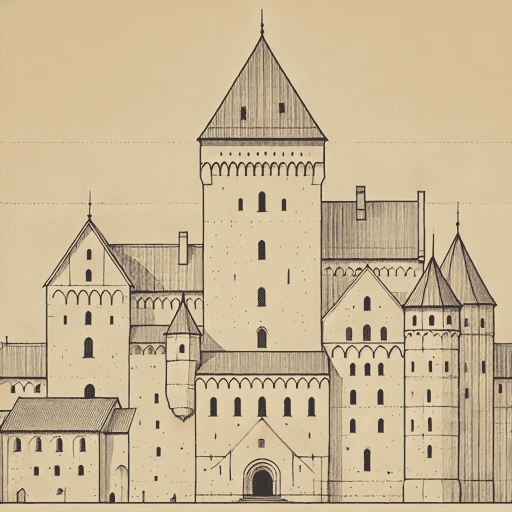
Convinced the Erlking has taken Gerdrut behind the veil alive, Serilda rides to Adalheid, consumed with guilt and rage. She confirms that no other children were taken and storms to the castle ruins. In the throne room, she reflects that her past lies—about Madam Sauer being a witch and herself being marked by Wyrdith—have come true, and wonders if her true gift is to spin stories and turn them into truth. She narrates the tale of the castle’s fall: a prince failed to save his sister from the Wild Hunt but killed the huntress, Perchta. In revenge, the Erlking massacred the castle’s inhabitants and cursed the prince with a gold-tipped arrow, tethering his spirit and erasing all memory of him and his family. Serilda realizes she has spun the story of Gild’s past. As she speaks, blood manifests in the air, forming a doorway that allows her to step through the veil.
Part 6, Chapter 51 Summary
Serilda finds herself in the pristine throne room behind the veil. The Erlking sits on his throne, flanked by the ghosts of Hans, Anna, Fricz, and Nickel. He taunts her for trying to fake her death and confirms he took the children to punish her, declaring their souls are his forever. When Serilda offers more gold in exchange for Gerdrut’s return, the Erlking mentions that the long-dead Adalheid princess was also blessed by Hulda. Serilda realizes he kidnapped the princess, believing she, not her brother, was the gold-spinner. When she could not do what he demanded, the Erlking kept the castle as revenge and hid the royal family’s ghosts to prevent the prince from recognizing them. Feigning ignorance about the prince’s whereabouts, Serilda declares she is ready to complete his task.
Part 6, Chapter 52 Summary
The Erlking leads Serilda and the children to the courtyard, where a spinning wheel sits the entire court is gathered. He announces Serilda will demonstrate her gold-spinning, threatening that Gerdrut will be his if she fails. Serilda spots Gild chained to the castle wall as punishment for stealing the bobbin of spun gold that Serilda herself took—the very gold he created to save her. Serilda sits at the wheel and attempts to spin, but the straw frays and snaps. Seeing Gild’s anguish, she remembers her bargain to give him her firstborn and realizes she has missed her monthly cycle. She tells the Erlking she can no longer spin because the magic has passed to her unborn child. Furious, he drags Serilda back to the throne room.
Part 6, Chapter 53 Summary
The Erlking summons Redmond, a ghost and former barber-surgeon, to remove Serilda’s fetus. As Redmond lays out surgical tools, Serilda argues that removing the child will not restore her magic and that killing it would squander a gift from Hulda. She claims she felt the magic leave her body and enter the child at conception. When the Erlking asks who the father is, Serilda lies and says it is a farmer from her village. After considering her argument, the Erlking relents, then loads a black-tipped arrow into his crossbow.
Part 6, Chapter 54 Summary
The Erlking fires the arrow into Redmond’s heart, destroying the ghost permanently and releasing his spirit to Verloren, eliminating the only witness who knows the Erlking is not the father of Serilda’s child. He announces he will wed Serilda on the summer solstice and claim her child as his own heir. Serilda realizes he plans to give the baby to Perchta when he captures a god on the Endless Moon and wishes for her return from Verloren. When Serilda refuses to marry him, the Erlking reminds her that he holds Gerdrut. She agrees to be his bride in exchange for Gerdrut’s freedom. The Erlking then plunges a gold-tipped arrow through her wrist, reciting the same curse from her story, and her spirit separates from her body. She is neither dead nor a ghost, but cursed like Gild, and can no longer feel her heartbeat.
Part 6, Chapter 55 Summary
The Erlking leads Serilda’s spirit to the courtyard and announces her as his future queen. As a betrothal gift, he makes the ghosts of Hans, Nickel, Fricz, and Anna her personal servants, then calls for Gerdrut, whose heart has already been torn out by the Erlking. Enraged by the betrayal, Serilda tries to retract her promise, but the Erlking silences her with a kiss and clarifies his terms: he will release all five children’s spirits to Verloren only after she gives him the child.
Part 6, Chapter 56 Summary
Serilda watches over the sleeping children and promises to free them. She finds Gild waiting with her mended cloak, and they embrace. When he asks what happened in the throne room, she carefully lies to protect the children, implying the Erlking will father her future child to gain its magic. Gild is horrified until he understands she has been cursed and trapped in the castle. She tells him her story: he is the cursed prince of the castle, his sister was the kidnapped princess, and the Erlking massacred his family and erased all memory of them. Serilda takes his hands and tells him that because he is cursed, not dead, his curse can be broken.
Part 6 Analysis
Serilda’s revelation that the stories she spins are actually true empowers her to manipulate the Erlking’s magic, setting the stage for their climactic conflict. Her narrative ability evolves into an active force capable of altering physical and metaphysical realities, pointing to The Power and Peril of Storytelling. Desperate to rescue Gerdrut, Serilda vocalizes the true history of the Erlking’s massacre and his subsequent curse on the prince. As she speaks the erased history aloud, the physical environment responds, and “a doorway framed in blood” (453) manifests in the air, parting the veil. In this scene, the act of storytelling exposes hidden truths. By narrating the forgotten tragedy, Serilda dismantles the magical amnesia imposed by the Erlking and forces the hidden world to reveal itself, suggesting that her stories are the key to unraveling the kingdom’s historical erasure. This narrative choice reflects the deep folkloric roots of the setting, in which oral tradition and the spoken word hold binding magical weight.
The Erlking’s retaliation against Serilda’s deception explicitly links his polished exterior to predatory violence, underscoring the novel’s thematic interest in The Façade of Beauty and the Nature of Monstrosity. After Serilda discovers the children’s bodies abandoned by the road, each bearing “a ragged hole where her heart had been” (440), the Erlking calmly asserts that these traumatized souls will serve in his ghostly court forever. The calculated murder of innocent children strips away any lingering ambiguity regarding the Erlking’s villainy. By contrasting the Erlking’s courtly manners with the visceral gore of the children’s deaths, the narrative subverts traditional fairy-tale expectations, establishing that monstrosity lies in the abuse of authority and the total dehumanization of others.
In the face of this overwhelming tyranny, Serilda leverages the rigid terms of magical agreements to carve out unexpected avenues of survival, reinforcing Finding Agency Within Restrictive Boundaries as a key theme in the story. When forced to demonstrate her ability to spin straw into gold before the assembled dark court, she quickly pivots her strategy and tells the Erlking she’s lost her magic because it has transferred to her unborn child. The story she tells highlights her intelligence and resourcefulness as a character, using the gifts at her disposal as weapons in her fight for survival: “Serilda gasped and looked up into the Erlking’s frosted eyes […] And that was when it came. The story. The lie. That was not entirely a lie” (470). Serilda understands that the Erlking views the child as a resource for his impending wish during the coming Endless Moon, so she constructs a lie that protects both herself and her baby. By appealing to his greed, she manipulates the bargain’s parameters to forestall her immediate execution and protect Gild from exposure. In a world where demonic contracts and divine blessings dictate existence, survival depends on exploiting the loopholes within these inflexible structures to reclaim a measure of power.
The novel’s climax alters the narrative structure by paralleling Serilda’s physical state with Gild’s historical trauma. To ensure Serilda’s compliance and secure the unborn child, the Erlking drives a gold-tipped arrow through her wrist, reciting the exact incantation he used on Gild centuries prior. In separating her spirit from her body and tethering her to the magical side of the veil, the Erlking locks her in the same liminal space as the forgotten prince. The reality of her confinement is cemented by the chilling realization that she can “no longer feel her heart beating” (484). However, by enduring the mechanics of Gild’s curse firsthand, Serilda gains the insight needed to combat it. She realizes that because they are cursed rather than truly dead, the enchantment can be broken. By transforming the protagonist into an unwilling bride and a bound spirit, Meyer lays the groundwork for the sequel, setting a new objective of breaking the ancient enchantments that hold Adalheid Castle hostage.

Get in-depth, chapter-by-chapter summaries and analysis from our literary experts.
- Grasp challenging concepts with clear, comprehensive explanations
- Revisit key plot points and ideas without rereading the book
- Share impressive insights in classes and book clubs