Gilded
Gilded
A modern alternative to SparkNotes and CliffsNotes, SuperSummary offers high-quality Study Guides with detailed chapter summaries and analysis of major themes, characters, and more.
Summaries & Analyses
Quizzes
NEWReading Tools
Part 5Chapter Summaries & Analyses
Content Warning: This section of the guide references graphic violence, child death, and illness or death.
Part 5: “The Chaste Moon”
Part 5, Chapter 36 Summary
During the weeks before the full moon, Serilda waits in Adalheid, helping at the Wild Swan Inn and gazing at the castle across the lake, longing to see Gild. She investigates old records for information about her mother’s disappearance but finds nothing—no bodies were recovered during the Mourning Moon when her mother vanished. She questions townspeople about the castle’s history and discovers a former mayor’s family journal with entire sections mysteriously removed. To earn her keep, she tells stories to growing crowds at the inn each evening, avoiding tales of the dark ones in favor of safer subjects.
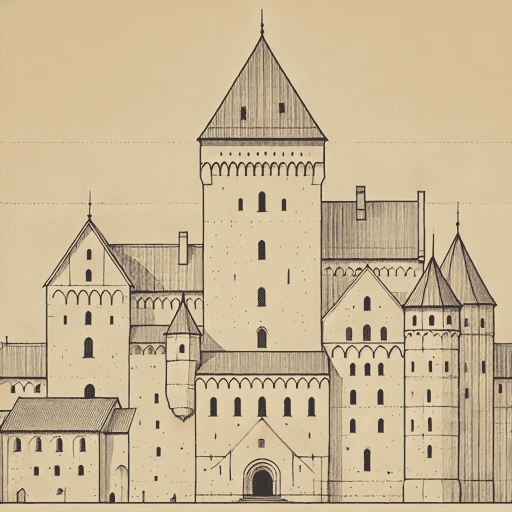
On the day of the Chaste Moon, the town grows quiet and fearful. Lorraine embraces Serilda and hopes for her safe return before sending her daughter to bed. At sunset, Serilda leaves for the castle while townspeople lock themselves indoors. The moon rises, transforming the ruins into a magnificent castle. The wild hunt storms past toward the countryside, but the Erlking remains. He praises her work, hinting at a reward, and takes the bait on a fabricated rumor Serilda plants about a beast in the Rückgrat foothills and rides off. Manfred leads Serilda to a room packed with an impossible amount of straw and locks her inside.
Part 5, Chapter 37 Summary
Gild materializes suddenly and collides with Serilda, sending them tumbling onto the straw. They share a flirtatious moment while untangling her hair from his shirt button, though Serilda questions whether her feelings are genuine or born of circumstance. She asks for his help with the straw, but, as always, his magic requires reciprocity and cannot be given freely. When he attempts to spin without payment, the straw remains unchanged. Serilda offers a lock of hair and a kiss, but Gild explains the payment must have tangible value. Growing desperate as dawn approaches, she impulsively offers her firstborn child, rationalizing that she will never have children anyway if the Erlking kills when he returns. Gild reluctantly accepts, creating a binding magical bargain, and begins spinning at double speed while Serilda assists.
He tells her he has asked the other spirits about Serilda’s mother, Idonia, but found nothing. To pass the time, Serilda continues her story about the prince: moss maidens led by Pusch-Grohla rescue the wounded prince and seal the gates to Verloren, trapping Perchta in the underworld. The prince recovers for nearly a month before departing—only to be caught outside when the wild hunt returns under a full moon.
Part 5, Chapter 38 Summary
Gild finishes spinning all the straw with time to spare, revealing he had been working slowly on previous nights to enjoy Serilda’s stories. As Serilda stacks the bobbins, she secretly pockets one wound with gold thread. They discuss what the Erlking wants with so much gold—Gild suspects nothing good but says he cannot let the king hurt Serilda. They share an intimate moment, with Serilda biting his earlobe and Gild responding with a passionate kiss. Their physical relationship escalates and they make love and fall asleep together.
Part 5, Chapter 39 Summary
Serilda wakes to find the Erlking standing over her—Gild has slipped away, leaving her cloak rolled as a pillow. The king, in unusually high spirits, leads her through the castle to his elaborate gardens and a menagerie of caged magical creatures. He reveals the hunt’s prize: a tatzelwurm captured in the Ottelien foothills, exactly where Serilda’s lie had placed it. The beast was bound with chains braided from her spun gold—the king explains that god-blessed spun gold is the only material capable of binding magical creatures. Serilda realizes with horror that her lies and her gold are enabling the Erlking’s conquests. As dawn breaks and the veil returns, she finds herself alone in the overgrown ruins of the gardens.
Part 5, Chapter 40 Summary
Exploring the ruined gardens, Serilda trips over a stone that turns out to be the head of a statue of a crowned queen. She finds the toppled remains of two headless royal figures and a broken stone hand bearing a ring with the familiar R-and-tatzelwurm seal, confirming it as a royal family crest. The statue’s base reads “This statue erected to commemorate the ascension of Queen ___ and her husband King ___” (374), but the names have been completely erased from the stone. Hearing the first screams of the ghosts reliving their deaths, she flees the castle.
Part 5, Chapter 41 Summary
Sitting on the dock in the rain, Serilda reflects on her growing feelings for Gild and whether their intimacy was too hasty, concluding she has no regrets. She discovers the stolen bobbin of gold remains real on this side of the veil. A schellenrock—a small, shell-coated river creature—emerges from the lake and beckons her to follow. It leads her through a hidden tunnel beneath the city and into the Aschen Wood.
Part 5, Chapter 42 Summary
Serilda follows the schellenrock through the dark, cramped tunnel and emerges in the forest. The creature leads her deeper into the Aschen Wood, where she takes in the somber beauty of the ancient trees. When she tries to cross a small footbridge, a salige—a malicious bridge spirit disguised as a beautiful woman—nearly lures her to her death with an enchanted invitation to dance. The moss maiden Parsley intervenes, driving off the spirit and revealing that Pusch-Grohla, the Shrub Grandmother, wishes to speak with Serilda.
Part 5, Chapter 43 Summary
Parsley leads Serilda to Asyltal, the hidden sanctuary of the moss maidens—a breathtaking village of homes built into ancient trees, lit by floating lights. She is brought before Pusch-Grohla in an amphitheater, where the ancient woman questions her sharply. Serilda explains the Erlking’s belief in her gold-spinning ability and how a ghost named Gild does the actual work. When Serilda presents the stolen bobbin, Pusch-Grohla confirms the gold is genuinely blessed by Hulda. Serilda reveals that the king is braiding the gold into chains to capture magical creatures, and the moss maidens grow alarmed. Meadowsweet connects the threat to the coming Endless Moon—a winter solstice full moon when the Erlking might use golden chains to capture a god and demand a wish of his choosing.
Part 5, Chapter 44 Summary
The moss maidens debate what the Erlking might wish for, though Pusch-Grohla refuses to speculate. They demand Serilda swear never to provide more gold, and she agrees, though she privately worries about what will happen when the king summons her on the next full moon. Foxglove suggests killing Serilda to eliminate the problem. Pusch-Grohla instead offers an alternative: she will consult her herbalist about a potion suited to Serilda’s “condition” and send word by sundown. She places a spell on Serilda so she can never find Asyltal again or lead anyone to it, then has Meadowsweet escort her back toward Märchenfeld.
Part 5, Chapter 45 Summary
Walking home, Serilda is devastated by what she’s given up: She will never see Gild, Leyna, Lorraine, or the castle’s secrets again, and cannot even say goodbye. At the mill, she sees smoke from the gristmill and finds her father, who has been transformed into a nachzehrer—an undead creature devouring its own flesh. He attacks her, and she manages to shove a stone into his mouth to paralyze him. Madam Sauer appears and decapitates the creature with a shovel. They dispose of the body in the river. Madam Sauer reveals she is the messenger sent from Pusch-Grohla. As a witch, she has long supplied herbs and potions to the forest folk. She proposes a death draft made with Serilda’s blood that will fool the Erlking into believing she’s dead.
Part 5, Chapter 46 Summary
On the day of the Awakening Moon, Serilda drinks the death potion by the river while nachtkrapp watch, delivering a defiant farewell message to the Erlking. She dies—her spirit separates from her body—but clings to an ash branch as Madam Sauer instructed, which tethers her to the living world rather than letting her pass on to Verloren. She hides in an oak tree as the wild hunt arrives that night; the Erlking dismounts, examines her body, and leaves a gold-tipped arrow in her hand before riding away. At dawn, Madam Sauer administers a revival potion and Serilda returns to life, believing the ruse has worked. Moments later, Thomas arrives in a panic and reports that Hans, one of the school children, has gone missing from his bed. Serilda rides to the Weber farm and finds Anna is also gone. Racing toward Adalheid, she discovers the bodies of Anna, Fricz, Hans, and Nickel along the road near the Aschen Wood, their hearts ripped out—only little Gerdrut is nowhere to be found. The Erlking has taken the children Serilda loved most as punishment for her attempted escape.
Part 5 Analysis
Serilda’s promise to give Gild her firstborn child directly echoes the traditional Rumpelstiltskin tale, but its reimagined context alters its meaning. In the original story, the queen’s promise is a byproduct of ambition, whereas Meyer’s tale frames it as a calculated risk born of desperation. Serilda agrees to the bargain because she believes the price—a child she is certain she will never have—is nonexistent. She tries to manipulate the terms of the magic by offering something she deems impossible. This moment frames agency as a series of negotiations within constraints, rather than an escape from them, highlighting the complicated nature of Finding Agency Within Restrictive Boundaries, where each choice risks forging a new and stronger chain.
These chapters demonstrate the tangible, destructive consequences of Serilda’s lies, foregrounding The Power and Peril of Storytelling. Her narrative gift, once a tool for survival, becomes an accessory to the Erlking’s tyranny. The lie she invents about a beast in the Ottelien foothills becomes a self-fulfilling prophecy when the hunt returns with a captured tatzelwurm, proving that her fictions can reshape reality. This discovery is compounded when she learns that her spun gold is the only material that can bind magical creatures. The motif of spinning straw into gold, once a metaphor for her storytelling, now represents the literal manufacturing of weapons for her oppressor. This theme of narrative as a world-altering force is mirrored in the discovery of the ruined royal statues, where names have been physically erased from the commemorative plaque. The inscription, which reads “THIS STATUE ERECTED TO COMMEMORATE THE ASCENSION OF QUEEN ___ AND HER HUSBAND KING ___” (374), is a testament to the Erlking’s violent erasure of the castle’s history.
Amid the various coercive bargains, the development of Serilda and Gild’s relationship introduces a connection based on non-transactional intimacy. Their physical intimacy in Chapter 38 occurs immediately after they seal the bargain for her firstborn, creating a contrast between the rigid mechanics of their magical bargain and personal affection. Up to this point, their dynamic has been defined by payment and reciprocity; Gild’s magic requires an exchange, reinforcing a world where nothing is given freely. Their physical intimacy, however, exists outside this framework as a moment of shared vulnerability that is neither demanded nor bartered. In a castle where every interaction is governed by the Erlking, their freely given affection represents an act of agency that the Erlking’s power and magic’s laws cannot quantify or control.
The introduction of Pusch-Grohla and the moss maiden sanctuary of Asyltal expands the narrative scope, shifting the conflict from personal survival to a larger mythological struggle. Asyltal functions as an ideological counterweight to Adalheid Castle. Where the castle is a symbol of tyranny and forgotten history, the refuge of the forest folk represents an ancient community defined by resistance to the Erlking’s power. Pusch-Grohla, as a being who predates the current conflict, serves as a source of exposition. Her confirmation of the spun gold’s divine properties and her warning about the Erlking’s plan to capture a god during the Endless Moon outlines the narrative stakes. The conflict is no longer solely about Serilda’s freedom but also the potential disruption of the cosmic order.
The return of Serilda’s father as a flesh-eating nachzehrer foregrounds the novel’s thematic examination of The Façade of Beauty and the Nature of Monstrosity. Meyer positions the monstrous form of Serilda’s father as a devastating fate—a corruption of something once good—rather than an inherent evil. In contrast, the calculated cruelty of the Erlking’s decision to murder the children is an act of deliberate psychological terror, a punishment designed to cause Serilda maximum emotional devastation, suggesting that true monstrosity lies in one’s capacity for malice. Meyer reinforces this idea with the reveal that Madam Sauer is actually an herbalist allied with the forest folk, subverting the traditional archetype of the wicked witch. She becomes an ally to Serilda, demonstrating that appearances and societal roles can be deceptive indicators of one’s true nature.
The death draft that Madam Sauer gives Serilda offers a solution to an intractable problem and functions as a pivot in the narrative, closing off the possibility of escape and forcing the protagonist toward confrontation. The failure of the plan—resulting in the deaths of the children—serves as a point of no return. The Erlking demonstrates the strength of his power and his willingness to inflict cruelty. This narrative turn alters her motivation, transforming it from a desire for self-preservation into a need for vengeance. The loss of the children, coupled with the revelation of the Erlking’s grander ambitions, ensures that Serilda’s fight is no longer just for herself but for the ghosts of the dead and the future of the living. The plot to fake her death fails, but in doing so, it redefines the core conflict.

Get in-depth, chapter-by-chapter summaries and analysis from our literary experts.
- Grasp challenging concepts with clear, comprehensive explanations
- Revisit key plot points and ideas without rereading the book
- Share impressive insights in classes and book clubs