Gilded
Gilded
A modern alternative to SparkNotes and CliffsNotes, SuperSummary offers high-quality Study Guides with detailed chapter summaries and analysis of major themes, characters, and more.
Summaries & Analyses
Quizzes
NEWReading Tools
Symbols & Motifs
Content Warning: This section of the guide references graphic violence, child death, and illness or death.
Spinning Straw Into Gold
The motif of spinning straw into gold is the novel’s central conceit, emphasizing the novel’s thematic focus on The Power and Peril of Storytelling. Initially, it exists as a metaphor for Serilda’s unique gift. Cursed by Wyrdith, the god of stories and lies, Serilda possesses a talent for crafting enchanting tales from the mundane fabric of her life. As the children she teaches observe, “Serilda’s stories take our dull existence and transform it into something special. It’s like … like spinning straw into gold” (16). This comparison explicitly links her narrative ability to the act of magical creation. This metaphorical act soon becomes a literal, life-or-death task when her lie ensnares her in the Erlking’s service, physically manifesting the theme that the stories we tell can have binding, real-world consequences.
Serilda’s impossible task embodies the duality of her blessing. The ability to spin stories saves her but also imprisons her, making her talent both the key to her survival and the lock on her cage. Serilda’s golden-wheeled eyes, the physical mark of her curse, symbolize this dual nature, representing her inescapable fate woven by stories. Each time she is summoned to spin, she must rely on another’s magic, paying a steep price to maintain the fiction she’s created. This transaction highlights storytelling as a form of currency and bargaining, a dangerous power that can create immense wealth but also indebts its user to forces beyond their control.
The Wild Hunt
The Wild Hunt is a recurring motif that embodies the cyclical nature of supernatural tyranny, underscoring the novel’s thematic exploration of The Façade of Beauty and The Nature of Monstrosity. As a ghostly procession of hunters, dark ones, and hellhounds, the hunt embodies the terrifying power the Erlking wields over the mortal realm. Its appearance on every full moon provides the narrative with a chronological structure, creating a predictable cycle of terror that drives the plot and reinforces the Erlking’s oppressive control. The hunt acts as a direct expression of the Erlking’s will, a tool he uses for vengeance and violence. Meyer’s establishes the existence of the hunt through the device of Serilda’s stories as she explains the hunt’s purpose in procuring victims for the dark court, concluding, “And the Erlking has been taking lost little children back to his castle ever since” (20). This portrayal defines the hunt as an active, malevolent force tied directly to the king’s monstrosity.
The hunt’s ability to cross the veil between the mortal and magical worlds symbolizes the porous boundary between the two realms and the constant threat of supernatural intrusion. For the villagers, it is an inescapable reality that defines their lives, forcing them into hiding and reliance on superstition. For Serilda, each appearance of the hunt precipitates a crisis, escalating the narrative stakes. From her first fateful lie to protect the moss maidens to the eventual abduction of the village children, the Wild Hunt plays a pivotal role in the novel’s central conflicts.
Adalheid Castle
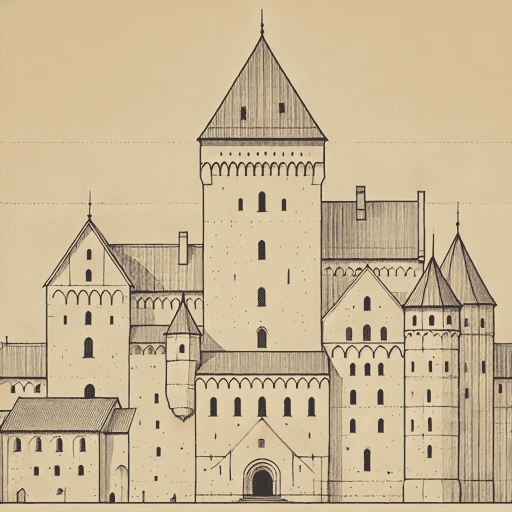
Adalheid Castle serves a symbol of forgotten history and the deceptive nature of reality, physically manifesting the novel’s central device of hidden truths. The castle exists in a dual state: on the magical side of the veil, it is a splendid, torch-lit fortress, but in the mortal world, it stands as decaying, desolate ruins. This duality points to the violent history erased by the Erlking’s curse, with the castle’s mortal decay mirroring the community’s collective amnesia. The Erlking reveals his role in this erasure when he tells Serilda, “I have claimed Adalheid as my home and sanctuary… . The royal family was not using it” (68). His casual statement positions the castle as a conquered territory, a site of appropriated history where the truth of past atrocities lies buried just beneath a veneer of magical splendor. The pristine castle is a beautiful facade hiding a monstrous truth, much like the Erlking himself.
The castle also functions as a prison for both the living and the dead, introducing the novel’s thematic engagement with Finding Agency Within Restrictive Boundaries. Serilda is physically trapped within its walls, forced to serve the Erlking while the tormented spirits of the castle’s original inhabitants are cursed to relive their violent deaths over and over again. In this way, Adalheid symbolizes a state of perpetual suffering—a place where past violence is never allowed to rest and continually ensnares new victims, linking the Erlking’s personal tyranny to a broader, historical curse.

Unlock the meaning behind every key symbol & motif
See how recurring imagery, objects, and ideas shape the narrative.
- Explore how the author builds meaning through symbolism
- Understand what symbols & motifs represent in the text
- Connect recurring ideas to themes, characters, and events