Gilded
Gilded
A modern alternative to SparkNotes and CliffsNotes, SuperSummary offers high-quality Study Guides with detailed chapter summaries and analysis of major themes, characters, and more.
Summaries & Analyses
Quizzes
NEWReading Tools
Background
Literary Context: Novelized Retelling of Germanic Folk Legends
Marissa Meyer’s Gilded reinterprets the classic fairy tale “Rumpelstiltskin,” blending it with iconic elements of Germanic folklore, particularly the myth of the Wild Hunt and the figure of the Erlking. Rumpelstiltskin was first published by 19th-century German scholars, Jacob and Wilhelm Grimm (collectively called the Brothers Grimm), in their 1812 collection of fairytales, Children’s and Household Tales. In the original story, a miller’s daughter is saved from a greedy king by a magical creature who spins straw into gold in exchange for her firstborn child. The narrative’s tension centers on the transactional nature of her bargain, which places the miller’s daughter and the imp at odds, prompting her quest to discover the creature’s name to save her baby.
Meyer inverts the structure of the original tale by weaving in the figure of the Erlking as a monstrous villain and casting the Rumpelstiltskin figure, Gild, as a sympathetic, cursed hero. The Erlking, or Erlkönig, is a key figure in German folklore, popularized by Johann Wolfgang von Goethe’s 1782 poem of the same name. In Goethe’s ballad, the Erlking is a sinister supernatural being who lures a young boy to his death. Meyer fuses two mythic elements by making her Erlking the leader of the Wild Hunt—a spectral procession of phantom hunters storming across the sky–a tradition found across Europe but extensively documented in a Germanic context by Jacob Grimm in his 1835 work, Deutsche Mythologie.
Traditionally, the appearance of the Wild Hunt was considered an omen of catastrophe, war, or death, and its leaders were often identified with pagan gods like Odin. Meyer integrates this legend as a central element of her world, depicting the hunt as a terrifying force that seeks “lost souls and aimless drunkards and naughty children” (1). This cultural context grounds the novel’s fantasy in a specific, dark folkloric tradition, imbuing the world with a sense of ancient, malevolent power and making the threat posed by the Erlking and his hunt feel both mythic and immediate.
Meyer differentiates Serilda from the miller’s daughter in the original tale by framing her initial lie about her gold-spinning abilities as an act of kindness. Her attempt to protect the moss maidens from the tyranny of the Erlking nuances Meyer’s version of the character, contrasting the villagers’ view of Serilda as a bad omen with her innate empathy and selflessness. By transforming the Erlking into the primary antagonist, Meyer creates the opportunity for a love story between Gild and Serilda that propels the duology, transforming a cautionary tale about making reckless promises into a dark love story about resisting tyrannical power and breaking ancient curses.
Series Context: The Gilded Duology’s Central Mysteries
Gilded is the first installment in a two-book series, or duology, and its narrative is structured to introduce foundational mysteries that are left to be resolved in its sequel, Cursed. This structure is common in young adult fantasy, allowing for complex world-building and plot development that culminates in a final, conclusive volume. Other examples include Marie Lu’s Warcross and Wildcard, Adalyn Grace’s All the Stars and Teeth and All the Tides of Fate, and Leigh Bardugo’s Six of Crows and Crooked Kingdom.
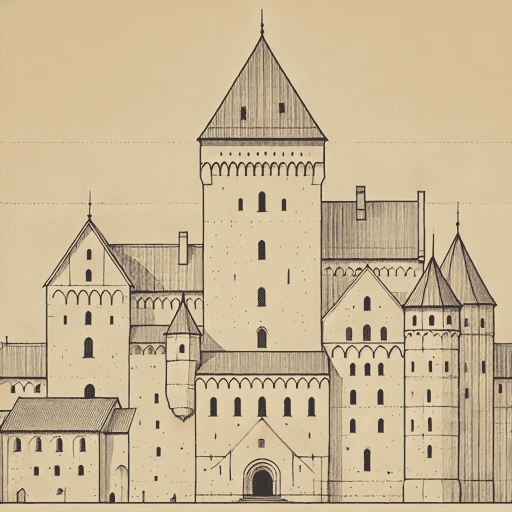
Meyer’s first installment establishes the primary conflict between Serilda, the villainous Erlking, and the cursed prince Gild, while weaving in several overarching questions that drive the story forward. The first major mystery surrounds the haunted castle of Adalheid, which is populated by the ghosts of its violently murdered former residents. Serilda’s discoveries of defaced tombstones and a broken statue with a familiar crest suggest a forgotten royal family whose history has been magically erased from memory.
Across the novel, Serilda discovers that the Erlking’s sudden obsession with spinning straw into gold is part of a larger plan to forge magical chains capable of capturing one of the old gods during the rare Endless Moon, forcing it to grant him a wish. As Serilda grows to understand her own gift—the ability to spin stories into truth—she unravels the secret of Gild’s identity. Initially presented as a mischievous poltergeist, Serilda’s tales reveal him as the lost prince of Adalheid, cursed by the Erlking centuries ago to be forgotten by everyone, including himself. The book ends on a cliffhanger, with Serilda trapped by a curse in the castle and the Erlking’s plans still in motion, setting the stage for the sequel to resolve these central conflicts.
The second installment of the duology, Cursed, sees Serilda wed to the Erlking on the night of the summer solstice. The Erlking double-crosses Gild and Serilda so he can capture one of the seven gods he needs to accomplish his true goal: wishing away the veil separating his host of dark spirits from the mortal realm. One by one, the Erlking captures the gods, including Velos, the god of death. Serilda discovers the god, Wyrdith, is her mother, just as the Erlking captures Wyrdith—the final divinity needed for his bargain. When Serilda’s golden-eyed baby is born, Gild demands the baby to fulfill the bargain he made with Serilda, but he’s stabbed as he tries to leave with the child. Serilda makes a final stand against the Erlking and his forces, reclaims her mortal body, and bargains with Velos to return Gild and their daughter. Velos agrees but needs Gild’s forgotten family name to do it: Rumpelstiltskin.

Get in-depth, chapter-by-chapter summaries and analysis from our literary experts.
- Grasp challenging concepts with clear, comprehensive explanations
- Revisit key plot points and ideas without rereading the book
- Share impressive insights in classes and book clubs