Grandma Gatewood's Walk: The Inspiring Story of the Woman Who Saved the Appalachian Trail
Grandma Gatewood's Walk: The Inspiring Story of the Woman Who Saved the Appalachian Trail
A modern alternative to SparkNotes and CliffsNotes, SuperSummary offers high-quality Study Guides with detailed chapter summaries and analysis of major themes, characters, and more.
Summaries & Analyses
Quizzes
NEWReading Tools
Chapters 1-5Chapter Summaries & Analyses
Content Warning: The section features depictions of physical abuse, emotional abuse, and death.
Chapter 1 Summary: “Pick Up Your Feet”
In late spring 1955, Emma Gatewood packed her belongings and left Gallia County, Ohio. She traveled by car to Charleston, West Virginia, then bused to the airport, flew to Atlanta, bused to Jasper, Georgia, and finally took a taxi up Mount Oglethorpe. The driver stopped a quarter mile from the summit; Emma paid him $5 plus an extra dollar for his trouble and carried her pasteboard box the rest of the way on foot.
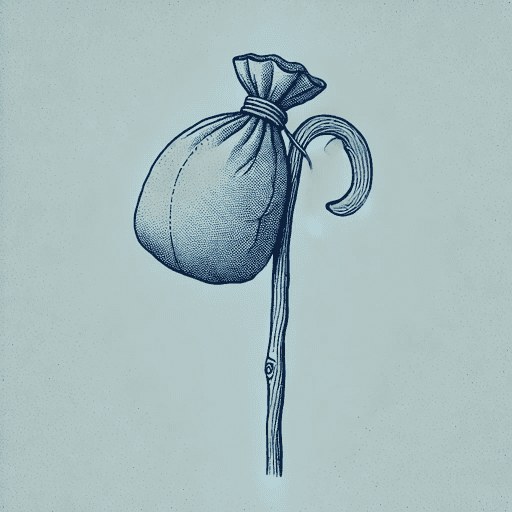
At the summit, she changed from her traveling dress and slippers into dungarees and tennis shoes. She filled a homemade denim sack with minimal supplies: canned meat, dried fruit, nuts, bouillon cubes, powdered milk, first-aid items, a spare dress, a coat, a shower curtain for rain protection, water, a knife, a flashlight, mints, and a small notebook. She discarded the box in a nearby chicken house.
On May 3, 1955, at age 67, Emma Gatewood stood at the southern terminus of the Appalachian Trail. She was a mother of 11 and grandmother of 23, standing five-foot-two and weighing 150 pounds. She wore false teeth, had painful bunions, and couldn’t see without her glasses. She carried no map, sleeping bag, or tent. She had worked at a nursing home, saving enough to draw $52 monthly in Social Security, and progressively increasing her daily walks to 10 miles while living with her son Nelson in Dayton, Ohio.
The narrative describes the trail’s dangers: more than 300 mountains over 5,000 feet, wild animals including bears and poisonous snakes, and potential human threats in remote Appalachia. Only the taxi driver and her cousin, Myrtle Trowbridge, knew Emma’s whereabouts. She had told her children merely that she was going on a walk. The narrative mentions dark secrets—broken teeth, broken ribs, jail time—motivating her journey, but Emma plans to present herself as a widow seeking solace in nature.
She began hiking, read the monument to James Oglethorpe, and passed a large chicken farm. She stopped at a house for water but, after dark, missed a trail blaze and walked two miles off course before Mr. and Mrs. Mealer offered her shelter. The next morning, she backtracked, rejoined the trail, and hiked 15 miles, surrounded by blooming sweetshrub. She constructed a makeshift shelter from a disassembled cardboard shack and was visited by a fearless field mouse that climbed onto her chest.
On May 5, with sore, swollen feet, she stopped at a lean-to to wash clothes and slept on a picnic table, using her sack full of leaves as a pillow. The next morning, she admired azaleas, watched a deer, and gave a coiled copperhead a wide berth. After receiving buttermilk and cornbread from a townsman, she slept at Doublehead Gap Church. The next day she hiked past a military base with dugouts and barbed wire, continued through Woody Gap, and sought shelter after seven o’clock. At a house where a woman chopped wood, a suspicious man demanded credentials when she asked to stay the night. When Emma showed her Social Security card and admitted her family did not know her plans, he told her to go home and refused her shelter. Without argument, Emma shouldered her pack and walked away.
Chapter 2 Summary: “Go Home, Grandma”
The chapter opens with Cherokee creation mythology about a great vulture whose wings formed the valleys and mountains. On the night Emma was turned away, she walked until 10:30 pm and found shelter in a vacant shed. Her children did not know she was hiking, or that no woman had yet hiked the trail alone.
The narrative flashes back to 1954, when Emma first read about the trail in a discarded National Geographic at a doctor’s office. By then, Earl V. Shaffer and five other men had completed a thru-hike. In July 1954, at age 66, Emma took a Greyhound to Maine and climbed Mount Katahdin. The next day she started south but took the wrong trail and became lost for three days and eventually ran out of food. She built fires, whistled, and sang to comfort herself. After accidentally crushing her glasses, she heard a search plane but could not flag it down. She found her way back to Rainbow Lake on the third evening.
Four Baxter State Park rangers had been searching for her. They told her to go home. With broken glasses, no food, and little money, Emma agreed to quit. The rangers flew her to Millinocket and put her on a train to Bangor. At the Penobscot Hotel, Emma saw her bruised, disheveled reflection and, at 66, felt like a failure. She told no one about this attempt.
Back in May 1955, after eight days on the trail, the Jarrett family gave Emma a ride and corn pone. She hiked 20 miles, reaching Hightower Gap during a thunderstorm. On May 14, she crossed into North Carolina. That evening she heard cowbells but found no homes. Three men—Mr. Parker, Mr. Burch, and Mr. Enloe—invited her to their lean-to. She stayed two nights, cooking potato cakes. Forest and game wardens mistook her for Mr. Burch’s wife. She did not correct them because she didn’t want to explain what she was doing on the trail. After leaving the men, she climbed Standing Indian Mountain.
The narrative then flashes back to Emma’s life in Ohio. In Crown City, she met P.C. Gatewood, a 26-year-old schoolteacher from a prominent family. P.C. courted her on horseback, giving her rides home. He soon proposed. She finally agreed after he threatened to leave town. They married on May 5, 1907, when she was 18. Within three months, he struck her for the first time.
Chapter 3 Summary: “Rhododendron and Rattlesnakes”
Emma continued through a difficult, poorly marked stretch past Wayah Bald. After crossing the Nantahala River, she ate sassafras leaves and wild strawberries when her food ran out. She restocked at a trailside store. During her ascent of Swim Bald, she slipped on a boulder, breaking her walking stick but escaping injury. She found a replacement and continued over multiple peaks and gaps. With no shelter available, she camped beside the trail. A flashback details Emma’s married life: P.C. Gatewood’s repeated abuse, the birth of their 11 children, her hard work on their farm, and his 1924 manslaughter conviction that led to financial ruin.
After climbing Shuckstack Mountain, Emma found only a dented trash-can lid with rainwater on the summit. She made her bed on a fire-tower porch. The next day, she met Lionel Edna, a trail maintainer painting white blazes. At Newfound Gap, Emma encountered playful nuns celebrating near a Rockefeller monument. Needing supplies, she took the bus to Gatlinburg, Tennessee, bought new shoes and a raincoat, then spent the night in a motel.
After leaving Great Smoky Mountains National Park, Emma admired fields of rhododendron and laurel. She lost the trail briefly, crossed a muddy field, and walked through a dark tunnel formed by tall rhododendron. On May 28, she reached Hot Springs, North Carolina, where locals were hospitable. On May 29, while climbing Turkey Bald Mountain, a rattlesnake struck her pant leg. She jumped aside and escaped unharmed.
Chapter 4 Summary: “Wild Dogs”
Nearly a month into her journey, Emma’s children remained unaware of her whereabouts, though they were not worried. Emma zigzagged between North Carolina and Tennessee over steep terrain. She wrote about sore feet, scarce water, and campfires kept burning for protection against wild dogs.
The narrative explains the trail’s origins. Conceived by Benton MacKaye in 1921 as a wilderness backbone accessible to urban populations, the trail was completed by 1937 under Myron Avery’s leadership. The text notes the irony that MacKaye also imagined a new kind of automobile highway designed exclusively for motorists. By World War II’s end, President Roosevelt planned a national highway system. Eisenhower, taking office in 1953, pushed for a $50 billion federal highway program. Ohio began its turnpike in October 1953.
Car culture exploded. By June 1955, Americans owned 62 million vehicles. Television ownership had jumped from 9% of households in 1950 to over 50% by 1954. In March 1955, doctors reported that American children were growing lethargic from automobile dependence and that athletes required muscle strengthening rather than loosening.
The narrative traces walking’s philosophical history through ancient Greeks, Roman writers, and figures from Leonardo da Vinci to Johann Sebastian Bach. By 1949, cars killed nearly 30 pedestrians daily. Against this backdrop, the Appalachian Trail offered escape. By 1952, only a handful had repeated the feat.
Returning to Emma’s journey: On June 4, descending from Roan Mountain, she struggled to find lodging. One homeowner suspected her of being an FBI agent. She finally stayed with a family of seven sons and their elderly mother. The next morning, she hiked through a gorge to a beautiful waterfall. Near Watauga Dam, she asked a man for water. That night, wild dogs returned. On June 8, a storm brought rain, sleet, and bitter cold. She crossed into Virginia and reached Damascus, but a motel refused her because she was soaked. She found a cabin and celebrated by treating herself to a steak dinner.
Chapter 5 Summary: “How’d You Get in Here?”
Emma hiked through Jefferson National Forest and areas torn up by manganese mining. Near Groseclose, Virginia, she filled up on fruit from peach and apple trees. She was turned away from another motel but stayed with several hospitable families.
On June 20, Emma mentioned her journey to a man at a gas station. The next day, trail club members Preston Leech and Frank E. Callahan tracked her down, along with a photographer. They wanted to publicize her story. Emma initially refused, worried about her family’s surprise and potential danger. The men convinced her to stay at Callahan’s cabin. At ten o’clock on her 48th day, Emma agreed to be photographed and interviewed.
On June 22, the Roanoke Times ran a headline describing her as a widowed “great-grandmother” hiking 2,050 miles in tennis shoes (59). Emma realized it was time to inform her family and mailed postcards.
The narrative explains thru-hiking history. The trail was designed for sections, not end-to-end attempts. The first thru-hiker, Earl Shaffer, undertook his 1948 journey after returning from World War II depressed over losing a friend. Chester Dziengielewski and Martin Papendick became the first to hike the trail from north to south. Gene Espy followed in 1951. In 1952, 72-year-old George Miller became the fifth male thru-hiker. That same year, pacifist Mildred Norman hiked with Dick Lamb.
Thru-hikers received little attention because Americans were distracted by Cold War anxieties. On March 1, 1954, the US detonated an H-bomb at Bikini Atoll. Japanese fishermen 80 miles away on the Lucky Dragon suffered radiation burns; their radio operator died, becoming the first Japanese H-bomb victim. By 1955, fear of Communist infiltration gripped America. Senator Joseph McCarthy’s hunt for subversives peaked before his censure. The Supreme Court’s May 1954 ruling ending school segregation sparked resistance. Headlines also reported rising juvenile crime.
After the article appeared, Emma left Sunset Field at 5:30 am. The overgrown trail was hard to follow. She encountered a fence where trail marks ended. Confused, she climbed through barbed wire and followed a slag road. A dozen young men marched toward her. When she asked about the trail, an officer explained she had followed the old trail into Bedford Air Force Station, a Cold War radar facility. The men were shocked to find an elderly woman inside the secure perimeter. At the gate, a guard asked how she had gotten in. Emma explained about the barbed wire and joked about getting arrested. That night, sheltering on an empty farmhouse porch, Emma wrote in her notebook about bursting into laughter at the situation and the looks on the soldiers’ faces.
Chapters 1-5 Analysis
The narrative structure in the opening chapters establishes a dynamic between Emma Gatewood’s physical forward motion in 1955 and the psychological weight of the life she is leaving behind. By juxtaposing the linear account of her hike with fragmented flashbacks to her past, the book frames her journey through the theme of Escape and Self-Liberation. The narrative begins in media res with the immediate details of her arrival at Mount Oglethorpe, grounding the book in the present. However, this forward momentum is interrupted by analeptic shifts that reveal her failed 1954 attempt and her abusive marriage to P.C. Gatewood. This recasts the trek as an act of self-liberation rather than a simple adventure. This connection is especially clear when the narrative places her solitary nights outdoors beside flashbacks describing the fear and instability of her marriage, equating physical distance with emotional separation. The Appalachian landscape thus offers a journey of reclamation, where physical endurance fosters personal agency.
The book positions Emma’s journey as an act of quiet rebellion against the prevailing values of mid-century American society. Chapter 4 provides an extended historical digression to contextualize the theme of Walking as Quiet Rebellion Against American Convenience Culture. Montgomery details the growth of automobile culture, the development of the interstate highway system, and the rise of a sedentary, television-centric populace. This backdrop of speed and convenience contrasts sharply with Emma’s step-by-step pilgrimage. The narrative underscores this tension by citing contemporary anxieties that American children were “forgetting how to walk” (51) and by invoking the transcendentalist critique of modern life found in Henry David Thoreau’s essay “Walking.” Against this backdrop, Emma’s simple, arduous trek becomes a symbolic counter-narrative. Her reliance on her own physical strength and minimal supplies is a rejection of a culture increasingly dependent on technology and comfort. The contrast becomes particularly overt when she sleeps on picnic tables, shelters in abandoned structures, and continues hiking through storms while much of the country embraces the convenience of cars, motels, and newly expanded highways.
Emma’s character is developed through her actions and her limited possessions, as she has no interior monologue beyond minor reflections or lines from her journals and letters. Her unconventional gear reinforces her identity, defining her as a resourceful pioneer instead of a conventional hiker. The shower curtain reveals Emma’s ingenuity and self-reliance. It is a humble object that serves as portable shelter, rejecting the burgeoning market for specialized camping equipment and asserting a philosophy of making do. Similarly, her walking stick becomes a defensive weapon when a rattlesnake strikes and she “slammed the tip of her walking stick toward the snake and jumped sideways” (44). This action demonstrates her capacity for decisive adaptation in a hostile environment. The same resourcefulness appears throughout the opening chapters when she fills her sack with leaves for bedding, improvises shelter from discarded materials, and navigates poorly marked sections of the trail alone. Her willingness to adapt to difficult conditions with limited resources reveals the self-sufficiency she developed through decades of physical labor and hardship.
Throughout these early chapters, the pattern of doors opened and shut reveals the moral topography of the social landscape in 1950s America. Emma’s progress is contingent on her own resilience but also on the unpredictable hospitality of strangers. Encounters range from the kindness of the Mealers, who offer her shelter on her first night, to the suspicion of a man who interrogates her and refuses her a place to stay. A motel in Damascus later denies her entry because her rain-soaked appearance violates its standards. This alternation between acceptance and rejection highlights the precarity of a woman traveling alone in defiance of the era’s social conventions. Emma’s independence also arouses suspicion in many people she meets. Even well-meaning strangers repeatedly question why an older woman would travel alone, revealing how sharply her journey conflicts with conventional expectations for women in the 1950s. This tension emphasizes her vulnerability and her independence, as she navigates a social terrain as challenging as the physical one.
The end of this section marks a turning point as Emma’s private pilgrimage becomes a public narrative, initiating the theme of Reviving the Appalachian Trail. Her initial reluctance to engage with the press stems from a desire to protect her privacy and avoid alarming her family. However, the publication of the article in the Roanoke Times transforms her into a public figure. This shift is essential to the book’s larger argument about her legacy. Montgomery contrasts her journey with those of previous thru-hikers, such as Earl Shaffer, whose accomplishments received far less media attention. Emma’s identity as a 67-year-old great-grandmother in tennis shoes creates a compelling human-interest story that captures the national imagination. Her accidental celebrity begins to draw unprecedented attention to the Appalachian Trail, foreshadowing her eventual role in advocating for its maintenance and inspiring a new generation of hikers.

Get in-depth, chapter-by-chapter summaries and analysis from our literary experts.
- Grasp challenging concepts with clear, comprehensive explanations
- Revisit key plot points and ideas without rereading the book
- Share impressive insights in classes and book clubs