Grandma Gatewood's Walk: The Inspiring Story of the Woman Who Saved the Appalachian Trail
Grandma Gatewood's Walk: The Inspiring Story of the Woman Who Saved the Appalachian Trail
A modern alternative to SparkNotes and CliffsNotes, SuperSummary offers high-quality Study Guides with detailed chapter summaries and analysis of major themes, characters, and more.
Summaries & Analyses
Quizzes
NEWReading Tools
Summary and Study Guide
Overview
Grandma Gatewood’s Walk (2014) is a work of nonfiction biography by Pulitzer Prize–finalist journalist Ben Montgomery. The book chronicles the journey of Emma “Grandma” Gatewood, who at 67 became the first woman to solo thru-hike the Appalachian Trail in 1955. Carrying little more than a denim sack and wearing tennis shoes, Gatewood’s public feat masked her private motivation: escaping a life defined by decades of domestic abuse. A New York Times bestseller, Grandma Gatewood’s Walk won the 2014 National Outdoor Book Award for History/Biography.
Montgomery frames Gatewood’s journey as an exploration of resilience and self-liberation, examining themes of Escape and Self-Liberation, Walking as Quiet Rebellion Against American Convenience Culture, and Reviving the Appalachian Trail. The narrative contrasts Gatewood’s immense physical endurance with the passive, automobile-dependent culture of mid-century America. By revealing the story of Gatewood’s abusive marriage, Montgomery reframes her hike as a profound act of reclaiming her life. Her subsequent criticism of the trail’s poor conditions drew unprecedented national attention to the footpath, inspiring renewed volunteer efforts and solidifying her legacy as a folk hero who helped preserve the A.T. for future generations.
This guide is based on the 2016 Chicago Review Press paperback edition.
Content Warning: The source text and this guide feature depictions of physical abuse, emotional abuse, child abuse, graphic violence, and death.
Summary
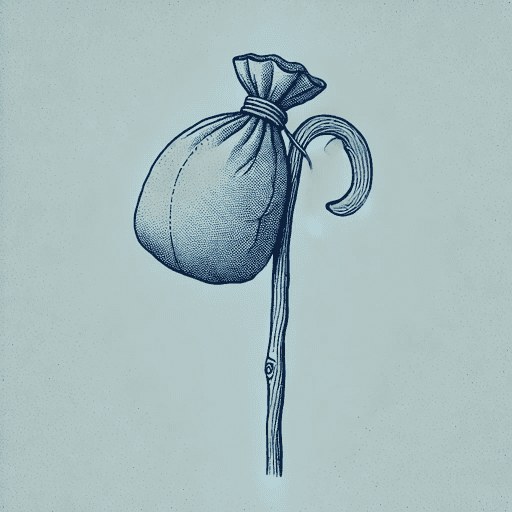
In May 1955, Emma Gatewood, a 67-year-old mother of 11 from Gallia County, Ohio, traveled alone to Mount Oglethorpe, Georgia, the southern terminus of the Appalachian Trail. She carried no map, sleeping bag, or tent. Her supplies fit inside a homemade denim sack weighing roughly 12 pounds at the beginning of her journey. She set out with Vienna sausages, raisins, peanuts, bouillon cubes, a Swiss Army knife, a shower curtain for rain, a flashlight, and a small memo book. She stood five foot two, wore canvas sneakers, had false teeth and severe bunions, and was blind without her glasses. Her only survival training came from decades of farm labor. She told her 11 grown children she was going on a walk but revealed nothing more.
Journalist Ben Montgomery reconstructs Emma’s 2,050-mile journey through 14 states alongside the story of her life, weaving together her trail diary, family correspondence, newspaper accounts, and interviews with her surviving children. Montgomery notes that Emma deflected reporters who asked why she was hiking, calling it “a good lark” (4), while concealing the real reasons: a marriage defined by decades of domestic abuse.
Montgomery flashes back to 1954, when Emma first attempted the trail after reading a 1949 National Geographic article describing the path as well-marked, full of shelters, and “planned for the enjoyment of anyone in normal good health” (16). Starting from Mount Katahdin in Maine, the trail’s northern terminus, she got lost within days, crushed her glasses, ran out of food, and was rescued by park rangers. She resolved to tell no one about the failure.
The narrative moves between the 1955 hike and extended flashbacks to Emma’s earlier life. Born in 1887 near Mercerville, Ohio, one of 15 children, she grew up in poverty, attending school only a few months a year and working tobacco and corn fields. At 19, she married P.C. Gatewood, a college-educated schoolteacher who pressured her into the union by threatening to leave town. Three months after the wedding, he struck her for the first time. She considered leaving but had no job, savings, or education beyond eighth grade.
Over the next three decades, Emma bore 11 children while enduring relentless violence. P.C. physically abused Emma, even during pregnancy. Their children witnessed the abuse: One daughter saw her mother hurled to the floor by her hair; another found her father strangling her mother; a son physically pulled his father off her. In 1924, P.C. killed a man named Hiram Johnson in an argument and was convicted of manslaughter, forcing the sale of half the family farm.
In 1937, Emma fled to California, staying with her mother and sister, but eventually returned. The abuse resumed. In September 1939, their 15-year-old son Nelson found his father attacking his mother, her face swollen, teeth broken, a rib cracked. Nelson lifted his father off the ground and told his mother to run. When P.C. returned with a lawman, Emma heaved a five-pound sack of flour into his face. The officer arrested Emma and drove her to a jail cell in Milton, West Virginia. The town’s mayor took her in and found her work. Emma filed for divorce in September 1940, and it was granted the following February.
Montgomery interleaves this backstory with the forward progress of Emma’s 1955 hike. She crosses into North Carolina, traverses the Great Smoky Mountains, and pushes into Virginia through rain, sleet, and wild dogs. She often relies on the charity of strangers for food and shelter, eats wild strawberries and sassafras salads, and sleeps on church floors and picnic tables. On June 21, the Roanoke Times publishes the first story about her journey. An Associated Press dispatch soon carries her story to newspapers across the country. As her fame spread, strangers increasingly recognized her on the trail and invited her into their homes.
Montgomery contextualizes the America through which Emma walks. He traces the rise of the interstate highway system and the corresponding decline of walking: By 1955, Americans owned 62 million vehicles, television had entered more than half of American households, and doctors warned that children were “forgetting how to walk” (51). He cites Henry David Thoreau’s 1862 essay “Walking,” which predicted a day when walking across open land would be “construed to mean trespassing” (51). Against this backdrop, Emma’s journey reads as an act of defiance.
A Sports Illustrated reporter named Mary Snow tracked Emma down and began accompanying her intermittently. In August, Hurricanes Connie and Diane battered the East Coast in quick succession, triggering catastrophic flooding that killed more than 200 people. Emma waded through knee-deep water in Vermont. At Clarendon Gorge, where the bridge had washed out, two young men recently out of the navy tied a parachute cord around her waist and walked her through chest-deep rushing water. She laughed and said, “Well, you got grandma across” (134).
She pushed through the White Mountains of New Hampshire, climbed Mounts Moosilauke, Lafayette, and Washington, then crossed into Maine. The final stretch was brutal. She spent two hours squeezing through Mahoosuc Notch, widely regarded as the most difficult mile on the trail. On Baldpate Mountain, freezing rain turned to sleet on sheer rock; she crawled on hands and knees, nearly blind with one fogged lens. She fell on a hillside, sprained her ankle, and broke her glasses again. She entered the 100-Mile Wilderness, the trail’s most remote stretch, and limped into Rainbow Lake on September 23.
On September 25, 1955, her 146th day, Emma reached Baxter Peak atop Mount Katahdin. She had lost 30 pounds and was wearing her seventh pair of sneakers. She said aloud, “I did it. I said I’d do it and I’ve done it” (197), then sang the first verse of “America the Beautiful” as the wind beat against her cheeks. She became the first woman to solo thru-hike the Appalachian Trail.
Headlines ran nationwide. Emma appeared on NBC’s Today with Dave Garroway and won $200 on the quiz show Welcome Travelers. In 1957, at nearly 70, she thru-hiked the trail again, becoming the first person to complete it twice. In 1959, she walked the Old Oregon Trail from Independence, Missouri, to Portland, Oregon, roughly 2,000 miles in 95 days. Five thousand people greeted her in Portland. She appeared on Groucho Marx’s You Bet Your Life; when Groucho asked why she walked, she replied, “Oh, I didn’t have anything else to do. The family is all married and gone and I just wanted to do something” (229). In 1964, at 77, she completed the Appalachian Trail a third time, walking in sections.
In her later years, Emma blazed sections of the Buckeye Trail through Ohio, personally painting robin’s egg-blue blazes along 30 miles of the Ohio River, and led annual winter hikes through Hocking Hills State Park. P.C. Gatewood died in 1968. On his deathbed, he requested to see Emma one last time. She refused. On June 4, 1973, Emma died at 85 after humming a few bars of “The Battle Hymn of the Republic.” The Ohio Senate passed a resolution in her memory, citing her as a founder of the Buckeye Trail.
Montgomery inserts himself into the narrative by retracing Emma’s climb up Mount Katahdin and later joining her daughter, Louise, for the annual winter hike at Hocking Hills State Park. Trail scholars credit Emma with drawing unprecedented public attention to the Appalachian Trail, prompting better maintenance through her blunt criticism, and dismantling the psychological barrier between ordinary Americans and the wilderness. She pioneered three categories of A.T. hiking: senior hikers, women hikers, and ultra-light hikers. Ed Garvey, author of Appalachian Hiker, said before his death that she “possessed that one ingredient, desire, in such full measure that she never really needed the other things” (253). Montgomery weighs Emma’s many stated reasons for hiking and concludes that her fullest answer was also her simplest. When a reporter once asked why she did it, she replied: “Because I wanted to” (259). Montgomery reads in those four words both truth and defiance, an escape from abuse, age, and obligation.

Get in-depth, chapter-by-chapter summaries and analysis from our literary experts.
- Grasp challenging concepts with clear, comprehensive explanations
- Revisit key plot points and ideas without rereading the book
- Share impressive insights in classes and book clubs