Grandma Gatewood's Walk: The Inspiring Story of the Woman Who Saved the Appalachian Trail
Grandma Gatewood's Walk: The Inspiring Story of the Woman Who Saved the Appalachian Trail
A modern alternative to SparkNotes and CliffsNotes, SuperSummary offers high-quality Study Guides with detailed chapter summaries and analysis of major themes, characters, and more.
Summaries & Analyses
Quizzes
NEWReading Tools
Symbols & Motifs
Emma’s Feet
Emma Gatewood’s feet symbolize the way her life has been shaped by suffering and reclaimed through movement. Montgomery describes them in anatomical detail early in the narrative, and their condition encodes decades of hardship that preceded the trail. Her toes hook permanently downward “from being scrunched into too-small shoes for too long a time” (69), and bulbous bunions protrude from both insteps. These are not injuries sustained on the Appalachian Trail but the accumulated marks of poverty, farm labor, and lack of bodily autonomy. Her feet carry the physical record of everything she endured before she ever set out from Mount Oglethorpe.
Yet these same damaged feet become her primary instruments of liberation. Montgomery frames Walking as Quiet Rebellion Against American Convenience Culture, and Emma’s feet are the agents of that rebellion. She wears canvas sneakers rather than proper hiking boots, purchases men’s shoes when her feet swell beyond women’s sizes, and tapes discarded rubber to her insteps for arch support. Each improvised repair reflects her insistence on continuing forward with what her body and resourcefulness can do rather than what consumer culture provides.
Her father’s instruction, “Pick up your feet” (5), comes to define Emma’s philosophy of motion. That phrase connects her childhood on the farm to her passage through the wilderness, suggesting that the act of walking was always available to her as a form of quiet authority. The feet that bear the evidence of abuse ultimately carry her away from it.
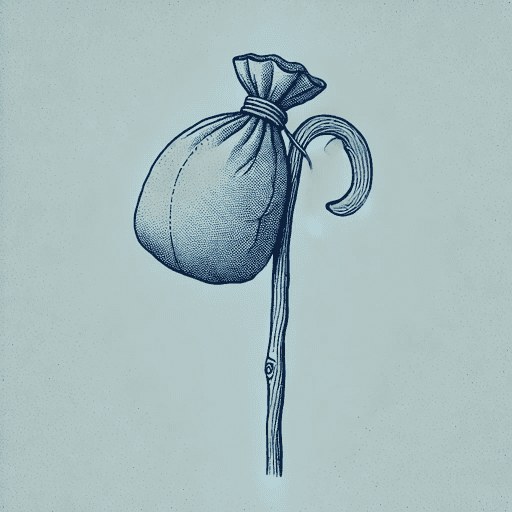
The Denim Sack
Emma’s homemade denim sack symbolizes self-reliance as a form of resistance against both the outdoor establishment and the domestic life that confined her. Montgomery emphasizes that she stitched the bag herself, “her wrinkled fingers doing the stitching” from “a yard of denim” (2), and this craftsmanship distinguishes the sack from every piece of gear carried by hikers before or after her. Where previous thru-hikers arrived with “mail-order rucksacks and sleeping bags and tents and mess kits,” Emma’s sack weighed 17 pounds and rode on one shoulder (16). The symbolic sack hence suggests that that survival depends on ingenuity and will rather than on money and consumerism, and it quietly mirrors the resourcefulness she developed across decades of poverty and abuse, when she braided rugs, rendered lard, and fashioned dolls from sawdust and ceramic scraps.
The sack also operates as a vessel of reinvention. Into it she places the few items that define her new identity on the trail: Vienna sausages, a Swiss Army knife, a shower curtain, and the small memo book in which she records her journey. Notably absent are objects tied to her former life. She discards the “simple dress and slippers she’d worn during her travels” and changes into dungarees in the woods atop Mount Oglethorpe (2), as though the sack marks a threshold between who she was and who she is becoming. Its deliberate inadequacy by conventional standards made her an object of both concern and admiration, and when reporters marveled at how little she carried, they inadvertently amplified her argument that the weight a person sheds can matter more than the weight she bears.
Shelter
The recurring search for shelter functions as a motif through which Montgomery explores themes of vulnerability, the unpredictability of human kindness, and the very definition of safety. Each evening on the trail forces Gatewood to rely on the charity of strangers, creating a constant tension between hospitality and suspicion. For every family that welcomes her, there is a homeowner who sees an indigent and turns her away. A suspicious man bluntly tells her, “You’d better go home, then. You can’t stay here” (11), a rejection that reinforces her isolation. This motif complicates her image as a purely self-reliant figure, revealing the communal effort that her solo journey required.
Furthermore, Gatewood’s experience with the trail’s official shelters helps develop the theme of Reviving the Appalachian Trail. Her widely published critiques that the shelters were often “blown down, burned down, or so filthy” (181) that she preferred to sleep outside galvanized trail clubs to improve conditions. The motif’s deepest resonance, however, connects to the theme of Escape and Self-Liberation. Having fled the profound insecurity of her own home, Gatewood’s quest for nightly refuge becomes a search for a safety she was long denied. Whether she finds it in a stranger’s barn, a pile of leaves, or a shared lean-to, each successful night redefines shelter not as a physical structure but as a space free from fear and violence.

Unlock the meaning behind every key symbol & motif
See how recurring imagery, objects, and ideas shape the narrative.
- Explore how the author builds meaning through symbolism
- Understand what symbols & motifs represent in the text
- Connect recurring ideas to themes, characters, and events