Hungerstone
A modern alternative to SparkNotes and CliffsNotes, SuperSummary offers high-quality Study Guides with detailed chapter summaries and analysis of major themes, characters, and more.
Summaries & Analyses
Quizzes
NEWReading Tools
Part 1, Chapters 11-14Chapter Summaries & Analyses
Content Warning: This section of the guide includes discussion of graphic violence, sexual content, gender discrimination, emotional abuse, child abuse, illness, and death.
Part 1: “It Is Not the Dead You Should Fear”
Part 1, Chapter 11 Summary
Convinced Henry is having an affair with Cora, Lenore spitefully returns to Nethershaw alone. She recalls a traumatic childhood incident where she defied Aunt Daphne and was nearly lured away by a strange man in a park. At Nethershaw, Carmilla waits for her. Carmilla behaves provocatively, and during dinner, she taunts Lenore about her suppressed anger and desire to be free of Henry and Cora, explicitly telling her she is “hungry.”
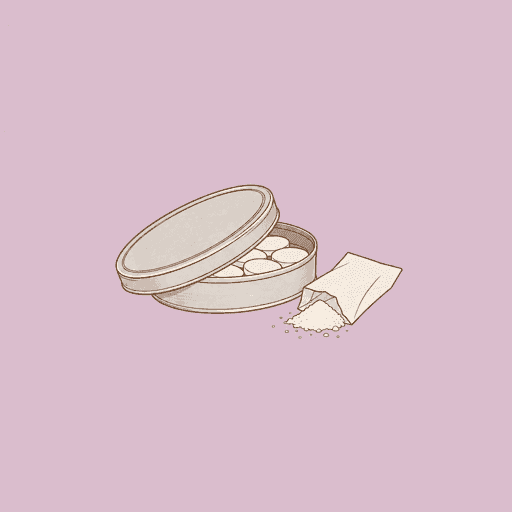
Disturbed, Lenore retreats to her room and consumes pastilles, acknowledging the deep inner “hunger” Carmilla identified. Later that night, Henry joins her in bed. He apologizes for his recent behavior and initiates sex, which Lenore recognizes as a calculated attempt to placate her. After he falls asleep, Lenore has a nightmare in which a monstrous cat sits on her chest and transforms into a vision of a blood-drenched Carmilla. Waking in terror, Lenore is certain something has happened to Carmilla. She rouses a reluctant Henry, and when they find Carmilla’s door locked, he breaks it down to reveal an empty room.
Part 1, Chapter 12 Summary
A search of the house and grounds reveals no trace of Carmilla. Henry angrily declares she will be evicted upon her return. Soon after, Lenore finds Carmilla back in her room as if nothing happened, her nightdress stained with mud. Carmilla evades Lenore’s questions, cryptically calling herself “a mirror to those who need it. To those who hunger but deny themselves” (154). Lenore suffers another bout of violent illness but forces herself to manage household affairs.
Later, Lenore travels to the village of Hathersage with Carmilla to deliver a letter for Henry and meet Cora. On the way, Carmilla has a severe negative reaction to a churchyard, becoming pale and suffering a nosebleed. When Lenore delivers Henry’s letter, the recipient, a woman, reads it and throws it back in her face in a rage. Lenore reads the crumpled letter and learns it is a formal notice from Henry denying compensation to the widow of Alexander Whitmore, a worker who died from injuries sustained at the Ajax Works. Disturbed, Lenore wanders into a crowd and is drawn into a cottage, where she discovers a woman cooking and eating flesh carved from the arm of an injured man. The woman looks at Lenore and says, “I was so terribly hungry” (163).
Part 1, Chapter 13 Summary
After the police are called to the gruesome scene in Hathersage, Lenore returns to Nethershaw. Henry, furious that she delivered his private letter, berates her. Moments later, Lenore sees Henry and Cora standing in an intimate posture in his study and flees the house in despair. Cora follows and insists she is not having an affair with Henry; instead, she claims she is secretly helping him manage a crisis involving workers who are threatening to expose his fraudulent compensation scheme to a journalist. Cora then warns Lenore that Carmilla is a strange and possibly dangerous influence.
Back in her room, a distraught Lenore reaches for her pastilles, but Carmilla knocks them from her grasp. Carmilla then picks up the scattered pastilles and throws them out the window, stating that Lenore is “feeding the wrong hunger” (173). When Lenore accuses Carmilla of being connected to the recent horrific events, Carmilla cryptically replies, “I am not the beginning of it […] I am the end” (174). Afterward, Lenore feels intensely ill and becomes certain she is dying.
Part 1, Chapter 14 Summary
Lenore recalls a memory from early in her marriage when she witnessed Henry shoot and kill a nobleman, Lord Abney, and then helped him cover up the murder as an accident. In the present, she searches Henry’s room for the missing jewelry box she had previously found containing diamonds not meant for her, wondering who they were bought for. In a trunk, she finds a large supply of her pastilles stored alongside a chemist’s bag full of white powder.
Consulting a medical dictionary, Lenore realizes her chronic illness matches the symptoms of arsenic poisoning. She understands with horror that Henry is poisoning her. She confronts Carmilla, who responds that she’s been trying to warn Lenore and that the cause of her illness was obvious to anyone who truly saw her. Carmilla then goads Lenore verbally and pushes her physically to provoke a reaction until Lenore’s fear gives way to rage and she shoves Carmilla. After Lenore pushes Carmilla into the bedpost, Carmilla pulls her close, and the encounter shifts into a passionate sexual encounter. In the aftermath, Lenore collapses into sobs, grieving for her life. Carmilla comforts her, explaining that she appeared at Nethershaw because Lenore’s suppressed pain and hunger had been “calling” to her.
Part 1, Chapters 11-14 Analysis
In the novel’s third section, Dunn uses the motif of hunger to escalate the theme of Desire as Self-Actualization. These chapters explore the consequences of repressing one’s appetite. Carmilla’s claim that Lenore is hungry reframes Lenore’s deep-seated unhappiness as a fundamental, unmet need for agency and desire. The motif of hunger intensifies when Lenore discovers a woman eating her husband’s flesh in Hathersage. The woman’s simple explanation that she “was so terribly hungry” echoes Carmilla’s earlier diagnosis (163). This parallel suggests that whether women hunger for food, safety, or selfhood, the systemic denial of their needs in a patriarchal society breeds “monstrosity.” Lenore attempts to satiate herself with pastilles, a self-destructive act that Carmilla identifies as “feeding the wrong hunger” (173). These chapters posit that Lenore’s carefully managed, passionless existence is a form of starvation, and the violent events she witnesses are manifestations of women’s yearning to break free from societal restrictions.
The narrative structure in these chapters, which intersperses the present crisis with key flashbacks, reveals how Lenore’s past traumas have conditioned her into passivity and complicity. Her memory of defying Aunt Daphne teaches her that venturing outside the confines of domestic control leads to terrifying vulnerability: “[N]o one was coming to rescue me” (136). This childhood trauma informs her adult strategy of seeking security through emotional suppression and mastery over her environment. This pattern culminates in the flashback to Lord Abney’s murder, where Lenore’s instinct for self-preservation leads her to become Henry’s accomplice. She chooses to weave a “fiction” of an accident rather than confront the dangerous reality of her husband’s violence. The author’s choice to place these memories here demonstrates that Lenore’s self-denial is a learned survival mechanism that is now failing her.
Lenore’s discovery of the pastilles and white powder in Henry’s trunk transforms the domestic setting of Nethershaw into a site of insidious, gendered violence. This clarifies Henry’s character, exposing his feigned apologies and calculated sexual advances as manipulative performances designed to placate Lenore and continue his slow poisoning. The revelation that the pastilles contain arsenic cements their narrative function as a symbol of patriarchal control. This private violence is mirrored by Henry’s public brutality, linking the themes of The Intertwined Struggles of Class and Gender. His abuse of Lenore and his exploitation of his workers are two expressions of the same patriarchal and capitalist entitlement. The poison is the domestic expression of the same ruthless self-interest that leads him to murder a nobleman and deny compensation to a worker’s widow, revealing the home as just another sphere for his violent mastery.
The delivery of Henry’s letter to the widow of Alexander Whitmore directly connects the gothic horror of Nethershaw to the systemic violence of industrial capitalism. The letter exposes The Monstrous Nature of Capitalism, an economic system that consumes its workers and discards their families. The narrative immediately follows this act of corporate cruelty with the scene of cannibalism, implying a causal link between the poverty Henry enforces and the grotesque measures people take to survive. This juxtaposition argues that Henry’s polite, bureaucratic violence is more monstrous than the visceral horror Lenore witnesses in the cottage. His refusal to pay compensation is a deliberate part of a business model that treats human life as an expendable resource in the pursuit of wealth and status. Through moments like this, Dunn argues that Henry’s socially acceptable greed is more monstrous than the supernatural Carmilla.
The violent, passionate encounter between Lenore and Carmilla serves as the climax of this section, depicting a painful but necessary awakening that is central to the theme of Desire as Self-Actualization. By forcing a physical confrontation, Carmilla ignites Lenore’s rage, an emotion Lenore has systematically suppressed to survive her marriage. The ensuing sexual encounter is transgressive and liberatory, explicitly drawing on the literary tradition of the lesbian vampire as a figure who awakens forbidden desires. Blood, previously associated with trauma and death, is here reclaimed as a medium of shared vitality as the two women bite each other. Their union represents the destruction of Lenore’s old, poisoned self and the bloody birth of a new self that is finally able to acknowledge, and act upon, her own hunger.

Get in-depth, chapter-by-chapter summaries and analysis from our literary experts.
- Grasp challenging concepts with clear, comprehensive explanations
- Revisit key plot points and ideas without rereading the book
- Share impressive insights in classes and book clubs
Featured Collections
Appearance Versus Reality
View Collection
Books on Justice & Injustice
View Collection
Books that Feature the Theme of...
View Collection
Challenging Authority
View Collection
Class
View Collection
Class
View Collection
LGBTQ Literature
View Collection
Loyalty & Betrayal
View Collection
Power
View Collection
Revenge
View Collection
Safety & Danger
View Collection
The Best of "Best Book" Lists
View Collection
Truth & Lies
View Collection