Hungerstone
A modern alternative to SparkNotes and CliffsNotes, SuperSummary offers high-quality Study Guides with detailed chapter summaries and analysis of major themes, characters, and more.
Summaries & Analyses
Quizzes
NEWReading Tools
Part 2, Chapters 21-26Chapter Summaries & Analyses
Content Warning: This section of the guide includes discussion of graphic violence, gender discrimination, emotional abuse, physical abuse, child abuse, animal death, suicidal ideation, and death.
Part 2, Chapter 21 Summary
Consumed with the need to deliver her incriminating letter about Henry to Lacey, Lenore reluctantly agrees when Cora suggests a picnic and painting excursion on the moors. During their walk along a high cliff, Lenore notices that Cora is wearing the diamond necklace Henry purchased. Lenore confronts Cora, accusing her of having an affair with her husband.
During the argument, Cora stumbles backward and falls over the edge of the cliff. Lenore manages to grab her blouse, momentarily halting her fall. As she holds Cora’s weight, Lenore reflects on her friend’s perceived betrayal and her own history of powerlessness, but her grip fails and Cora falls her to her death on the rocks below. A flashback reveals Lenore’s history with Cora: Initially, a lonely Lenore was flattered by the friendship of the popular and charming Cora, but she eventually grew to resent her effortless confidence. With Cora dead, Lenore believes she is finally free.
Part 2, Chapter 22 Summary: “What Have I Done?”
Horrified by her actions, Lenore decides she must frame Cora’s death as an accident to survive. She returns to Nethershaw and tells Henry there has been a terrible accident, and he summons the police. When Lacey arrives to take her statement, Lenore claims that Cora was dancing carelessly near the cliff’s edge, lost her footing, and fell before Lenore could reach her.
Later, Lacey seeks out Lenore for a private conversation in the courtyard. He gently suggests the possibility that Cora may have taken her own life. Lenore immediately seizes this opportunity, implying that Cora was distraught over an affair with Henry. Lacey notices bruises on Lenore’s wrist and asks softly if there is anything else she needs to tell him. Believing herself to be in danger, Lenore draws the letter from her pocket and hands it to him.
Part 2, Chapter 23 Summary
Cora’s body is brought back from the moors and stored in the estate’s icehouse. That evening, Henry confronts Lenore in her bedroom, calling her a “monstrous bitch” and grabbing her wrist. Molly interrupts the assault, witnessing Henry’s aggression before he storms out. That night, Lenore is tormented by a nightmare in which she sees Cora’s ghost beckoning to her from the icehouse.
The next morning, Lenore wakes with a ravenous hunger. She goes to the kitchens and devours a huge quantity of various foods, only to vomit it all up moments later. From her window, she watches as men load Cora’s body into a cheap coffin for transport. That night, after the shooting party dinner, she witnesses Henry secretly dispatch a groom with a message summoning staff from a nearby asylum, shattering the confidence she had felt.
Part 2, Chapter 24 Summary
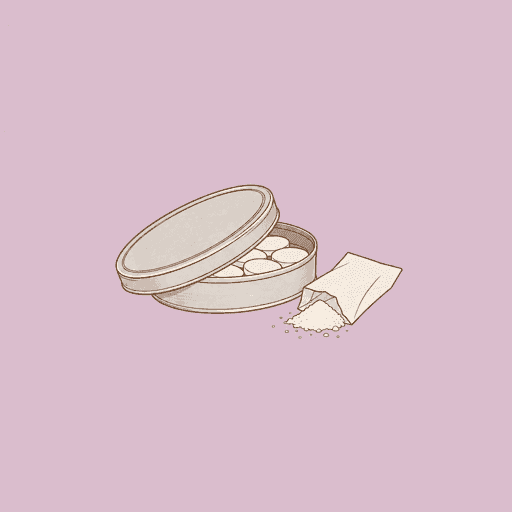
The following morning, Lenore finds Henry in her room placing a tin of pastilles by her bed as a supposed apology for his behavior. She confronts him, revealing that she knows the sweets are poisoned with arsenic. She blows into the tin so that a cloud of white powder bursts into the air, watches Henry’s horrified reaction, and then tells him she has already disposed of the arsenic. Lenore informs Henry that she has given an incriminating letter to Detective Lacey to be opened should anything happen to her, effectively blackmailing him into ensuring her “long and healthy life” (298).
Lenore’s confidence is shaken when she overhears Henry telling Dr. Foxfield that she suffers from dangerous delusions and may be a danger to others and Foxfield obliquely references Cora’s accident. Realizing the gravity of her situation, Lenore gives Molly a large sum of money and urges her to take an extended holiday.
Part 2, Chapter 25 Summary
During the shooting party on the moors, Henry corners Lenore and gives her an ultimatum: She can agree to an uncontested divorce in which she takes the blame for adultery, or he will have her committed to the asylum that very day. When Lenore again accuses him of having an affair with Cora, Henry denies it, explaining the diamond necklace was a gift for Cora’s assistance in the Ajax matter. The realization that she killed Cora based on a false assumption sends Lenore reeling. A brief flashback recalls a specific night at Aunt Daphne’s house when a young Lenore walked out into the London streets, then returned and resolved that killing her own hope was the only way to survive.
Now, consumed by rage and a monstrous hunger, Lenore refuses Henry’s terms and attacks him. They fight violently across the moor, and though Henry wounds her with a rock, Lenore overpowers him. She bites into his neck and tears out his throat, killing him. As she stands over his body, she feels a sense of triumph and imagines she can hear Carmilla’s inhuman laughter.
Part 2, Chapter 26 Summary
When the shooting party returns, they find Lenore spattered in blood beside Henry’s mutilated corpse. Nearby, Henry’s notoriously ill-behaved hunting dogs have bloody mouths. Lacey crouches beside Lenore and asks her to tell him what happened. She is lost for words until one of the men remarks that Henry “quite literally couldn’t train a dog to save his life” (315). She tells Lacey and the others that the dogs went wild and mauled Henry to death. The men quickly accept this story.
Just as the scene is brought under control, a fine carriage arrives, and Carmilla emerges. She calmly addresses the men, stating she has come to take her “dear friend” into her care. As Carmilla takes Lenore’s hand, Lenore sees a shared understanding in her eyes. Carmilla smiles and says, “Come, my dear. You must be so terribly hungry” (317).
Part 2, Chapters 21-26 Analysis
In the novel’s final section, Cora’s death advances Lenore’s transformation into the “female monster,” a figure of rebellion against patriarchal constraints. As she holds Cora’s weight, Lenore realizes, “All the power is now in my hands, and with the flex of a muscle, this could all be over” (278). Lenore’s decision is fueled by a furious sense of betrayal and a raw jealousy of Cora’s unencumbered freedom. She views the act as a punishment for Cora’s perceived affair, showcasing a new, ruthless morality where her survival and vengeance supersede conventional ethics. This act of violence is the first in which Lenore fully claims her agency, moving beyond fear and into a realm of decisive, lethal action.
Following Cora’s death, Lenore demonstrates a newfound mastery of the social codes that once imprisoned her. When Detective Inspector Lacey gently suggests Cora’s fall might have been a suicide, Lenore immediately seizes the opportunity, constructing a story that casts Henry as a cruel adulterer and herself as a sympathetic victim. Later, after killing Henry, she again exploits the biases of her audience, allowing the men of the shooting party to believe that their host, a “grasping, vulgar man with his sly business affairs and naked ambition” (316), was mauled by his own poorly trained dogs. The gentry’s readiness to accept her version of events highlights The Intertwined Struggles of Class and Gender; the men close ranks to protect a woman of their own class, whose gender makes her seem incapable of such brutality, from the messy truth of both her actions and Henry’s low-class origins. Lenore learns that true power lies in controlling the narrative, a skill she uses to ensure her own survival and freedom.
Lenore’s attempt to eat in the Nethershaw kitchens, followed by a violent purge, gives physical form to the motif of hunger that has defined her journey. Her desperate consumption of grapes, pie, ham, and cheese is a literal attempt to satiate a desire that has become monstrous and unmanageable. However, her body’s immediate rejection of the food signifies that her appetite is no longer for simple sustenance. This scene makes it clear her hunger is for power, autonomy, and retribution, cravings that the domestic world and its offerings can no longer satisfy. This bodily revolt illustrates the theme of Desire as Self-Actualization; her physical self is now in open conflict with the constrained life she has been forced to lead. The act of binging and vomiting physicalizes the mix of guilt and empowerment warring within her, marking the final, violent break from her role as a controlled, passionless wife. This foreshadows the more literal, bloody consumption that will ultimately liberate her.
The novel’s climax on the moor completes Lenore’s monstrous self-actualization. Her final confrontation with Henry is a primal act of consumption, as she bites into his throat and tears his body apart. The graphic description of the “spurt of arterial blood into [her] mouth” completes her arc by fully aligning her with the gothic vampire archetype inherited from Le Fanu’s Carmilla (314). Blood, previously a marker of industrial violence and female suffering, becomes the medium of her triumph. By devouring her oppressor, Lenore reclaims the life and vitality he has drained from her over a decade of marriage. Carmilla’s sudden arrival to collect her “dear friend” underscore the extent of the protagonist’s transformation over the course of the novel. Lenore is no longer an isolated, suffering wife but a member of a monstrous sisterhood, her hunger finally acknowledged and welcomed as the very essence of her newfound power.

Get in-depth, chapter-by-chapter summaries and analysis from our literary experts.
- Grasp challenging concepts with clear, comprehensive explanations
- Revisit key plot points and ideas without rereading the book
- Share impressive insights in classes and book clubs
Featured Collections
Appearance Versus Reality
View Collection
Books on Justice & Injustice
View Collection
Books that Feature the Theme of...
View Collection
Challenging Authority
View Collection
Class
View Collection
Class
View Collection
LGBTQ Literature
View Collection
Loyalty & Betrayal
View Collection
Power
View Collection
Revenge
View Collection
Safety & Danger
View Collection
The Best of "Best Book" Lists
View Collection
Truth & Lies
View Collection