Hungerstone
A modern alternative to SparkNotes and CliffsNotes, SuperSummary offers high-quality Study Guides with detailed chapter summaries and analysis of major themes, characters, and more.
Summaries & Analyses
Quizzes
NEWReading Tools
Part 2, Chapters 15-20Chapter Summaries & Analyses
Content Warning: This section of the guide includes discussion of graphic violence, sexual content, gender discrimination, emotional abuse, suicidal ideation, illness, and death.
Part 2: “It Is the Living”
Part 2, Chapter 15 Summary
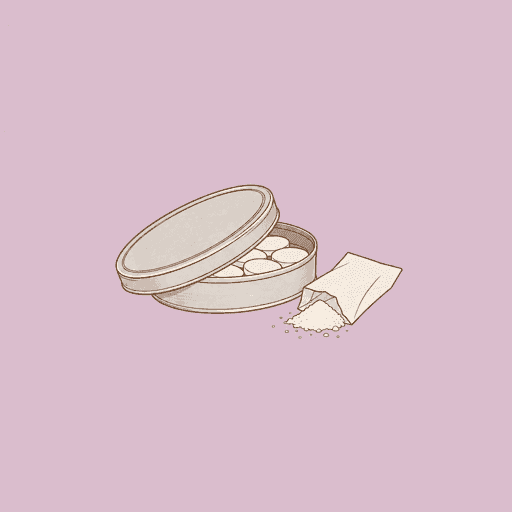
Lenore wakes up naked and alone in Carmilla’s bed at Nethershaw. The room is clean and unlived-in, with no sign of Carmilla except for a note on the pillow that reads, “Darling. Aren’t you magnificent? You know now. Enjoy. I’ll see you soon” (200). In the hallway, Lenore encounters Cora, who is startled by her nudity. Cora reveals that both Carmilla and Henry were absent from breakfast. When Lenore explains that Carmilla has vanished, Cora expresses relief, admitting she was afraid of Carmilla’s unsettling nature. Alone again, Lenore grapples with the new, terrifying awareness that Henry has been poisoning her and wants her dead. Realizing that her attempts to build a safe life have been a futile effort to please a man who means to kill her, she resolves to save herself and make Henry pay. Her initial plan is to secretly visit a doctor, secretly dispose of the pastilles, present Henry with empty tins, and search his study for evidence. Before she can act, the housekeeper interrupts to announce that the police have arrived and wish to speak with her.
Part 2, Chapter 16 Summary
Detective Inspector Lacey questions Lenore about the incident she witnessed in a cottage in the village of Hathersage, and his gaze lingers on a bite mark Carmilla left on her neck. Lacey wraps up the interview, stating he believes Lenore has told him all she knows. He leaves his card before departing, which Henry crumples. Henry then confronts Lenore for entertaining a male guest alone, then demands to know what Lacey asked her. He angrily blames her for associating herself with the letter she delivered to Hathersage, but she surprises him with newfound defiance, arguing with him about the man killed at his factory. Stunned by her change in behavior, Henry blames Carmilla for having “poisoned [her] mind with alien ideas” (213). The following day, while driving with Cora to a picnic, Lenore impulsively diverts their carriage to the Botanical Gardens. She unnerves Cora by recounting the graphic details of her parents’ fatal carriage accident and asking whether Cora thinks about death. At the gardens, Lenore is overcome by a monstrous, insatiable hunger and eats voraciously. She realizes the poisoned pastilles that used to curb her appetite no longer have power over her. On the ride home, she accuses Cora of being instructed by Henry to watch her, leaving her friend frightened and confused.
Part 2, Chapter 17 Summary
Back at Nethershaw, Lenore goes to the high gallery above the dining hall, where she considers jumping to her death. Instead, she claws at the plaster on the ceiling in a fit of despair. She then overhears Henry telling Cora that a “conniving woman” has interfered with plans “months in the making” (227), which Lenore infers is about Carmilla. That evening, Lenore shocks Henry and Cora by coming to dinner in her nightgown. Henry offers her a tin of pastilles, claiming it is an apology for his earlier harshness. Seeing through the lie, Lenore tests him by offering a pastille to Cora, which forces a panicked Henry to intervene, claiming it will spoil her appetite. At the dinner table, Lenore finds the food tasteless and unsatisfying. The frustration culminates in a violent outburst where she throws a piece of beef and then shatters a wine glass against the wall near Henry. She flees to her bedroom and slams the door, barricading herself inside.
Part 2, Chapter 18 Summary
Lenore discovers that Henry has locked her in her bedroom. She overhears him and Cora outside the door discussing her as “not sane” and planning to send for a doctor. Over the next day, Lenore descends into a feverish state, tormented by a strange, all-consuming hunger. In her delirium, she eats strips of wallpaper and gnaws on the wooden leg of a chair.
The following night, Carmilla appears outside her first-floor window. With Carmilla’s encouragement to do what she truly wants, Lenore smashes the windowpane with a pot from her dressing table. Carmilla yanks her through the window and they drop together, landing in the soft heather below, where a carriage is waiting. After giving Lenore a new dress, Carmilla explains that she left so Lenore could discover her own appetites. As they drive away, Lenore acts on her first true impulse, pointing to a theater poster and declaring she wants to see the play.
Part 2, Chapter 19 Summary: “Revenge.”
Lenore and Carmilla see a play called Maria Marten, or The Murder in the Red Barn, which is about a woman who is murdered by her lover. The story solidifies Lenore’s desire for revenge against Henry. Afterward, they go to a supper club where Lenore is humiliated to see Henry with another woman sitting on his lap. She flees to a nearby graveyard, where she confesses to Carmilla her lifetime of pain and powerlessness. Lenore declares that she wants Henry to pay and considers killing him, but Carmilla warns her of risking arrest and advises her to stop playing by his rules. On the way back to Nethershaw, they stop by a river and have a passionate sexual encounter. At the riverbank, Carmilla presses Lenore’s hand against a hunger stone, a rock marked in times of drought to signal that times of starvation are imminent. Carmilla tells her the stone is “long drowned,” the river now “free and powerful and raging” (258). With a new sense of purpose, Lenore tells Carmilla to take her back to Nethershaw, stating she has “unfinished business.”
Part 2, Chapter 20 Summary
Lenore sneaks back into her locked room before dawn, determined to get revenge by exposing Henry, not by murdering him. When Dr. Foxfield arrives to assess her mental health, Lenore successfully manipulates him into believing she is merely a fragile wife, overwhelmed by her new duties. The doctor diagnoses a temporary “fragility of the nerves” and dismisses Henry’s fears of hysteria (264). Lenore then contrives a reason for Henry to drive Cora to town, ensuring she has the house to herself. She finds Henry’s hidden trunk, replaces his bag of arsenic with icing sugar, and buries the real poison in the garden beneath her broken window. In Henry’s study, she discovers documents proving he has been conspiring with Cora’s father, a government official, to defraud workers of compensation for deaths and injuries at his factory. Recognizing that as Henry’s wife she cannot stand as a witness against him, Lenore compiles the most damning evidence into an envelope alongside a short letter with instructions that it “be opened in the event of [her] untimely death” (272).
Part 2, Chapters 15-20 Analysis
Hunger appears as both a destructive and a liberating force in these chapters. In a feverish state after being locked in her room, Lenore gnaws on a chair leg and eats wallpaper. This physical craving is a violent reaction against a life of emotional and psychological starvation. Her earlier outburst at the dinner table, where she declares she is “feeding the wrong hunger” (231), marks her conscious recognition of her existential appetites. The symbol of the arsenic pastilles has lost its power, leaving her with the “raw, untrammeled hunger” of a woman woken from a 30-year slumber (220). Her grotesque consumption signifies the collapse of the controlled, curated self she has maintained for survival. Drawing on the literary lineage of Carmilla, the novel frames this awakening in vampiric terms; Lenore’s hunger becomes a monstrous, primal force that must be fed. Its emergence signals the death of the accommodating woman she was forced to be, illustrating the theme of Desire as Self-Actualization as a process that is both frightening and necessary for her rebirth.
This section contrasts Lenore’s youthful despair with her adult decision to seize control of her own story. In a flashback, a 12-year-old Lenore weeps over a penny dreadful, concluding that “only in fiction was there logic and sense” and that in real life, the innocent are not saved (198). This memory establishes her core belief that she is a powerless character in a meaningless tragedy. However, after her escape with Carmilla, her perspective shifts. Watching the play Maria Marten, or The Murder in the Red Barn, a story of a woman’s murder being avenged, no longer prompts despair but instead solidifies her desire for revenge. She moves from seeing stories as proof of life’s unfairness to seeing them as models for action. This culminates in her decision to compile evidence against Henry. By creating this document, she becomes the author of her own narrative, ensuring that even if Henry kills her, her truth will be told on her terms.
The narrative uses classic gothic tropes to frame Lenore’s liberation as a monstrous rebirth. Her imprisonment in the locked bedroom recalls the “madwoman in the attic,” a figure of female suffering and confinement in Victorian literature. However, Lenore refuses this fate. The act of shattering the window allows her to “experiment with a little violence” and represents a break from her domestic prison (240). Carmilla’s role is that of the archetypal gothic liberator, pulling Lenore from the suffocating confines of Nethershaw into the wild, untamed moor. The metaphor of the hunger stone solidifies this transformation; Carmilla explains that the stone, a historical marker of starvation, is “long drowned” by a river that is now “free and powerful and raging” (258). This imagery contrasts Lenore’s history of deprivation with her new, unleashed strength. In escaping her confinement, Lenore takes her place among a literary tradition that finds agency in female monstrosity.
After her escape and return to Nethershaw, Lenore’s manipulation of Dr. Foxfield demonstrates her shift from chaotic rage to strategic resistance. Where Henry and Cora seek to pathologize her rebellion as madness, Lenore appropriates the language of female hysteria to disarm her captors. She presents herself as a woman undone by domestic responsibility, a narrative the doctor readily accepts because it affirms his sexist worldview. By performing the role of a fragile wife suffering from a “fragility of the nerves” (264), she subverts the very patriarchal assumptions Henry uses to control her. This performance is an important turning point, revealing Lenore’s capacity to “play [her] own game” on a board designed to ensure her defeat (252). This act of deception highlights The Intertwined Struggles of Class and Gender, as Lenore weaponizes the expected helplessness of a woman of her station to create the autonomy she needs to plot her revenge.
Upon discovering Henry’s business records, Lenore’s focus shifts from personal survival to systemic justice, linking her domestic suffering to a broader critique of industrial exploitation. The documents that prove Henry’s conspiracy to deny compensation to injured and killed workers reveal that his cruelty is not limited to his marriage. This realization reframes his attempt to murder her as just one facet of his all-consuming greed and emphasizes The Monstrous Nature of Capitalism as the antagonist’s driving force. Consequently, Lenore’s plan for revenge evolves, and she replaces the arsenic with sugar and compiles damning evidence against her husband. True revenge, she realizes, lies not in mirroring Henry’s violence but in dismantling the systems of class and reputation that protect him and his corrupt enterprise.

Get in-depth, chapter-by-chapter summaries and analysis from our literary experts.
- Grasp challenging concepts with clear, comprehensive explanations
- Revisit key plot points and ideas without rereading the book
- Share impressive insights in classes and book clubs
Featured Collections
Appearance Versus Reality
View Collection
Books on Justice & Injustice
View Collection
Books that Feature the Theme of...
View Collection
Challenging Authority
View Collection
Class
View Collection
Class
View Collection
LGBTQ Literature
View Collection
Loyalty & Betrayal
View Collection
Power
View Collection
Revenge
View Collection
Safety & Danger
View Collection
The Best of "Best Book" Lists
View Collection
Truth & Lies
View Collection