Hungerstone
A modern alternative to SparkNotes and CliffsNotes, SuperSummary offers high-quality Study Guides with detailed chapter summaries and analysis of major themes, characters, and more.
Summaries & Analyses
Quizzes
NEWReading Tools
Part 1, Chapters 6-10Chapter Summaries & Analyses
Content Warning: This section of the guide includes discussion of graphic violence, sexual content, gender discrimination, child abuse, emotional abuse, animal death, illness, and death.
Part 1: “It Is Not the Dead You Should Fear”
Part 1, Chapter 6 Summary: “My Smile Becomes Stiff.”
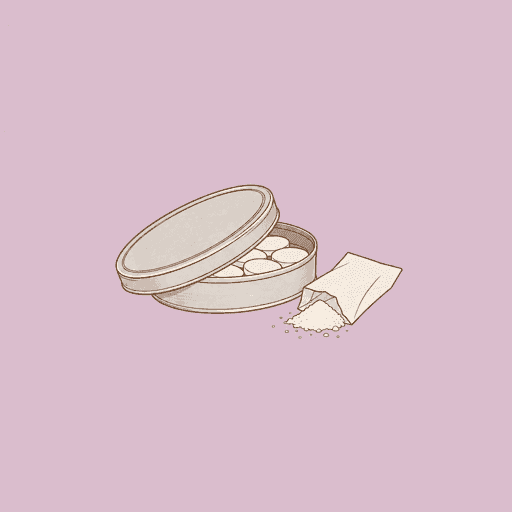
Henry’s arrival at Nethershaw with Lenore’s beautiful and wealthy friend, Cora, fills Lenore with a sense of dread and inadequacy. This intensifies when Cora reveals she has been staying at the Victoria, a hotel Henry claimed was unsuitable. Lenore hides a stack of Cora’s unread letters and receives an expensive fan from her, a gift Lenore feels is too girlish for her age. Carmilla appears and criticizes Lenore’s tin of pastilles, calling them “disgusting.” Later, as she leaves the drawing room before dinner, whispers to Lenore that she wants her to herself.
Henry is cold toward Lenore, accusing her of being distracted by her new “hanger-on.” He then abruptly softens, inviting Lenore to his steelworks in Sheffield, and the moment temporarily eases the strain between them. That evening, Lenore dines alone with Carmilla, who provokes her by suggesting Henry is having an affair with Cora. That night, Lenore is woken by a heavy weight on her chest. A shadowy presence holds her down, and she feels a tongue on her neck followed by two sharp points pressing into her skin. When the presence vanishes, Lenore suspects Carmilla of playing a trick on her but finds Carmilla’s door locked.
Part 1, Chapter 7 Summary
A flashback reveals Lenore’s miserable childhood with her emotionally abusive Aunt Daphne, who taught her to suppress her own needs in order to be tolerated. In the present, Lenore is convinced Carmilla must leave Nethershaw. She travels to Sheffield and arranges for Dr. Bartolomé to visit, hoping he will declare Carmilla fit for travel. She also travels to the police station but stands outside before deciding not to enter, recalling Henry’s firm instruction against involving the police.
After a near-fatal accident with a mail coach triggers a memory of her parents’ death, Lenore recovers at the Victoria hotel. There, she reads a newspaper article about industrial relations at the Ajax Works that mentions the Sheffield Outrages, which Lenore faintly recalls as an incident involving murders and explosions that occurred when she was a child. Her anxiety deepens when she sees Henry and Cora together at the hotel. Back at Nethershaw, Dr. Bartolomé examines Carmilla but insists she is too unwell to leave, citing a slow and irregular pulse. Overwhelmed and frustrated by this setback, Lenore cruelly snaps at Cora. Wracked with immediate guilt, she retreats and consumes an entire tin of pastilles, purposely making herself feel ill to distract herself from her emotional pain.
Part 1, Chapter 8 Summary
Lenore recalls her society debut at age 19 and the calculated manner in which she secured a marriage proposal from Henry. They viewed their union as a pragmatic exchange of her aristocratic status for his wealth. In the present, her health deteriorates, and she becomes violently ill with severe cramping and vomiting. Molly suggests she might be pregnant, but Lenore knows this is impossible, as she and Henry have not been intimate for a long time. While Henry and Cora avoid her sickroom, Carmilla tends to her with unexpected patience and kindness. When she attempts to empty Lenore’s pastilles out the window, Lenore snatches the tin and locks it in a drawer.
While Lenore is feverish, Carmilla apologizes for pushing Lenore too hard and cryptically claims she heard Lenore “calling [her] for so long” (101). As Lenore drifts in and out of consciousness, Carmilla’s presence feels both real and hallucinatory. In the middle of the night, Lenore looks out her window and sees a figure in a white nightgown, whom she believes is Carmilla, walking across the dark moor toward a limestone crag called Hungerstone Edge.
Part 1, Chapter 9 Summary
Lenore receives a letter from Debrett’s peerage guide stating that no record of the Kernstein family exists. Later, Carmilla continues to challenge Lenore about her repressed will, telling her that “to want is to be alive” (109). Lenore’s suspicion of an affair between Henry and Cora grows when she sees Cora emerging from Henry’s study.
Lenore, Cora, and Carmilla take a walk on the moors. Carmilla catches a snake, and Lenore finds herself strangely fascinated even though she expected to be disgusted by the animal. At a fork in the path, Carmilla insists that Lenore choose their route, a simple demand that brings Lenore to tears because she has been conditioned to never express her own desires. The women then come upon a farmhouse where they discover a young girl who has torn a hen apart with her bare hands. The girl looks at Lenore and confesses, “I was so terribly hungry” (163). While Cora is horrified, Carmilla is rapturous. Carmilla takes the dead bird from the girl’s hands and leads her back to the girl’s farmhouse.
Part 1, Chapter 10 Summary: “I Remember Screaming.”
Shaken by the incident at the farm, Lenore lies to the girl’s father, claiming a fox killed the hen. The next day, Henry takes Lenore and a subdued Cora into Sheffield. At the Ajax Works, Henry gives investors a tour, which is interrupted when a grinding wheel shatters and a metal fragment rips a worker’s face open. When Lenore questions Henry about the workers’ safety, he becomes enraged and warns her to stay out of his business.
Henry then demands that Carmilla be removed from Nethershaw, suggesting Lenore bribe a doctor to declare her fit for travel. He then produces a jeweler’s box and gives Lenore a necklace of black Whitby jet for their anniversary even though their anniversary isn’t until next week. She is crushed, having previously found a diamond necklace she assumed was for her. Before he leaves her at the works, he hands her a new tin of pastilles. Moments later, Lenore sees Cora walk through the factory gates, seemingly arriving for a private meeting with Henry.
Part 1, Chapters 6-10 Analysis
In the novel’s second section, Lenore’s inner conflict reveals the difficulty of reclaiming Desire as Self-Actualization after a lifetime of abnegation. The protagonist’s inability to choose a path on the moors reveals the depth of her self-suppression. The flashback to her miserable childhood with Aunt Daphne reveals that Lenore was systematically taught that her needs were an intolerable “burden” and that her survival depended on distancing herself from her desires. By asking Lenore to choose their route through the moors, Carmilla challenges the denial of self that underpins Lenore’s entire approach to life. The resulting panic and tears expose the void where Lenore’s will should be. This moment is a painful but necessary turning point in Lenore’s journey toward Desire as Self-Actualization; before she can embrace her appetites, she must first confront the fact that she does not know what they are. Carmilla forces Lenore to face the psychological damage inflicted by her upbringing, framing her eventual transformation as a difficult process of reclamation.
The horrific accident at the Ajax Works connects the violence of industrial capitalism to the psychological violence of Lenore’s marriage. Henry callously dismisses the incident by saying “there is no such thing as a life without risk” (130), revealing that his power is built on the casual acceptance of others’ suffering. The Ajax Works thus becomes a motif of The Monstrous Nature of Capitalism. The factory’s centerpiece, a Bessemer converter described as a “monstrous thing that looks like a steel egg on legs” spilling a “red tide of molten metal” (125), literalizes this grotesque, life-destroying force. Because the steelworks’ profits fund the purchase and renovation of Nethershaw, Dunn also uses Ajax Works to critique the exploitation that underpins the British landed gentry’s status. Lenore’s visit to the factory forces her to reckon with her own privilege and culpability in this system: “I have been happy to find security in his money, never thinking on whose backs such riches are made” (127). The subsequent accident marks an important moment for the protagonist’s moral awakening and her growing resistance against Henry’s corrupt control.
The novel’s use of gothic tropes creates ambiguity, blurring the lines between the supernatural and Lenore’s crumbling reality. The nighttime visitation from a shadowy presence that pins her to the bed and bites her neck is a classic gothic horror scenario. However, the narrative leaves the incident deliberately uncertain: Lenore suspects Carmilla, but the event could be a nightmare born of her mounting anxiety. This ambiguity mirrors Lenore’s own fragile state, as she struggles to determine whether her suspicions about Henry and Cora are real or “poison” planted by Carmilla. The setting of Nethershaw enhances this atmosphere; the isolated, dilapidated manor functions as an external manifestation of Lenore’s decaying marriage and psyche. Carmilla’s ability to appear “noiselessly” and the sight of a lone figure on the moor at night further destabilize Lenore’s sense of reality, suggesting that the true horror lies in the disintegration of the self rather than in an external “monster.”
Lenore’s encounter with the farm girl who tears a hen apart with her bare hands uses hunger as a motif of Desire as Self-Actualization. The girl’s simple, desperate confession, “I was so terribly hungry” (119), recasts her grotesque act as an expression of an overwhelming, undeniable need that polite society cannot contain. This scene provides a visceral image of the repressed appetites churning within Lenore herself, who is “famished” after witnessing the event. While Cora reacts with conventional horror, Carmilla looks on with “an expression of rapture” (120), positioning this raw, bloody consumption as an authentic state to be revered. This moment aligns with the author’s utilization of the gothic trope of vampiric hunger as a metaphor for unleashed female agency.
In this section, gifts and other domestic objects function as instruments of control, showing The Intertwined Struggles of Class and Gender. Henry’s anniversary present of a black jet necklace is a cheap substitute for the diamonds Lenore had seen and a calculated reminder of his economic power over her. His subsequent offering of more arsenic pastilles reinforces this dynamic; the pastilles symbolize his insidious patriarchal control, a toxic substance disguised as a sweet comfort that allows Lenore to numb the pain he himself inflicts. Carmilla’s judgment that the pastilles are “disgusting” marks her as the only person who recognizes this cycle of abuse and attempts to break it. Even Cora’s well-meaning gift of an expensive fan makes Lenore feel inadequate and “girlish,” reinforcing the class and social pressures that police her identity as an aging, childless wife. These transactional objects reveal the hollowness of Lenore’s world, exposing a system where material goods are weaponized to assert dominance, enforce conformity, and maintain a patriarchal order built on female suppression.

Get in-depth, chapter-by-chapter summaries and analysis from our literary experts.
- Grasp challenging concepts with clear, comprehensive explanations
- Revisit key plot points and ideas without rereading the book
- Share impressive insights in classes and book clubs
Featured Collections
Appearance Versus Reality
View Collection
Books on Justice & Injustice
View Collection
Books that Feature the Theme of...
View Collection
Challenging Authority
View Collection
Class
View Collection
Class
View Collection
LGBTQ Literature
View Collection
Loyalty & Betrayal
View Collection
Power
View Collection
Revenge
View Collection
Safety & Danger
View Collection
The Best of "Best Book" Lists
View Collection
Truth & Lies
View Collection