Open Throat
Open Throat
A modern alternative to SparkNotes and CliffsNotes, SuperSummary offers high-quality Study Guides with detailed chapter summaries and analysis of major themes, characters, and more.
Summaries & Analyses
Quizzes
NEWReading Tools
Background
Environmental Context: Ecological Instability in Los Angeles
At the heart of Open Throat is Los Angeles’s struggles with climate change. Climate change has exacerbated already significant challenges in the area, such as drought and forest fires, with climate change disrupting natural weather patterns. The early 21st century saw increasingly harsh dry spells, which increases risks of severe fires and can make wilderness areas more difficult for animals to survive in. The drought that the mountain lion experiences in the novel is one made worse by climate change, as well as by human intervention. When the narrator ventures into Los Angeles, they see green everywhere, suggesting that despite the drought, water is being used for aesthetic purposes by those in very wealthy neighborhoods.
Not only are wildfires at risk to break out because of human activity, such as fireworks, smoking, or even ill-conceived gender reveals, but they are also becoming more common because of rising temperatures. In the past few years, wildfires that broke out in Los Angeles were some of the worst on record. The Palisades fire killed dozens of people and destroyed property across the region, as these climate-related factors worked in tandem. When the narrator witnesses a man set fire to an encampment of unhoused people, they soon see the fire spread uncontrollably. It forces the narrator out of the park and into the city of Los Angeles, reflecting how destroyed or damaged habitats force animals to move elsewhere. In using an animal narrator, Open Throat thus provides a critique of how human-made climate change impacts the natural world.
Environmental Context: P-22
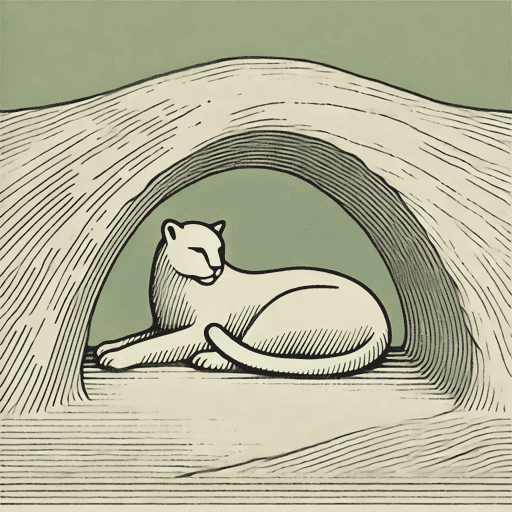
Henry Hoke found inspiration for his mountain lion narrator in Open Throat in the real-life story of P-22. P-22 was a mountain lion that lived in Griffith Park in Los Angeles. P-22 made his way into the city by crossing a highway, much like the narrator in the novel crosses the long death: “As a young mountain lion, P-22 made headlines by crossing two of LA’s massive freeways to find his long-time home in Griffith Park” (Rosenau, Josh. “A Year After the Passing of the Iconic Puma of LA’s Hills.” Mountain Lion Foundation, 2023). P-22’s many years in the park were well-documented, and he soon became a celebrity. Angelinos knew not to disturb him, and to give him space when spotted. Through the many photos taken of him and the constant attention, P-22 became a sort of symbol: “National Geographic photographer Steve Winters’ iconic photograph of P-22 in front of the Hollywood sign came to symbolize the strength and courage needed to make that long crossing. It cemented the cat as an A-lister and galvanized a movement to save LA’s cougars” (Rosenau).
P-22’s journey was not an easy one, and highlighted the impact of habitat loss and climate change on the region’s native apex predator. Forced into the city, P-22 captured the tragedy of the cougar’s dwindling population. Even in the park, P-22 faced much adversity: “He experienced nearly all the dangers threatening the survival of mountain lions: cars, poisons, shrinking habitat and inbreeding” (Rosenau). The narrator of Open Throat reflects the experiences of P-22, as they also face much danger. First, despite trying to save someone from a fire, bottles are thrown at them out of fear. That same fire then also drives the narrator out of the park. They lose this habitat and venture into an unknown city with even more dangers.

Get in-depth, chapter-by-chapter summaries and analysis from our literary experts.
- Grasp challenging concepts with clear, comprehensive explanations
- Revisit key plot points and ideas without rereading the book
- Share impressive insights in classes and book clubs