Open Throat
Open Throat
A modern alternative to SparkNotes and CliffsNotes, SuperSummary offers high-quality Study Guides with detailed chapter summaries and analysis of major themes, characters, and more.
Summaries & Analyses
Quizzes
NEWReading Tools
Themes
Content Warning: This section of the guide includes discussion of graphic violence, death, sexual content, and transgender discrimination.
Ecological Decay and Urban Wilderness
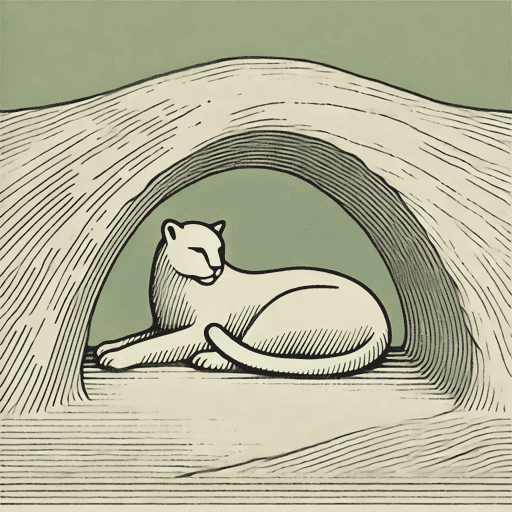
The narrator of Open Throat resides in the city of Los Angeles, making a home underneath the Hollywood sign in a cave. To survive, the narrator must face the challenges of overcoming ecological decay, which limits resources, and the urban wilderness of the city, which restricts movement.
The narrator’s primary goal in maneuvering through the park is to remain hidden. The narrator does not want any hikers to notice them, drawing unwanted attention. However, the narrator occasionally must venture out of the cave to quench both thirst and hunger. This challenge is exacerbated by the ecological decay of Los Angeles, a direct result of climate change that worsens droughts, making water scarce. When the narrator tries to find water, there is little to be had, a reminder of how severe this drought is: “[N]ow that the hikers are gone I leave my thicket and go down into the dry ravine where lots of water used to flow and I eat bugs and suck at the little trickles to make my thirst less” (8). This ravine was once full of water, providing an easily accessible source of sustenance. The drought causes the ravine to dry up, eliminating the narrator’s primary water source. Now, the narrator must do anything, even slurping at drops of moisture, to survive. The narrator continues to visit the ravine despite its lack of water, because of the greater threat that exists outside the park.
Los Angeles is a sprawling city, creating a maze of unknown and hostile areas for the narrator to explore. The narrator stays within the boundaries of the park because it simulates nature, even if it is often crowded with tourists and hikers. The narrator’s view of the city is unforgiving, seen through the lens of the danger it poses. Humans are scared of the narrator, and by venturing out into the city, the narrator risks their life. Only when ecological disaster erupts, in the form of a quickly spreading fire, does the narrator move out into the city: “I […] run away from my people / away from their doom and towards the lights of a larger one / the flames rise to the tops of the trees behind me and the hills in front of me reflect the glow and they might as well be burning too” (71). The fire forces the narrator to evaluate the severity of the city’s threat. To stay means facing an insatiable and unpredictable fire, but the city promises unknown hurdles and dangers. The narrator therefore sees Los Angeles as the dangerous wild, an inversion of how humans might view the actual wild. The city represents the greater doom.
As the narrator ventures out into the city, human life and society become clearer. As the narrator moves through this unpredictable area, questions arise about why the city looks the way it does, and why humans act the way they do.
The Disillusioning Nature of Human Society
Henry Hoke uses the mountain lion’s identity as an animal to offer a different view of familiar human practices and behaviors. As the narrator closely observes humans and begins to understand their behavior, the novel examines the disillusioning nature of human society.
At first, the narrator only sees and hears people in the park. With little knowledge of the city around the park, the narrator slowly discovers humans and the differences between them and other living creatures. With the narrator’s thirst worsening in the drought, a glaring difference appears between itself and humans. While the narrator cannot find water, men and women hike by the narrator, carrying water with them: “I think of the girl hikers and the shiny bottles they gulp out of and I paw the dirt for more caterpillars and eat them and I know I have to find somewhere new to drink” (8-9). This observation creates a stark contrast between the ways humans and wild animals survive during times of ecological hardship. While the narrator must depend on natural sources of water, disrupted by drought and human intervention, the hikers have easy access to water.
When the narrator leaves the park and stumbles into the city, the cruelty of humans becomes more apparent. While in Little Slaughter’s home, the narrator recognizes the great disparity between the lives of the housed in Los Angeles, and those unhoused whom the narrator once knew. As the narrator becomes more accustomed to human life, emotions become conflicted: “I’m starting to hate myself […] I think of all the other space in this house and in every house on this street and in all of ellay and I think how the people of my town could be here too / instead of burning in the woods” (115). The narrator begins to feel like a human, and experiences self-loathing. After witnessing the hardships and violence against the unhoused, the narrator struggles to fathom how there is such a difference between them and Little Slaughter. Little Slaughter’s home is big enough to fit others in it, and the narrator realizes that some people live better than others, abandoning the unhoused to face the danger of living outside alone.
The narrator becomes more and more disillusioned with society as Open Throat progresses, seeing the unfair ways humans act. The inequity and abuse bothers the narrator, and because of these experiences, the narrator believes that humans are simply a destructive force.
Forging Queer Identity Through a Desire to Belong
The exploration of queer identity is central to the plot of Open Throat. Though the narrator does not find words to explain its own gender and sexuality that match the ways humans categorize them, the narrator does explore queer identity. This exploration occurs through the narrator’s need to belong.
Just as many queer people experience the trauma of rejection and isolation, the narrator experiences abandonment. This drives the narrator to crave community and a partner who will accept the narrator. After the narrator’s father runs the narrator out of the forest and toward the city, the narrator meets another mountain lion, of the same sex, and begins a relationship. This relationship is not traditional in any sense, but allows the narrator to feel connected as they share a deer the Kill Sharer caught: “I remember how every day the kill sharer and I would meet by his deer and bloody our faces together / and each bite that made the carcass smaller made the roar of the long death smaller too” (62). This other cat also allows the narrator to eat with him, and does not ask for anything in return. The narrator feels a bond forming, though they cannot communicate. The more time they spend together, the more at peace the narrator feels.
The need to belong is deep-rooted in the narrator’s psyche. When the narrator sees two human men having sex, it feels as though the scene depicts something natural. The ability to have a partner is something the narrator can only dream of. The narrator attempts to join the town of unhoused people in the park, but they reject the narrator, afraid even when the narrator tries to help put out the fire. With Little Slaughter, the narrator feels more comfortable, but realizes that this comfort can only occur in the safety of Little Slaughter’s room.
When the narrator dreams of Disney, the narrator finally experiences the euphoric sensation of belonging: “I smell something so different that it’s hard to describe and as we come to a stop and as the river of people forms a long slow moving line I realize it’s not what I smell it’s what I don’t smell / no one is afraid” (121). The narrator is at first uncertain of the dream, as everyone around acts strangely. When the narrator realizes that the scent of fear is absent, meaning that others are accepting them, it is a new sensation. This dream captures the struggle of the queer community to live with their identity in societies that reject them. Many queer individuals experience fear, intolerance, and rejection, much like the narrator does when in the company of humans.
Despite the happiness the dream brings, the narrator wakes to rejection again, and soon finds that the intolerance is too much to escape. This pushes the narrator to realize that searching for identity through a desire to belong is limiting, and finally accepts a more natural identity, which fits with the narrator’s own values.

Unlock every key theme and why it matters
Get in-depth breakdowns of the book’s main ideas and how they connect and evolve.
- Explore how themes develop throughout the text
- Connect themes to characters, events, and symbols
- Support essays and discussions with thematic evidence