Open Throat
Open Throat
A modern alternative to SparkNotes and CliffsNotes, SuperSummary offers high-quality Study Guides with detailed chapter summaries and analysis of major themes, characters, and more.
Summaries & Analyses
Quizzes
NEWReading Tools
Summary and Study Guide
Overview
Open Throat (2023) is a stream-of-consciousness novel by Henry Hoke that follows the adventures of a queer and gender non-conforming mountain lion living in Griffith Park in Los Angeles. Though the novel primarily focuses on themes of Ecological Decay and Urban Wilderness, The Disillusioning Nature of Human Society, and Forging Queer Identity Through a Desire to Belong, it also captures the impact of climate change on wild animals, particularly those affected by habitat loss and drought.
A finalist for the 2024 Pen Faulkner Award for Fiction, the novel takes inspiration from the real-life mountain lion, P-22, that lived in Griffith Park in Los Angeles.
This guide uses the 2024 paperback edition published by MCD & Farrar, Straus, and Giroux.
Content Warning: This source material and guide feature depictions of animal cruelty and death, graphic violence, death, sexual content, cursing, emotional abuse, physical abuse, and transgender discrimination.
Plot Summary
Open Throat follows a mountain lion living in Griffith Park in Los Angeles. This mountain lion narrates the novel through stream of consciousness. The narrator is queer, doesn’t think of themselves as either a male or female lion, and only ever refers to themselves as “I.”
The narrator wakes in a bush to the sound of a cracking whip. They peer out to see a man dressed like Indiana Jones entertaining a man and a woman with a whip. The narrator neither hunts nor eats people, but something about the man with the whip makes them uncomfortable, and they begin to wonder what it might be like to pounce on him. When the narrator smacks their lips while daydreaming, the people hear them, and the man with the whip approaches the bush. Just as the mountain lion considers jumping at him, the other people call him away.
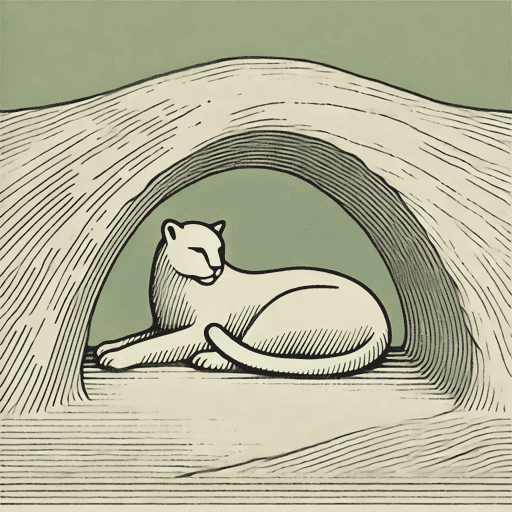
In the park, the narrator makes their home in a cave beneath the Hollywood sign. They often watch hikers go by, eavesdropping. They slowly learn about human culture and the city of Los Angeles. When not in the cave, the narrator wanders around the park, searching for whatever food and water they can find. This is a daily struggle, as a drought plagues the area.
The narrator often lingers around an encampment of unhoused people, hoping to be accepted by them. They think that they foster a symbiotic relationship with the encampment. The people leave their trash out, which attracts vermin. These vermin are food for the narrator, who by eating them, keeps them away from the people.
The mountain lion was not born in the park, but came from the wilderness away from the city. They were raised by their mother, a kind lion and a skilled hunter. They stayed with their mother well past their kittenhood. Lurking in the background of their lives was their father. Their father was wary of the narrator, and territorial. He attacked the narrator and killed their mother. He chased the narrator out of his territory, toward the multi-laned highway the narrator calls “the long death” (37).
When the narrator approached the long death, they met another mountain lion. This lion shared a deer he killed with the narrator—odd behavior for a predator. The narrator bonded with the other mountain lion, whom they named the Kill Sharer, falling in love. When the Kill Sharer did not return one night to the carcass of the deer, the narrator decided to finally cross the long death. There, they found the body of the Kill Sharer on the road, and ran in despair across the long death.
In the park, the narrator hides from people, and though they feel protected by the cave, an earthquake startles them. They watch as two men approach their cave, and enter it to have sex. The narrator watches, seeing what they are doing, and the movements they make, as resembling the earthquake, though in a more positive and natural way. The narrator imagines what it might be like to do the same thing with the Kill Sharer, both of them having penises like the men.
Afterward, another pair of men approach the cave, though when it is apparent they won’t have sex, the narrator follows them. It is the man with the whip and his friend. The man with the whip and the friend complain about the encampment of unhoused people, and the man with the whip uses his lighter to set the encampment on fire before fleeing. As the fire spreads through the dry area, the mountain lion tries to help one of the people by pouncing on him to put the fire out. The other people of the encampment believe they are attacking the man, and chase the narrator out. The fire spreads through the park, pushing the narrator to its edge.
As the narrator tries to maneuver through the smoke, they stumble upon a merry-go-round. At first, they think that it is a trap that impales animals. When they realize it is fake, they move on. The narrator eventually stumbles upon a zoo, though all of the animals in the zoo scream in terror at the sight of them, much like humans do. Eventually, the narrator finds a weak and sickly koala, and eats it. Zookeepers appear and chase the narrator away, lamenting the death of the koala.
Forced to move into the city, the narrator hides in bushes. They are overwhelmed by the green of the city, with grass and palm trees in better health than any plants in the park. When two people walk by and point to a house that belongs to a celebrity named Slaughter, the narrator decides to go there. They find a hole and crawl into the basement. It is safe, dry, and stocked with many mice for them to eat.
During the day, the narrator hears the man named Slaughter argue with his daughter, whom the narrator names Little Slaughter, about a new baby. When Slaughter goes to the hospital for its birth, Little Slaughter spots the narrator through a hole in the deck. Instead of being afraid, she is happy to see them. She claims that she summoned them, and names the narrator “Heckit,” after the Greek goddess Hecate. She feeds the narrator raw meat and water through the hole. When a downpour floods the basement, the narrator begins to drown. They think they will die until Little Slaughter pulls them out.
Little Slaughter adopts the narrator, bringing them to her room. She provides a litter box and sofa and tells the narrator, whom she treats as a female animal, about her life. She does not like her father’s new wife or her father. She plans to move to Santa Fe, and wants to bring the narrator. The narrator enjoys life in the house, with unhunted food and water always waiting, though they begin to feel uncomfortable that Slaughter has all this space, but the unhoused people do not.
Among Little Slaughter’s many plans is one to bring the narrator to Disney. One day, the narrator dreams of going to Disney, riding in a car for the first time. To their surprise, no one at Disney treats them like a dangerous animal. There is no fear and the narrator and Little Slaughter are even worshipped. Over the course of the dream, the narrator stands on two legs, walks with its paws at its side like hands, and even attempts to speak, feeling as though they are a human in a costume.
The peace of the dream breaks with a scream, and the narrator wakes to see Slaughter’s maid in the doorway. She runs away and Little Slaughter comes rushing in. Slaughter also arrives, and yells at Little Slaughter, begging her to step away from the narrator, and questioning how she could do this with the new baby now in the house. Little Slaughter argues and eventually storms out, only to return moments later when Slaughter’s wife yells that the baby is missing. Little Slaughter hid the baby in the laundry room, and in the chaos that ensues, she brings the narrator to her car, announcing that they will leave for Santa Fe early.
The two encounter traffic, and Little Slaughter decides to drive through neighborhoods instead. While they wait in traffic, the narrator looks out the window to see the man with the whip eating outside. The narrator remembers all the violence his hands committed and feels the need to kill him rise. Opening the door, the narrator charges at and pounces on the man, thinking of how much better the world would be if there were no humans. They kill the man, and look back to see Little Slaughter staring in horror.
The narrator never wanted to kill people but is glad that they made the decision in this case, to end the threat of the man with the whip. They watch as Little Slaughter flees, happy knowing that she will be unburdened without them. Sirens sound and emergency vehicles arrive, surrounding the narrator and the corpse of the man with the whip. The narrator tries to be non-threatening, and even tries to speak, though this only scares the people around them.

Get in-depth, chapter-by-chapter summaries and analysis from our literary experts.
- Grasp challenging concepts with clear, comprehensive explanations
- Revisit key plot points and ideas without rereading the book
- Share impressive insights in classes and book clubs