Taiwan Travelogue
A modern alternative to SparkNotes and CliffsNotes, SuperSummary offers high-quality Study Guides with detailed chapter summaries and analysis of major themes, characters, and more.
Summaries & Analyses
Author Insights
Quizzes
NEWReading Tools
Chapter 11-Translator’s Note 3Chapter Summaries & Analyses
Content Warning: This section of the guide includes discussion of substance use, racism, emotional abuse, and death.
Chapter 11 Summary: “Kiâm-Nn̄g-Ko / Savory Cake”
In March 1939, Aoyama remains in her cottage, feeling adrift ever since her falling-out with Chi-chan. Her appetite has disappeared; she oversleeps, subsists on plain rice and toast, and smokes heavily at her desk, producing only two thin shrine articles for Mishima padded with facts from a railway travel guide.
While consulting the guide, she feels a brief pull to travel, but realizes what she truly longs for is the Alisan sakura she had promised to see with Chi-chan. She accepts Mishima’s proposal to travel to Toyohara. She initially refuses his request to write promotional content about the Emperor’s paddies, but agrees when he describes kiâm-nng-ko, a local variant of bah-sò minced pork sandwiched between steamed sponge cake layers.
In Toyohara, they tour the royal paddies, Toyohara Shrine, and a Maso temple. At the temple, an idol of Nuózhà, the Third Prince, a Taiwanese deity shown in perpetual youth, reminds Aoyama of a comic story Chi-chan once translated for her. Mishima buys kiâm-nng-ko and takes Aoyama to a tearoom. The cake is so evocative of a past conversation with Chi-chan that it becomes difficult to swallow. As Aoyama praises the food and credits the Empire for similar cultural fusions, she notices suppressed displeasure on Mishima’s face. It is the same expression she now realizes Chi-chan had worn that rainy evening at Kirun Port when Aoyama said she would find the “demonic” Chi-chan adorable. She presses Mishima until he agrees to speak honestly.
Mishima tells her that her relationship to the Empire is governed by preference, not principle: she criticizes what she dislikes and praises what she finds delightful, then presents her tastes as evidence of larger truths. She treats Island culture as an exotic spectacle without genuinely engaging in its values. The Maso temple they just visited had been preserved by the locals, who fought for years to restore it after imperial troops damaged it. The colonial government added a Japanese torii gate regardless of the effort to claim it for themselves. Meanwhile in Taichū, the Maso Temple was demolished overnight for an urban reorganization project. He concludes that nothing in the world is harder to refuse than goodwill that speaks to the self-righteousness of the person who performs it.
They ride back to the cottage in silence. That night Aoyama drinks sake, smokes through her pack, and paces the veranda until she collapses onto the tatami. She dreams of various scenes before finding herself face-to-face with Chi-chan, who takes her hand but says Aoyama never once asked whether she wanted protection. Aoyama wakes at dawn.
Aoyama goes to the kitchen and eats all six remaining pieces of kiâm-nng-ko. Only as she finishes the last one does she realize she is weeping. The memory that breaks through is of the previous spring, when she pressed Chi-chan to see the Alisan sakura, talking past Chi-chan’s clear reluctance to follow through with this plan. Aoyama now understands she kept doing this throughout their friendship.
Chapter 12 Summary: “Mitsumame / Fruit and Jelly Ice”
On the last day of March, Aoyama walks the full length of Taichū from her cottage to Chōkyōshitō, a route she has never taken in nearly a year of living there. Arriving near the Taichū Second High School, she circles the campus looking for the Ōng family’s courtyard home but loses her nerve before approaching any gate.
She ducks into a nearby general store and orders ramune soda. An elderly Islander shopkeeper brings her fresh, uncooked sunflower seeds. As Aoyama fumbles with them, she hears flawless Japanese from behind her. It is Chi-chan.
Aoyama speaks directly: Chi-chan has been on her mind, and she has come to say so in person. She presents a careful deduction of Chi-chan’s background: Tracing clues from her knowledge of Quánzhōu cuisine, her preference for coffee and bread, her dice skills, a comment from a cook about the name “Kohaku,” and the circumstances of a clam noodle meal, Aoyama concludes that Chi-chan’s mother died young, and that three of her mother’s gē-tòa friends raised her at Kohaku, which is not a person, but a café.
Chi-chan confirms the deduction is nearly correct. Her mother died before she started school, and the three women she calls her aunts educated her at Kohaku, a café in Shintomi District still in operation. They deliberately did not train Chi-chan in performance, intending to give her the skills to live securely on her own terms. Ōng Tshian-hōh thus became the public school teacher Ō Chizuru.
Chi-chan says something harder to reckon with: She acknowledges they were destined to meet, but insists a Mainlander and an Islander cannot be true equals as friends. Harder still, she claims she never opened her heart to Aoyama and never truly regarded her as a friend. She had deceived Aoyama from the beginning.
Aoyama is not surprised. She says she has long known that Chi-chan is guarded and capable of lying without showing it, and that this side of Chi-chan is exactly who she considers her closest friend. She then delivers a sincere apology, acknowledging her arrogance, her tendency to override others, and the cumulative harm she caused. She does not ask for forgiveness, only for Chi-chan to know she has finally understood her fault.
Chi-chan’s composure breaks. She thanks Aoyama, apologizes in return, and confirms that even within her shuttered heart, her feelings are real. They grip each other’s hands hard.
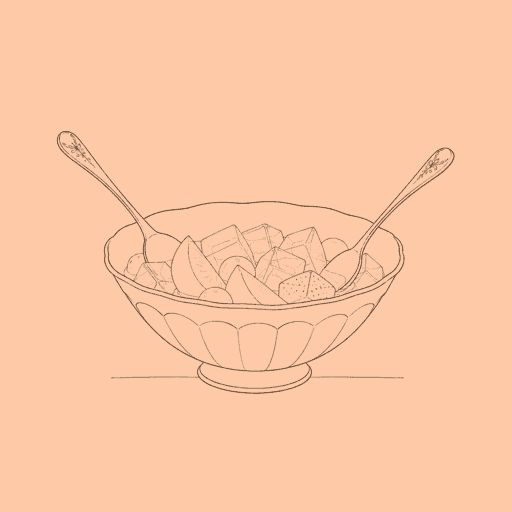
Aoyama announces she is hungry. Chi-chan laughs. They walk out arm in arm, naming dishes they love, until they reach the Taishō Bridge over the Midori River, where a cart vendor is already selling mitsumame fruit-and-jelly ice. Aoyama’s departure for Kyūshū is two weeks away; neither of them acknowledges this. They share one bowl of mitsumame on the bridge, which Aoyama remembers as being very sweet and delicious.
Afterword Summary: “Memories of My Mother: 1970”
Aoyama Yōko, a professional artist and the adopted daughter of Aoyama Chizuko, recalls that Taiwan was a constant presence in her childhood.
When Yōko first read the manuscript of Taiwan Travelogue as a young girl and wept at its sadness, Aoyama confirmed it was a true story. This prompted Yōko to ask whether she had gone to see Chi-chan after eating the kiâm-nng-ko. That question led Chizuko to add a 12th chapter to her story.
The novel was published in 1954; after it went out of print, the remaining copies were destroyed in a windstorm. Before the 1970 reprint, Yōko traveled to Taiwan, but could not locate Chi-chan. The 1970 reprint is her way of fulfilling her mother’s dying wish.
Translator’s Note 1 Summary: “Noodles: 1977”
As a preface to her Mandarin translation, Wáng Chién-hò (Chi-chan) writes from Columbia, Missouri, recalling Yōko’s 1976 visit to deliver the 1970 edition of Aoyama’s novel, as well as news of Aoyama’s death. Each morning over two weeks, Chi-chan shared memories of Aoyama over breakfast.
The note’s central anecdote is a cold-wave episode in late 1938 when Aoyama fell ill and Chi-chan brought her medicine. Aoyama demanded noodles instead. Over the course of that visit, Chi-chan produced seven successive bowls of noodles. After the last bowl, Aoyama proposed that Chi-chan marry her and promised that even if only one grain of rice remained, she would give Chi-chan half of it. Chi-chan admits that in that moment she felt she might actually have found happiness had she followed her to the Mainland. She closes by raising a cup to Aoyama across the decades.
Editor’s Note Summary: “A Promise with the Departed: 1990”
Wu Cheng-mei, a literary scholar and Chi-chan’s eldest daughter, explains the long road to the Mandarin edition of Aoyama’s novel. Yōko had contacted Wu in 1975; it was not until Taiwan’s martial law ended in 1987 that Chi-chan expressed her wish to translate the novel into Mandarin for Taiwanese readers. She presented Wu with a completed translation she had finished a decade earlier in 1977.
Wu describes two formative moments when she recognized her mother as more than a mother: once when Chi-chan drove four hundred miles alone to visit her at college, and once when reading the novel revealed a version of Chi-chan entirely unlike the composed, deferential woman at home. An anecdote about a kimono from Aoyama, sold by Chi-chan’s husband after the war, gives Wu a sudden insight into the nature of her mother’s deference in her marriage. During a summer trip back to Taiwan, Chi-chan died peacefully in 1987 on the engawa of the family’s Taichū house, speaking Japanese words no one present could understand.
Wu notes that the 1990 edition of the novel is abridged due to censorship. She expresses hope that a complete version will one day reach Mandarin readers.
Translator’s Note 2 Summary: “Amber: 2020”
Yáng Shuāng-zǐ describes discovering Aoyama Chizuko’s name on a postcard at the Hayashi Fumiko Memorial Reference Room in Kitakyūshū in December 2014, while researching colonial Taiwan alongside her late sister.
After tracing fragments of a Mandarin translation online and tracking the manuscript through the Museum of Taiwan Literature and a Japanese researcher, Yáng began translating in June 2015; illness extended the process to four years.
The note frames the book’s successive translators from Yōko to Yáng as a chain working to preserve an affection shaped by history and rendered ineffable by its time and place. Yáng describes the novel as a form of amber: something that holds both actual events and the ideals the author wished had been possible. The note is dedicated to Yáng’s late sister, the other half of the name Shuāng-zǐ.
Translator’s Note 3 Summary: “2024”
Lin King, the English translator of the novel, explains several key decisions, and in doing so reveals the novel’s true nature as a contemporary work of fiction.
The note clarifies that the book’s author is Yáng Shuāng-zǐ, who initially published it under a fictional frame crediting it as written by Aoyama Chizuko and translated by Yáng. This attribution generated controversy and was corrected in later printings.
For the English edition, Lin chose to use Japanese colonial-era pronunciations for Aoyama’s speech and thoughts, retained tonal marks and accents in Romanized words throughout, and built on Yáng’s translator footnotes by adding further historical and cultural context for English readers.
Chapter 11-Translator’s Note 3 Analysis
The narrative climax in Chapter 11 dismantles Aoyama’s perspective, crystallizing the theme of The Paternalism of the Colonizer’s Gaze. Throughout her time in Taiwan, Aoyama has positioned herself as a benevolent observer, assuming her appreciation for Islander culture absolves her of imperial complicity. However, Mishima directly confronts this intellectual arrogance, pointing out that Aoyama evaluates colonial infrastructure through arbitrary personal preferences, rather than an understanding of Islanders’ lived realities. He notes that the government she praises for preserving the Maso Temple in Toyohara also demolished the Taichū Maso Temple for an urban project, exposing her romanticized view as a self-serving spectacle that ignores historical reality. Mishima’s assertion that “there is nothing in the world more difficult to refuse than self-righteous goodwill” (247) forces Aoyama to recognize that her relentless attempts to protect Chi-chan were inherently condescending and self-serving. This critique shatters her illusion of innocent observation. Aoyama’s subsequent dream, in which Chi-chan asks if she ever actually wanted this protection, serves as moment of reckoning. This confrontation illustrates how the colonizer’s gaze, even when rooted in sincere curiosity, fundamentally denies agency to the colonized by treating them as subjects to be saved, rather than equals to be respected.
As Aoyama grapples with her newfound self-awareness, the motif of food transitions from a marker of cultural exoticism into a medium for grief, guilt, and unspoken affection. In earlier chapters, Aoyama’s culinary pursuits functioned as consumption; in Chapter 11, this dynamic inverses when she eats kiâm-nng-ko (savory cake). The cake’s texture literally chokes her, physically manifesting the emotional weight of her naivety. Food continues to anchor her complex bond with Chi-chan during their final meeting, which culminates in sharing a bowl of mitsumame (fruit and jelly ice). This shared dish represents fleeting, imperfect communion before inevitable separation. The motif extends into the paratextual layers as well, notably in Chi-chan’s 1977 translator’s note. Her recollection of cooking seven successive bowls of noodles for a sick Aoyama reveals a depth of care she could never safely articulate in 1938. By intertwining complex emotional negotiations with the act of eating, the novel grounds the systemic power imbalances of 1930s colonial Taiwan in everyday domestic rituals, proving that colonial divide infiltrates even the most basic acts of nourishment and hospitality.
The final encounter in Chapter 12 solidifies the theme of The Fragility of Friendship Across Power Divides by exposing the emotional barriers necessitated by colonial hierarchy. When Aoyama correctly deduces Chi-chan’s hidden past, she acknowledges the survival skills that Chi-chan had to cultivate in order to survive the harsh world she lives in. This extended to her friendship with Aoyama, which was just another way to prove her usefulness to the colonial powers. As a colonized Islander employed by privileged Mainlander, Chi-chan’s emotional distance ensured her self-preservation against casual prejudice and paternalistic overreach. This tragic reality is nuanced by Chi-chan’s concession: “Even though I cannot open my heart, the feelings that I hold within this shuttered heart are, nonetheless, real” (268). This admission captures the paradox of their bond. While true equality is impossible under the rigid social stratification of the Japanese Empire, genuine affection can still exist within those constraints. Their unresolved relationship acts as microcosm for the human cost of imperialism, demonstrating that individual goodwill cannot single-handedly dismantle systemic abuse.
The novel’s metafictional paratexts fundamentally recontextualize the central narrative, highlighting the theme of Storytelling as an Act of Historical and Personal Reckoning. Aoyama’s adopted daughter reveals in the 1970 afterword that Chapter 12 was a later addition, transforming the reconciliatory mitsumame scene into a fiction of repentance. This revelation destabilizes Aoyama’s authoritative account, suggesting that storytelling provides a space to amend personal failures and imagine alternative outcomes when reality falls short. The subsequent layers further fracture the idea of a single, objective history. When the English translator finally discloses that the entire novel is a fiction constructed by Yáng Shuāng-zǐ, the text shifts into a postcolonial critique of archival authority. The multiple translators embody the ongoing process of re-examining history, granting voice to the marginalized Islanders who are often erased from official imperial records. By framing the novel as “a piece of amber, one that coagulates both the ‘real’ past and the ‘made-up’ ideals” (289), the narrative asserts that fiction is a vital tool for reclaiming and interrogating the fractured colonial past.

Get in-depth, chapter-by-chapter summaries and analysis from our literary experts.
- Grasp challenging concepts with clear, comprehensive explanations
- Revisit key plot points and ideas without rereading the book
- Share impressive insights in classes and book clubs