Taiwan Travelogue
A modern alternative to SparkNotes and CliffsNotes, SuperSummary offers high-quality Study Guides with detailed chapter summaries and analysis of major themes, characters, and more.
Summaries & Analyses
Author Insights
Quizzes
NEWReading Tools
Symbols & Motifs
Content Warning: This section of the guide includes discussion of racism and emotional abuse.
Food
The motif of food is the central organizing principle of the novel, serving as the primary medium through which the characters navigate colonial power dynamics and intimacy. Aoyama’s voracious appetite initially frames her journey as a naive desire to consume the “authentic” Taiwan. She treats the island as a buffet, oblivious that her ability to seamlessly appropriate local street food is a privilege afforded only to the colonizer. Through Chi-chan’s guidance, however, food reveals marginalized identities and strict social hierarchies. The distinction between high-class lóo-bah (pork belly) and lower-class bah-sò (minced pork skin) reflects Chi-chan’s own marginalized background, while the cultural divide between Taiwanese lóo-bah and Japanese sashimi mirrors the imperial dichotomy of the “dirty” and the “pure.”
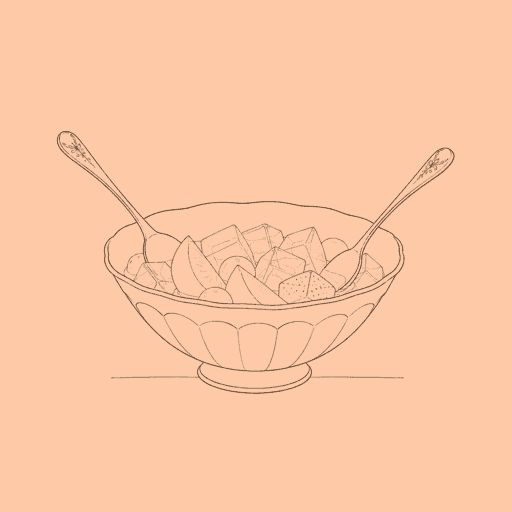
Because rigid colonial hierarchies prevent a truly equal friendship, shared meals become a surrogate for affection. Aoyama’s preparation of sukiyaki (a dish whose name plays on the Japanese suki, “to love”) and Chi-chan’s meticulous preparation of tshài-bué-thng (leftovers soup) are acts of guarded devotion that communicate the feelings their unequal status otherwise forbids. Even then, Aoyama’s culinary demands repeatedly force Chi-chan to navigate prejudiced spaces, proving that one woman’s adventure is another’s social peril. Ultimately, this motif illustrates that while sharing food can foster deep emotional intimacy, the act of consumption cannot erase systemic inequalities, highlighting the theme of The Fragility of Friendship Across Power Divides. This bittersweet reality is crystallized in their final, silent communion over mitsumame: “Chi-chan and I shared one bowl of fruit and jelly ice. It was very sweet. It was very delicious” (270). Though the bowl satisfies Aoyama’s desire to resolve the tension between them, they must consume it quickly, underscoring the ephemeral nature of their relationship.
The Noh Mask
The Noh mask, which is Aoyama’s term for Chi-chan’s inscrutable smile, is a recurring symbol that represents the protective, emotionless performance she must adopt to navigate her subordinate role. Aoyama repeatedly uses this image to describe her inability to discern Chi-chan’s true feelings, highlighting the limitations of her own paternalistic gaze. This symbol is crucial to the theme of The Fragility of Friendship Across Power Divides, as it illustrates the emotional distance required for self-preservation within a colonial hierarchy.
More than just a polite smile, the mask is a necessary barrier that prevents the vulnerability required for genuine friendship. It signifies Chi-chan’s awareness that her social and economic survival depends on her ability to remain pleasant and unreadable to her Japanese employer, hiding her true thoughts and feelings. Aoyama observes this performance but initially misinterprets it as a charming personality trait rather than a defense mechanism. It is only at the novel’s conclusion that Aoyama begins to understand the profound sadness and self-denial behind the mask. The revelation of this truth is crystallized in Chi-chan’s confession: “I never once opened my heart to you, never once truly regarded you as a friend” (265). This statement confirms that the mask was a constant, impenetrable shield, making a relationship of equals impossible. The fact that Aoyama tries to recast Chi-chan’s expression in terms that resonate with her Japanese cultural upbringing adds another layer to the symbol, indicating that Aoyama can only understand Chi-chan through her perspective as a Japanese colonizer.
Clothing (The Chōsan and Kimono)
The symbol of clothing, particularly the contrast between the Taiwanese chōsan and the Japanese kimono, illustrates the conflict between cultural identity and assimilation within the colonial context. The chōsan, Chi-chan’s typical attire, marks her as an Islander and subjects her to prejudice, as seen when she is insulted at the Tainan Railway Hotel. In response, Aoyama gifts her an expensive kimono, an act that stems from a misguided desire to protect her. This gesture embodies The Paternalism of the Colonizer’s Gaze, as Aoyama presumes that making Chi-chan appear more Japanese will shield her from harm, failing to recognize that this erases Chi-chan’s cultural identity and imposes her own cultural standards upon her without her consent.
The gift becomes a major point of contention, leading to a heated argument where Chi-chan insists on a “strictly professional relationship” (175) between them. The conflict over the kimono exposes the precarious quality of their friendship. In effect, Chi-chan perceives Aoyama’s well-intentioned act as another form of colonial pressure. As Chi-chan later explains, Aoyama’s misguided kindness denies her agency: “The truth is that gentle Aoyama-san never once asked me: Do you want this protection?” (229) This question exposes how the symbolic act of imposing clothing becomes a violation on the boundaries drawn between employer and employee.

Unlock the meaning behind every key symbol & motif
See how recurring imagery, objects, and ideas shape the narrative.
- Explore how the author builds meaning through symbolism
- Understand what symbols & motifs represent in the text
- Connect recurring ideas to themes, characters, and events