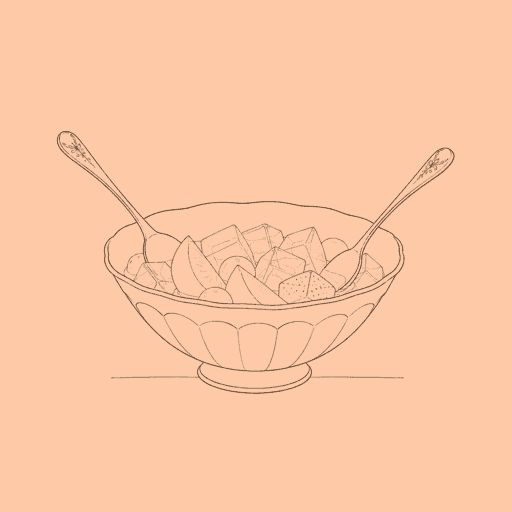
Taiwan Travelogue
A modern alternative to SparkNotes and CliffsNotes, SuperSummary offers high-quality Study Guides with detailed chapter summaries and analysis of major themes, characters, and more.
Summaries & Analyses
Author Insights
Quizzes
NEWReading Tools
Chapters 7-10Chapter Summaries & Analyses
Content Warning: This section of the guide includes discussion of racism and emotional abuse.
Chapter 7 Summary: “Ka-lí / Curry”
In the autumn, Aoyama finds a magenta wild ginseng flower near her cottage. After Chi-chan identifies it, Aoyama decides to leave it undisturbed.
Over a lunch of Yanagawa pot, Aoyama jokes that Chi-chan should move in with her, then frames it as practical preparation for Mainland domestic life before her arranged marriage. When Chi-chan plays along with her suggestion, Aoyama becomes irritated. They settle the matter with dice; Aoyama loses. To placate her, Chi-chan offers to do Aoyama a small favor. Aoyama requests that Chi-chan wear a Western-dress, stay one night together at the Taihoku Railway Hotel, and have a formal dinner there at her expense.
On the train to Taihoku, Aoyama privately weighs the contradictions in Chi-chan’s skills and competencies that do not match her modest origins or school teaching. To probe, she proposes a question-for-a-question game. This does little to resolve Aoyama’s curiosity.
After lunch, Aoyama uses culinary talk to invite Chi-chan to Kyūshū; Chi-chan sees through the invitation and senses a truer second request. Aoyama asks to have a kimono made for Chi-chan. Chi-chan asks for time to consider the offer. They complete their stay in Taihoku and return to Taichū.
On the return train, Chi-chan asks how Aoyama regards her. Aoyama answers that she sees Chi-chan as a friend. Chi-chan is skeptical of the answer, pointing out that she is always in the position of receiving Aoyama’s generosity. Aoyama tries to argue her case, but Chi-chan only tentatively accepts her and agrees to cook curry for Aoyama.
The next day, Chi-chan serves three distinct Taiwanese curry dishes, arguing that Taiwan has its own culinary identity and she need not travel to the Mainland to experience the wonder of food. She formally declines the Kyūshū invitation, citing her impending marriage as the reason she should maximize her time in Taiwan.
Afterward, Aoyama reveals she asked the gardener to spare the wild ginseng. Touched, Chi-chan likens herself to it: something of lesser value posing as a precious pearl. Aoyama rejects this. Later, Chi-chan interprets the kimono as pressure to appear more authentically Japanese; Aoyama frames it as protection between friends. Chi-chan accepts Aoyama’s offer of the kimono, though she soon puts up her expressionless Noh mask once again.
Chapter 8 Summary: “Sukiyaki / Beef and Vegetable Hotpot”
On a clear December morning, Aoyama and Chi-chan travel to the Hokutō onsen village, with Aoyama scheduled to lecture the next day at Taihoku First High School for Girls. On the train, Chi-chan peels a roasted sweet potato and places it in Aoyama’s hand. Aoyama notices Chi-chan has put on her Noh mask again; however, she is also wearing the new kimono.
Aoyama offers to release her from wearing it. Chi-chan deflects, pointedly invoking her upcoming marriage. This provokes Aoyama, who begs her to come to Kyūshū instead, abandon the match with her fiancé, and pursue translation with full support from Aoyama’s family. Chi-chan smiles sweetly but deflects; Aoyama senses anger under the warmth.
At a Hokutō cafeteria, Aoyama probes Chi-chan’s background with oblique questions about her culinary skills. Chi-chan confronts the implication that she might have worked in a café or the red-light district, then casually wipes a bit of miso from Aoyama’s mouth with her finger and licks it clean, leaving Aoyama mortified.
That evening in their hotel room, Aoyama challenges the Noh mask, accusing Chi-chan of trying to provoke her dismissal. Aoyama asks why Chi-chan would leave her when Aoyama is the only person who truly values her. Chi-chan concedes the point, but says Aoyama has a “blind spot” she cannot explain in terms Aoyama would accept, and concludes that a strictly professional relationship is most sensible way to engage with one another from this point on. Aoyama treats this as a renunciation; after a standoff she relents, furious and hollow, and demands sukiyaki. When Chi-chan notes she does not eat beef, Aoyama clings to this personal detail as proof of connection and asks at least to keep sharing meals. Chi-chan agrees.
Back in Taichū, their dynamic becomes more formal but steady. Aoyama makes sukiyaki with pork, explaining she reserves the dish for people important to her. She recalls childhood outings to eat sukiyaki after recovering from an illness. Without her Noh mask expression on, Chi-chan says Aoyama is the only person who has ever cooked a meal specifically for her. In thanks, she offers to make Taichū-style clam noodles; she confirms that Aoyama is special to her. She cannot yet explain more, but promises honesty when she finds the words. They agree to continue traveling together.
Chapter 9 Summary: “Tshài-Bué-Thng / Leftovers Soup”
In January, Aoyama and Chi-chan head north to Kirun and the Kinsan onsens, taking a detour so Chi-chan can see the Double Dragon Waterfalls. The train plunges through a tunnel between the two cascades. Aoyama watches Chi-chan instead and glimpses a rare, unguarded smile. Chi-chan explains the history of the site, noting that Taiwan’s first railway tunnel was a flawed Qing-era project later replaced during Japanese rule. Inspired, Aoyama announces plans to write a novel about Taiwan’s railways. She offers to let Chi-chan write the Han-language translation. However, Chi-chan quietly notes that the Japanese elimination of Han-language newspaper columns means that the translation industry in Taiwan will soon die out.
Upon arriving in rainy Kirun, Chi-chan shares her childhood memories of the port with Aoyama. Aoyama expresses a desire to know what Chi-chan was like as a child, but Chi-chan brushes the request away, citing that she is no longer as adorable as she used to be. Aoyama disagrees. Chi-chan then deflects by suggesting that she is at least demonic towards Aoyama. Aoyama rebuts that she would still find a demonic Chi-chan adorable. This causes Chi-chan to frown at Aoyama, but Aoyama believes that she is doing this mockingly.
At the Immortals’ Cave, they hold hands through a narrow, candlelit passage. On their way back to the hotel, the rain picks up and Aoyama ends up drenched. In their room, she reflexively tries to pat rain from Chi-chan’s sleeve; Chi-chan stops her, says it is more care than she knows how to receive. She points out that Aoyama would never treat the city hall interpreter the same way before drying out Aoyama’s hair. They mutually agree to stop performing such affectionate gestures.
Aoyama foreshadows that they will soon experience a rupture.
At the end of January, Chi-chan takes Aoyama to meet Master A-Phûn, a legendary chef who has cooked exclusively for the elderly matriarch of the Lin family for nearly a decade. Master A-Phûn, a former gentry daughter who became displaced by the turmoil during the Qing era, curtly states she does not cook for Japanese guests. Chi-chan challenges her to a dice game and manages to win a single dish request from the chef. Chi-chan requests tshài-bué-thng (leftovers soup).
Later, Chi-chan explains that a traditional Taiwanese banquet has 12 courses and that tshài-bué-thng is assembled from the remnants of all 12. To make it, Master A-Phûn must first cook a full banquet first and in about half a month, Aoyama will eat all 12 courses plus the soup. Overjoyed, Aoyama declares Chi-chan her best friend and immediately pivots to urging a move to the Mainland. Chi-chan cuts her off with unmistakable severity: If Aoyama cannot change her approach, she will resign. She bows, hands off her interpreter duties to the city hall interpreter, and walks out, leaving Aoyama stunned.
Chapter 10 Summary: “Tau-Mi / Potato Noodle Stew”
On New Year’s Eve, Aoyama and Chi-chan share an elaborate feast and play dice at Aoyama’s cottage. Aoyama wins the game for the first and only time; Chi-chan agrees to stay the night at the cottage. When Aoyama asks why Chi-chan had never stayed before, Chi-chan answers that she was afraid of discovering that she would be placed in the servant’s room, believing this would shatter her perception of Aoyama’s kindness. Shaken, Aoyama pushes their futons together, insisting she will never regard Chi-chan as a servant. They briefly hold hands before Chi-chan politely urges Aoyama to rest.
The next morning, Mishima from City Hall arrives as a substitute interpreter. He notes that Chi-chan had been quietly absorbing public criticism aimed at Aoyama, a burden he will not assume. During their two-day trip through Tōen and Shinchiku, Mishima declines all requests for authentic cultural experiences. This forces Aoyama to unfavorably compare him to Chi-chan at every turn. When Aoyama insists that Chi-chan must attend the tshài-bué-thng banquet, Mishima urges her to contact Chi-chan directly. Aoyama realizes she does not know Chi-chan’s address.
Back in Taichū, Aoyama is listless and has no appetite. Then Chi-chan appears at the veranda door. She prepares breakfast; the food tastes good to Aoyama again. Aoyama confronts her, guessing that Chi-chan deliberately lost their New Year’s dice game as an act of faith in Aoyama. She also guesses that Aoyama did something afterward that broke that faith. Chi-chan apologizes but still cannot explain. They travel to the Lin family mansion for the long-awaited banquet.
Master A-Phûn serves a full twelve-course meal. Eating alongside Chi-chan, Aoyama arrives at the recognition that Taiwanese cuisine is a sophisticated culinary tradition shaped by layered influence. During the tenth dish, they meet eyes and exchange pieces of food, a small, wordless tenderness.
After the main courses, Chi-chan says she had planned to make tau-mi, a Quanzhou New Year’s dish in which varied ingredients are cooked into a cohesive cake symbolizing togetherness. However, she has chosen to forego this plan. Referring back to the two schoolgirls, Ōzawa and Tân, Chi-chan explains that Ōzawa kept offering constant unsolicited protection to Tân without finding out first if Tân needed it. Aoyama, she says, has done the same: She has offered Chi-chan protection without first seeking Chi-chan’s consent. This signals that Aoyama treasures a constructed, compliant version of Chi-chan, rather than the real version of her. Without knowing the real Ō Chizuru, they cannot be true friends.
The servant brings out two small bowls of tshài-bué-thng. Chi-chan briefly takes Aoyama’s hand and squeezes it, then says this is their final shared meal. She has formally submitted her resignation and asks Aoyama not to think of her anymore.
Chapters 7-10 Analysis
The sudden reappearance of the symbol of the Noh mask in these chapters marks a critical shift in the relationship between Aoyama and Chi-chan. Throughout their travels, Aoyama persistently attempts to dissolve boundaries of their employer-interpreter dynamic, equating shared meals with genuine intimacy. However, when Aoyama gifts Chi-chan an expensive Japanese garment, Chi-chan’s compliant acceptance is immediately followed by withdrawal into emotional opacity: “The change was incredibly subtle yet utterly unmistakable. […] Chi-chan had put on her charming yet emotionless Noh mask again” (162). It is telling that Aoyama frames Chi-chan’s characteristic expression using a Japanese cultural symbol. This emphasizes the idea that Aoyama can only perceive or understand Chi-chan through the lens of her imperialist perspective. This limits her from seeing how Chi-chan uses the performance of her expression to survive within a rigid colonial hierarchy. Because Chi-chan’s social and economic security depends on placating her Mainlander employer, true vulnerability remains impossible.
The idea of Aoyama’s limited and biased perspective is further concretized in the symbol of clothing, specifically the tension between Japanese kimono and Taiwanese chōsan. Aoyama perceives her gift of a kimono as an act of friendship, aiming to elevate and protect Chi-chan from discrimination that the Islanders face at the hands of the Mainlanders. This gesture embodies the theme of The Paternalism of the Colonizer’s Gaze, resting on the assumption that Mainlander cultural markers offer superior, safer identity. Aoyama fails to recognize that dressing her interpreter in Japanese formalwear strips Chi-chan of her agency and imposes an imperial standard of respectability. Chi-chan eventually articulates this failure during their final shared meal at the Lin family mansion, using the allegory of the two schoolgirls to explain that unsolicited protection is fundamentally oppressive. Aoyama’s desire to shield her interpreter operates as well-intentioned arrogance, revealing her inability to view the colonized subject as an autonomous equal capable of defining her own needs.
The motif of food structures these escalating interpersonal conflicts while charting Aoyama’s evolving engagement with Taiwanese culture. Initially, Aoyama exercises culinary authority by cooking Japanese dishes like Yanagawa pot and sukiyaki, presenting these meals as gestures of affection demanding reciprocal vulnerability. The narrative shifts this power dynamic when Chi-chan orchestrates their visit to Master A-Phûn, a legendary chef who refuses to cook for Japanese guests. By challenging the chef to a dice game and winning a 12-course Taiwanese banquet for Aoyama, Chi-chan reclaims control over their culinary consumption. The banquet itself forces Aoyama to recognize Taiwanese cuisine as a highly sophisticated, layered tradition rather than mere exotic curiosity. Yet the culmination of this meal, which sees the serving of leftover soup assembled from the preceding 12 dishes, signals the definitive end of their association. Rather than functioning as bridge between colonizer and colonized, the elaborate meal becomes the staging ground for Chi-chan’s formal resignation.
The ensuing rupture exposes the systemic barriers Aoyama’s romanticized worldview previously obscured. In Chi-chan’s absence, Mishima’s rigid adherence to protocol starkly highlights the colonial machinery Aoyama has tried to ignore. When Aoyama demands that Mishima arrange a meeting with Chi-chan, he points out that she should contact her former interpreter directly, leading Aoyama to the jarring realization that she does not even know Chi-chan’s address. The exposition of this gap shatters the illusion of equality that Aoyama attempted to manufacture when she pushed their futons together on New Year’s Eve. The ease with which Chi-chan vanishes into the Islander neighborhoods of Taichū, whose spaces inaccessible to Aoyama without a guide, demonstrates that their relationship existed entirely on the colonizer’s terms and within the colonizer’s spaces, underscoring the theme of The Fragility of Friendship Across Power Divides.
The finality of their separation is underscored by the dish Chi-chan explicitly refuses to cook: a Quanzhou New Year’s stew that “congeals into a semitransparent cake” (228) symbolizing togetherness. By replacing the unifying potato noodle stew with leftovers soup, Chi-chan structurally finalizes their dynamic. She articulates that the person Aoyama treasures is a constructed, compliant Islander who requires a savior. Aoyama’s devastation upon losing her interpreter and appetite mirrors a broader postcolonial critique: the colonizer’s consumption of the colonized world is ultimately self-serving. When the colonized subject refuses to be consumed or protected, the colonizer is left hollow.

Get in-depth, chapter-by-chapter summaries and analysis from our literary experts.
- Grasp challenging concepts with clear, comprehensive explanations
- Revisit key plot points and ideas without rereading the book
- Share impressive insights in classes and book clubs