The Elsewhere Express: A Novel
The Elsewhere Express: A Novel
A modern alternative to SparkNotes and CliffsNotes, SuperSummary offers high-quality Study Guides with detailed chapter summaries and analysis of major themes, characters, and more.
Summaries & Analyses
Quizzes
NEWReading Tools
Background
Content Warning: This section of the guide includes discussion of illness, mental illness, child abuse, and physical abuse.
Medical Context: Savior Siblings
A “savior sibling” is a child conceived through in vitro fertilization and preimplantation genetic diagnosis (PGD) to serve as a genetic match for an older sibling with a life-threatening condition. The concept entered public discourse in 2000 with the birth of Adam Nash, the first child in the United States selected via PGD to be a compatible stem-cell donor for his sister Molly, who had Fanconi anemia, a rare bone-marrow disorder. Cord blood from Adam’s birth was transplanted to Molly, and the procedure was deemed a success. However, the case provoked significant ethical scrutiny. Bioethicists have questioned whether conceiving a child primarily as a medical resource reduces that child to an instrument of another’s survival. Organizations such as the American Academy of Pediatrics have emphasized the need to protect the donor child’s welfare and future autonomy in such arrangements, and researchers in pediatric psychology have noted that savior siblings may face distinct identity challenges when their medical role overshadows their individuality. Parents may impose strict health regimens on the donor child to preserve their viability as a future resource, compounding these feelings of reduced agency.
Several novels examine these ethical tensions. Jodi Picoult’s My Sister’s Keeper (2004) follows Anna Fitzgerald, a savior sibling who sues her parents for bodily autonomy after years of medical procedures performed on behalf of her ill sister, foregrounding the question of whether donor children have the right to refuse. Kazuo Ishiguro’s Never Let Me Go (2005) takes the premise to its darkest extreme, depicting clones raised at a boarding school who exist solely as organ donors, their humanity systematically subordinated to biological utility. In The Elsewhere Express, Hiraya Sia is conceived to save her brother, Jace, from a rare, inherited blood disorder called thalassemia major. She absorbs this purpose so thoroughly that she jokes that she “had been born for spare parts” (10), while her parents’ rigid dietary oversight reinforces the sense that her body belongs to someone else’s survival. Like Picoult’s Anna and Ishiguro’s clones, Hiraya must ultimately reckon with whether a life defined by another’s need can ever fully belong to the person living it.
Medical Context: Retinitis Pigmentosa
Retinitis pigmentosa (RP) is a group of inherited retinal disorders characterized by the progressive degeneration of photoreceptor cells in the retina. A comprehensive 2006 clinical review reported a prevalence of approximately one in 4,000 individuals, making RP one of the most common inherited causes of blindness worldwide (Hamel, Christian. “Retinitis Pigmentosa.” Orphanet Journal of Rare Diseases, 11 Oct. 2006). The disease typically begins with the deterioration of rod cells, which are responsible for peripheral and low-light vision. As a result, the earliest symptom is usually night blindness, often appearing during adolescence. Over time, the loss of rod cells narrows the visual field into what clinicians term “tunnel vision,” a shrinking circle of sight that may eventually contract to near-total blindness as cone cells also degenerate. The rate of progression varies considerably; some patients retain limited central vision well into adulthood, while others experience faster decline. There is currently no cure for most forms of RP, though the Food and Drug Administration’s 2017 approval of Luxturna (voretigene neparvovec), a gene therapy targeting RP caused by mutations in the RPE65 gene, marked a significant breakthrough for a small subset of patients. The Foundation Fighting Blindness, a leading research advocacy organization, continues to fund clinical trials exploring gene therapy, retinal implants, and optogenetic approaches.
Beyond its physical effects, RP exacts a significant psychological toll. A 2018 study of 112 RP patients found that over 28% exhibited clinically significant anxiety and that over 10% showed clinically significant depression, with both conditions correlating strongly with declining visual function and reduced quality of life (Sainohira, Mayumi, et al. “Quantitative Analyses of Factors Related to Anxiety and Depression in Patients With Retinitis Pigmentosa.” PLOS ONE, 23 Apr. 2018). The progressive nature of the disease forces patients to grieve their sight incrementally, adapting to each new reduction in their visual field. In The Elsewhere Express, Q’s experience closely mirrors an RP diagnosis: He loses his night vision at 13, and his illness gradually shrinks his “tunnel of vision to the size of a pinhole” (12). His reliance on memory to navigate his apartment, his use of thick glasses, and his anger at the encroaching darkness all reflect the documented emotional trajectory of RP patients confronting a future without sight.
Genre Context: Liminal Spaces in Fantasy
In literary and anthropological discourse, “liminality” refers to a threshold state, a condition of being between established categories of identity, place, or time. The concept originated with ethnographer Arnold van Gennep’s The Rites of Passage (1909) and was later expanded by anthropologist Victor Turner, who described liminal spaces as zones where ordinary social structures dissolve and transformation becomes possible. Fantasy literature has long employed liminal spaces as narrative architecture, using physical thresholds to signal a character’s passage from the known into the extraordinary. The wardrobe in C. S. Lewis’s The Lion, the Witch and the Wardrobe (1950) serves as the archetypal portal, an ordinary domestic object that opens onto a world governed by entirely different rules. J. K. Rowling’s Platform 9¾ in the Harry Potter series functions similarly, requiring characters to pass through a seemingly solid barrier to access a hidden reality. Lewis Carroll’s rabbit hole and looking glass in Alice’s Adventures in Wonderland (1865) and Through the Looking Glass (1871) literalize the descent into a liminal zone where logic itself becomes unstable. In each case, the threshold is a site of psychological reorientation, where characters must shed their assumptions before entering a space that will challenge or remake them.
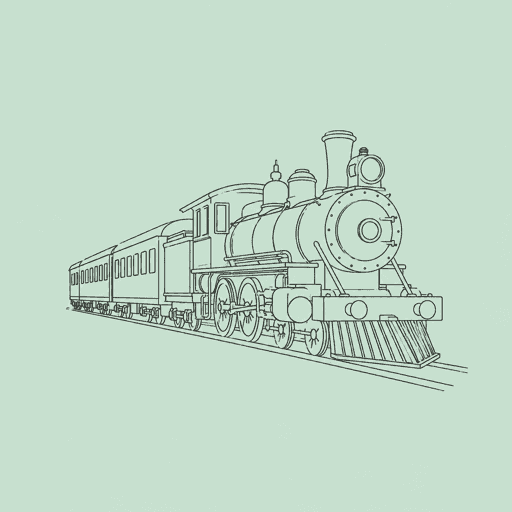
The Elsewhere Express situates its entire narrative within such a liminal zone. The train follows a route along “the border between waking and dreaming” (59), occupying a space that belongs to neither world fully. Passengers board not through a station but at “the end of all your dreams at a quarter past your heaviest sigh” (31), a threshold defined by emotional rather than geographic coordinates. Unlike portal fantasies where characters eventually return home transformed, Yambao’s train never stops, suspending its passengers in perpetual liminality. This structural choice amplifies the novel’s central questions about identity and purpose: On a threshold without a far side, finding your place requires confronting who you are rather than where you’re going.

Get in-depth, chapter-by-chapter summaries and analysis from our literary experts.
- Grasp challenging concepts with clear, comprehensive explanations
- Revisit key plot points and ideas without rereading the book
- Share impressive insights in classes and book clubs