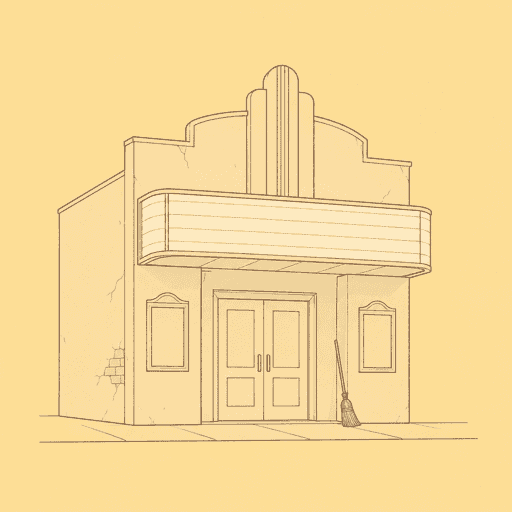
The Last Picture Show
The Last Picture Show
A modern alternative to SparkNotes and CliffsNotes, SuperSummary offers high-quality Study Guides with detailed chapter summaries and analysis of major themes, characters, and more.
Summaries & Analyses
Quizzes
NEWReading Tools
Chapters 12-16Chapter Summaries & Analyses
Content Warning: This section of the guide includes discussion of substance use, graphic violence, sexual content, and death.
Chapter 12 Summary
In mid-March, Sonny wakes up early and goes to the café, even though he is still officially banished. The waitress, Genevieve, welcomes him warmly and encourages him to stay. Sonny admits that Duane was also involved in the prank, but he was asleep in the truck, and Sam didn’t see him.
He then confides in Genevieve about his affair with Ruth. Genevieve warns him of the dangers in a small town but is also quietly amused. Sam the Lion and Billy soon enter the café. Before Sam can speak, Genevieve insists he listen to Sonny’s apology. Billy, who has forgotten the incident, greets Sonny happily. Seeing this, Sam accepts Sonny’s apology, and the two are reconciled.
Chapter 13 Summary
Jacy begins spending more time in Wichita with Lester, telling Duane her mother insists on it, though the trips are her own idea. She has become infatuated with Bobby Sheen. One night, Bobby begins to have sex with Jacy but stops when he learns she is a virgin. Mortified, Jacy devises a plan to lose her virginity to Duane during their upcoming senior trip, then pursue Bobby Sheen. She believes this will also make it easier to break up with Duane afterward. To manage the eventual breakup, she begins manipulating Sonny by offering him rides and confiding in him.
Meanwhile, Sonny’s affair with Ruth has intensified. Ruth’s sexual needs have grown, leaving Sonny feeling overwhelmed and restless. One evening, Ruth sees Sonny driving with Jacy and is seized with dread that she will lose him. That same night, Coach Popper, aroused by thoughts of Jacy while seeing Ruth undress, initiates sex. To his shock and disgust, Ruth responds with a passion he finds shameless.
Chapter 14 Summary
Sam the Lion takes Sonny and Billy on their yearly fishing trip to a stock tank he has owned for 50 years. After Sonny urinates off the tank dam, Sam has an emotional moment, laughing and crying about his old age. He explains that Sonny’s action reminded him of a memory from 20 years earlier, when he brought a young, married woman he was in love with to the same spot to swim. She bet him a silver dollar he couldn’t piss from the top of the dam into the water. He tells Sonny about their relationship and reflects that growing up is miserable about 80% of the time.
On the drive back to town, Sonny confesses his affair with Ruth Popper. Sam reveals he already knew and tells Sonny not to come to him for advice about women. Just as they arrive back in town, Sam asks if Duane was involved in the incident with Billy. Sonny is unable to lie but also cannot bring himself to tell the truth, and his silence serves as an unspoken confession to Sam.
Chapter 15 Summary
Three days after the fishing trip, Duane’s jealousy over Jacy’s Saturday night outings to Wichita with Lester boils over. He beats Lester up near the courthouse, with Sonny present as a witness. Afterward, at the café, Sam the Lion and Genevieve both suggest that Jacy may be going willingly, but Duane refuses to consider it.
Lester, nursing his injuries, travels back to Wichita and tells the boys there that “a couple of roughnecks beat [him] up” (140), prompting a group to drive to Thalia looking for a fight. When the Wichita boys confront Duane and Sonny, one of them further devastates Duane by revealing that Jacy and Bobby Sheen “played around all one night” (143).
A brawl follows; Duane takes a manageable beating, but Sonny, who has no personal stake in the fight, suffers worse, including painful rib and ear injuries. Afterward, Duane proposes an impulsive weekend trip to Matamoros, Mexico. Both boys have just been paid and pool nearly $100. Genevieve gives them an extra $10 and offers her car; Sam the Lion, sitting alone on the curb unable to sleep, adds another $10. Genevieve watches them drive off, briefly longing for her own lost youth and freedom.
Chapter 16 Summary
Sonny and Duane drive through the night and arrive in Matamoros. A local kid leads them to a private residence where, after paying extra to relocate away from sleeping children, they watch a sexually explicit film in a cramped room—its central shock being that one of the performers is a German shepherd dog. They then move on to Boy’s Town, a district of bars and brothels on the outskirts of the city. After several beers at the Cabaret ZeeZee, Sonny pays $25 to spend the night with a young woman named Maria, only to discover that she is pregnant. He begins to have sex with her but falls asleep.
He wakes at sunrise, nauseated and sweating, and finds Duane asleep in the front seat of the pickup, equally ill. Having nearly used all their funds, the boys are forced to use the money Sam the Lion and Genevieve gave them for the return trip. Driving back through Texas, they gradually reframe the trip as a worthy adventure to report back home.
Arriving in Thalia at 4:00 am, they find the café inexplicably dark and closed. When they wake the deputy sheriff on night watch for an explanation, he tells them that Sam the Lion had a stroke and died the previous morning. Sonny sits on the courthouse curb in silence as dawn breaks, unable to process the loss.
Chapters 12-16 Analysis
Sam the Lion’s emotional scene by the stock tank anchors these chapters in a sense of loss, connecting the personal despair of one man to a broader cultural shift and developing the novel’s exploration of The Revealed Illusion of the American Dream. When Sonny’s youthful act of urinating off the dam triggers Sam’s memories, the older man’s reaction of laughing, crying, and cursing—“I don’t want to be old. It don’t fit me!” (135)—is more than a lament for his own physical decline. It is an elegy for a lost past, embodied by the spirited, unnamed married woman with whom he swam naked 20 years before. This moment recasts the rugged West Texas landscape not as a site of heroic potential but as a repository for bittersweet and painful memories. Sam, the town’s sole link to the earlier era of American westward expansion, can only access that time through recollection. His annual fishing trip to a poorly stocked tank on land offers a pale imitation of his earlier and more meaningful connection to the land as a rancher and cowboy. As the genre of the Revisionist Western suggests, the frontier has been settled, and the mythologies that underpin it have been revealed to be hollow. Sam’s admission that being “crazy about a woman like her’s always the right thing to do” offers a moral code (137), one based on passion and spirit, but it is a code that belongs to a past world.
The novel juxtaposes the divergent sexual awakenings of Ruth Popper and Jacy Farrow to highlight The Destructive Nature of Social Hypocrisy. Jacy’s elaborate plan to lose her virginity to Duane on the senior trip in order to make herself a more suitable partner for the wealthy Bobby Sheen reveals a complete detachment of sexuality from intimacy. For Jacy, sex is a tool for social advancement, a means to escape the fate of being considered “backward and country” (124). In contrast, Ruth experiences a chaotic and authentic reawakening. When her husband initiates sex while fantasizing about Jacy, Ruth’s body responds with an uninhibited passion that horrifies him, as if she “had beslimed the bed” (133). This collision of agendas exposes the town’s rigid performative morality by contrasting it with authentic experience. Coach Popper’s disgust at his wife’s genuine response, even as he privately lusts after a teenage girl, exemplifies this hypocrisy. While Jacy’s calculated actions represent a cold strategy for navigating a loveless world, Ruth’s spontaneous passion is a desperate, internal rebellion against years of neglect—a life force that, once unleashed, cannot be contained by her husband’s narrow, punitive morality.
The boys’ violent encounters and subsequent escape to Mexico demonstrate the toxic and misguided expressions of masculinity that flourish in Thalia’s vacuum of purpose, developing the theme of How Purposelessness Leads to Moral Decay. Duane’s assault on Lester Marlow is a pathetic attempt to assert control over Jacy, an act of possessive pride that quickly spirals into a lopsided brawl over superficial conflicts. Sonny is drawn into this violence without cause, suffering a painful beating for a conflict that is not his own. The fight is about wounded male ego as, in the absence of a real frontier to conquer, the boys turn their aggression on each other over trivial matters of pride. The impulsive trip to Mexico shows a desperate flight from this humiliation and a search for an authentic, “manly” experience. This desperate attempt to perform a masculine ideal of freedom highlights a time in which traditional models of masculinity have been replaced by pointless violence and reckless escapism.
The journey to Matamoros, however, reveals the superficiality of this attempt to fulfill the boys’ ideas of what they, as men, should be doing. It culminates not in triumphant experience but in a series of grim and pathetic anticlimaxes. The boys’ “great adventure” devolves into watching a sordid film whose main “gossip value” is the inclusion of a German shepherd, followed by Sonny’s encounter with a sex worker. Confronted with her pregnancy and his own overwhelming fatigue, his quest for sexual transgression ends with him simply falling asleep on her cot. The experience is not liberating but alienating, leaving him feeling “incredibly foolish” and physically ill. The sordid reality of their experience strips their quest of any romance, reducing their grand gesture to a squalid, forgettable night. A quiet moment of unexpected grace appears the next morning, as Sonny watches an old man on a water wagon making his rounds, a scene of simple, daily ritual that offers the humanity the boys failed to see. This reality rebukes their childish adventure, revealing the emptiness of their motives and desires.
The boys’ return to Thalia completes the narrative of failure in these chapters, but it also becomes a definitive turning point in the narrative and for the town itself. They arrive to find the café—the community’s central hub—dark and learn that Sam the Lion has died in their absence. Their journey, meant to be a formative escape, is rendered insignificant by the real and final loss that occurred at home. Sam represented the town’s memory, its moral conscience, and its last connection to a valorized past. His death, which occurs while the boys are pursuing a hollow and selfish adventure, severs that connection permanently. Sonny sitting on the curb in front of the courthouse as dawn breaks, silently watching the traffic light blink over an empty street, is a final image of this new reality. He has returned from his quest for experience only to find his world irrevocably diminished, leaving him stranded at the start of a lonelier, harsher adulthood.

Unlock all 55 pages of this Study Guide
Get in-depth, chapter-by-chapter summaries and analysis from our literary experts.
- Grasp challenging concepts with clear, comprehensive explanations
- Revisit key plot points and ideas without rereading the book
- Share impressive insights in classes and book clubs