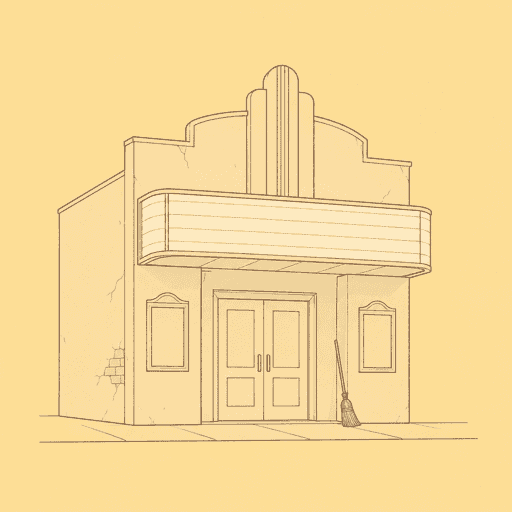
The Last Picture Show
The Last Picture Show
A modern alternative to SparkNotes and CliffsNotes, SuperSummary offers high-quality Study Guides with detailed chapter summaries and analysis of major themes, characters, and more.
Summaries & Analyses
Quizzes
NEWReading Tools
Chapters 6-11Chapter Summaries & Analyses
Content Warning: This section of the guide includes sexual content, animal cruelty, ableism, sexual violence, and substance use.
Chapter 6 Summary
Coach Popper asks Sonny to drive his wife, Ruth, to a doctor’s appointment in the nearby town of Olney. Sonny agrees, happy to miss his afternoon classes. When he arrives at the Poppers’ house, Ruth seems disappointed that her husband isn’t taking her himself. On the drive back from the clinic, Ruth is crying. She reveals that she has a tumor in her breast and must have an operation tomorrow, but she clarifies the tumor probably won’t be dangerous.
Back at her house, Ruth persuades Sonny to come inside for a Coke. In the kitchen, she breaks down again, confessing that loneliness, not fear of the operation, is what overwhelms her. In an emotional moment, she presses Sonny’s hand to her cheek and admits she considered seducing him. Overwhelmed, she sends him away. When Sonny later checks in with Coach Popper after basketball practice, the coach shows no concern for his wife, asking only if she received a prescription and complaining about her medical expenses.
Chapter 7 Summary
Upset that Jacy is on a date with rich boy Lester Marlow, Duane accepts an offer from Jerry Framingham to ride along on a cattle haul to Fort Worth, and Sonny joins them. Before they leave, they talk with Sam the Lion at the café. Duane, worried he isn’t rich enough for Jacy, is stunned when Sam reveals that Jacy’s father, Gene, is likely not cash-rich at all. This news encourages Duane until Sam points out that a man losing his wealth would become even snobbier about his daughter’s suitors.
On the road, Sonny and Duane get drunk on beer while Jerry drives, happily reminiscing. In Fort Worth, they pool their money to hire a sex worker, but Jerry wins the coin flips and is the only one to have sex with her. The return trip is miserable; the truck’s heater breaks, and they suffer from the cold and hangovers. They arrive back in Thalia before dawn, where a kind Genevieve gives them coffee and a ride home. Though exhausted, Sonny feels a sense of satisfaction at having traveled to the city.
Chapter 8 Summary
Thalia travels to Paducah for the season’s first basketball game and suffers a humiliating 121-14 defeat. The Paducah gym is abnormally small, their players openly tackle and block Thalia’s team, and the referee calls everything in the home team’s favor. Leroy Malone trips the gangly Paducah center, and Sonny runs in pursuit of the ball; someone trips him, and he hits the wall head-first, knocking himself out. Coach Popper forces him back in. Frustrated by the chaos, Sonny fires a shot that deliberately strikes the referee in the back of the head, making Sonny briefly celebrated among the Thalia players.
On the return bus ride, Sonny’s newfound status earns him limited romantic progress with a sophomore named Martha Lou. Jacy and Duane make out in the back seat, and their public sessions have become a ritual spectacle on the bus for the other students. Jacy is genuinely aroused specifically because she has an audience.
Later that night, Popper refuses to bring Ruth her pain medication, forcing her to stumble to it herself. The next day he baits Duane into quitting the team entirely over a public confrontation about Jacy, which Popper views as a convenient way to shed responsibility for the situation and avoid the wrath of Jacy’s parents.
Chapter 9 Summary
Winter settles over Thalia, bringing low morale to the basketball team and grueling late-night butane delivery work for Sonny. Duane, having quit basketball, takes double shifts roughnecking and devotes his Saturday nights to Jacy. Jacy, still processing her mother’s earlier advice to sleep with Duane, responds by retreating from him, sensing a trap by her mother. She gradually allows Duane limited intimacy again.
At the annual Christmas dance at the Legion Hall, Lester invites Jacy to a late-night naked swimming party at a wealthy Wichita Falls boy’s home. Jacy decides she must attend to secure her social legend and deliberately spends the evening manipulating Duane to soften his reaction to her leaving with Lester. Jacy also witnesses her mother openly kiss Abilene at the dance; she lectures Lois about it, but Lois’s casual, dismissive response hurts Jacy’s feelings. Lois casually grants permission for her to go to the party in Wichita Falls, further unsettling Jacy.
Lester takes Jacy to Bobby Sheen’s mansion in Wichita Falls. The pool is full of kids who are already naked, and Jacy must walk out on the diving board and remove all her clothes while they watch. She wins the crowd over and spends the evening swimming naked with them, deciding to align herself with this faster, richer social set. The chapter closes with Jacy carelessly ruining the expensive wristwatch Duane gave her for Christmas, dismissing it as trivial by the standards of her new crowd.
Chapter 10 Summary
Word spreads instantly at the Christmas dance that Lester has taken Jacy to a naked swimming party in Wichita. While waiting for the news to reach Duane, Sonny drifts into the refreshment room and encounters Ruth Popper cleaning up alone. She quietly suggests that Sonny look to her for companionship, and after a moment of silence, he offers to help carry trash outside. In the alley behind the Legion Hall, they share increasingly passionate kisses, and Ruth decides to arrange for Sonny to drive her to the hospital again on Tuesday. The encounter is a turning point for Sonny, the first kiss he’s had that feels as good as he imagined kissing could be.
After Duane finds out about Jacy, Sonny and Leroy steal vodka and take him to the pool hall. Several younger boys are there as well. The night deteriorates when Leroy leads the group to a stock pen to sexually abuse a blind heifer. The boys then decide to pay a local woman, Jimmie Sue Jones, to have sex with Billy.
Sonny voices objections for Billy, who doesn’t understand what is happening, warning the others about upsetting Sam the Lion, but he is overruled by the crowd. Jimmie Sue bloodies Billy’s nose, and Billy is confused and distressed. When the boys bring Billy home to the pool hall, Sam the Lion, discovering what happened, permanently bans the boys from his pool hall, café, and picture show. The punishment stuns everyone. Sonny goes to bed haunted by guilt over Billy and consoled only by the memory of Ruth.
Chapter 11 Summary
Sonny and Ruth Popper begin a secret affair, but their first sexual encounter is awkward and unsatisfying. Plagued by nervousness and the constant squeaking of her marital bed, Ruth is unable to feel pleasure and ends up in tears. Despite her insecurity and his uncertainty, Sonny decides to continue seeing her. The affair remains strained until Ruth nervously suggests they make love on a quilt on the floor. This change allows them both to relax, and Ruth begins to experience real intimacy and moments of pleasure for the first time.
As Ruth falls in love, she struggles to achieve a full orgasm, causing a brief strain in the relationship. She explains her loneliness by comparing herself to a refrigerator never defrosted, with the ice only growing thicker over the years. The turning point comes after she has a vivid dream in which a baby removed from between her legs is Sonny, who then lies at her breast. During their next encounter, she pretends she is bringing Sonny out of her, and this image carries her to a powerful sexual breakthrough.
Afterward, their relationship becomes much more comfortable and close. By the end of the chapter, the town has discovered their affair, although Popper still doesn’t know about it. While Sonny is worried, a newly confident and happy Ruth is unconcerned, joking that her husband might shoot them and happily suggesting they buy a new quilt.
Chapters 6-11 Analysis
In these chapters, the novel continues to interrogate the disjunction between public image and private reality, revealing The Destructive Nature of Social Hypocrisy. Coach Popper’s curt dismissal of his wife’s illness—“Hell, women like to be sick” (54)—establishes a contrast between his public role as a model for young men and his private life of callous neglect. At the gym, he is a figure of authority, chewing tobacco and bellowing at his players to “[b]e men.” At home, this performance of rugged masculinity gives way to emotional cruelty, as he complains about medical bills and refuses to fetch his wife, recovering from surgery, a pain pill. The same dynamic is at play with Jacy on the school bus, where she performs a passionate makeout session with Duane for the benefit of an audience. Her arousal is explicitly tied to being watched, transforming an act of intimacy into a calculated bid for social status and revealing her callous use of someone she purports to love. Both the adult and teenage worlds of Thalia are governed by this principle of performance, where public identity is a carefully constructed façade that conceals desperation, loneliness, and ambition.
Sonny and Duane’s trip to Fort Worth in Jerry Framingham’s cattle truck is a bleak parody of the heroic mythological journeys that once defined their region, showing The Revealed Illusion of the American Dream. What might have once been a cattle drive, an iconic test of cowboy masculine endurance and skill, is reduced to a drunken joyride in a truck cab. The destination is the anonymous Fort Worth stockyards, followed by a transaction with a sex worker. The romanticized frontier of the past has been replaced by a mundane, commercialized landscape where adventure consists of cheap beer and sordid encounters. The return journey, cold and miserable, completes the anti-Western narrative arc and illustrates McMurtry’s subversion of the Western genre: Instead of triumph, there is only a hangover. This disillusioning experience emphasizes the absence of true male role models in a world where the legends of the Old West are revealed to be just that: legends.
Sonny’s first kisses with Ruth Popper in the alley behind the Legion Hall mark a turning point, creating a moment of authentic connection that stands in opposition to the town residents’ isolation and cruelty. This brief scene of tenderness is immediately followed by a brutal descent into mob violence, showing How Purposelessness Leads to Moral Decay. Spurred on by Duane’s heartache, the boys’ evening devolves from drunken mischief into abuse of the town’s most vulnerable figures, Billy and a blind heifer. Sonny’s refusal to participate signals a nascent moral awakening, but his lack of real opposition illustrates his uncertainty in going against the majority. The incident culminates in Sam the Lion’s quiet, destructive verdict: “Scaring an unfortunate creature like Billy […] is just plain trashy behavior” (100). By permanently banning the boys from his businesses—the picture show, café, and the motif of the poolhall—Sam, the town’s moral center, effectively exiles them. His action is both a punishment and an admission of failure; the community’s social fabric has decayed to a point where he feels he can no longer guide or redeem its youth.
Jacy Farrow’s calculated pursuit of a social “legend” at the naked swimming party reveals the hollowness of Thalia’s social hierarchies and the transactional nature of its relationships, developing the theme of the destructive nature of social hypocrisy. To secure her invitation, she deliberately manipulates Duane, offering him unprecedented sexual intimacy as a tool to pacify him. At the party in Wichita Falls, her initiation into the “Senior Nudists” is a public performance, which she sees as an uncomfortable but necessary step to align herself with a richer, faster social set. The ease with which she discards her Thalia ties is represented by her carelessness with the wristwatch Duane gave her for Christmas. In the context of her new, wealthy friends, a $50-dollar gift is trivial, even though she knows that it cost Duane dearly. Her ambition is not for personal growth or genuine connection but for the status conferred by association with what she sees as a more sophisticated world. This arc demonstrates a world where social currency is gained through transgressive spectacle rather than character or loyalty.
Ruth and Sonny’s affair provides a counter-narrative to the town’s pervasive emotional stagnation, tracing a painful but ultimately transformative journey from isolation to connection. Their initial encounters are fraught with awkwardness and failure, plagued by the squeaking bedsprings of her loveless marriage. Ruth’s description of her decades-long loneliness as being “like a refrigerator that had never been defrosted at all” is a metaphor for the emotional chill that defines her existence and that of many other adults in Thalia (111). Her eventual sexual breakthrough, catalyzed by a dream of giving birth to Sonny, represents not just physical release but the reclamation of her own body and identity after years of neglect. This intensely private awakening, which ultimately brings her a sense of peace and confidence, becomes one of the novel’s few examples of genuine personal growth, occurring in defiance of the town’s judgmental gaze.

Unlock all 55 pages of this Study Guide
Get in-depth, chapter-by-chapter summaries and analysis from our literary experts.
- Grasp challenging concepts with clear, comprehensive explanations
- Revisit key plot points and ideas without rereading the book
- Share impressive insights in classes and book clubs