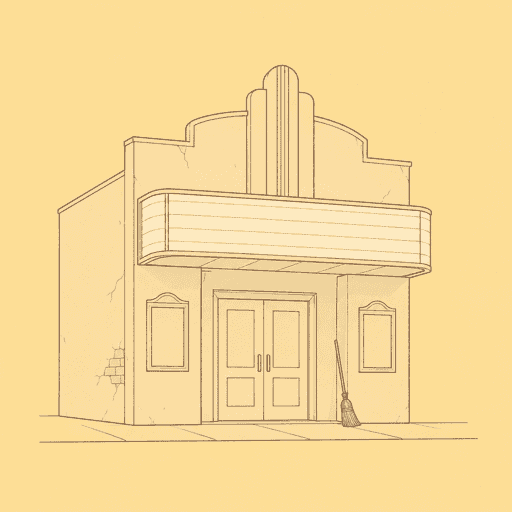
The Last Picture Show
The Last Picture Show
A modern alternative to SparkNotes and CliffsNotes, SuperSummary offers high-quality Study Guides with detailed chapter summaries and analysis of major themes, characters, and more.
Summaries & Analyses
Quizzes
NEWReading Tools
Chapters 22-26Chapter Summaries & Analyses
Content Warning: This section of the guide includes discussion of graphic violence and cursing.
Chapter 22 Summary
Duane, who now works in Odessa, makes a surprise weekend visit to Thalia in his new car. He and Sonny drive to Wichita Falls to drink beer, but the reunion sours when Duane confronts Sonny about his relationship with Jacy. When Sonny reveals that Jacy claimed Duane was sexually inept, Duane hits Sonny in the face with a beer bottle.
The police break up the fight, and after paying a fine, the two are released. Sonny’s eye is badly injured, and at the hospital, a doctor warns him that he might lose some sight. During an eight-day hospital stay, Sonny learns that Duane has enlisted in the army, and he refuses a visit from Ruth Popper. Jacy visits and impulsively proposes that they elope. She privately thinks that marrying him will create a dramatic spectacle, and she assumes her parents will quickly have the marriage annulled. Sonny agrees, and he is discharged from the hospital with partially impaired vision and a black patch for his eye.
Chapter 23 Summary
The day after Sonny leaves the hospital, he and Jacy drive to Wichita Falls to get a marriage license, then wait three days before driving to Altus, Oklahoma, where they are married by a justice of the peace in a shabby, unceremonious service. Jacy left a detailed note for her parents, telling them where she would be going. On the way to Lake Texoma for their honeymoon, Jacy begins to regret her plan, fearing her parents might not intervene to stop the marriage. Her fears are put to rest when a highway patrolman pulls them over at her parents’ request. They are taken to the local jail to wait.
An enraged Gene arrives and takes Jacy away. Lois offers Sonny a choice between a ride back to Thalia or bus money; Sonny accepts the ride. She tells him he is lucky, as Jacy would have found a way to avoid having sex and was just causing drama. Lois becomes emotional while reminiscing about her past love for Sam the Lion. She propositions Sonny, and they have sex in a motel on the Henrietta highway. Afterward, Lois drops Sonny at the pool hall, saying they will be “very good friends for a long time” (225), but she could not get away with seeing him regularly. The experience leaves Sonny feeling guilty about how he treated Ruth Popper.
Chapter 24 Summary
Sonny learns that the town’s picture show is closing for good for lack of business. When the football season begins, he feels like an outsider, no longer a member of the team or school. To combat his loneliness, Sonny takes long walks with Billy. He decides to attend an important football game, but the experience is painful; amid the town’s excitement for the win, Sonny feels completely invisible, as if he has been erased.
He returns to the dark, empty poolhall and breaks down, crying from the intense feeling of isolation. Later, while walking with Billy, he is overcome with shame. He realizes that by abandoning Ruth Popper without a word, he forced her to feel the same sense of worthlessness and invisibility that now plagues him.
Chapter 25 Summary
Duane returns to Thalia from boot camp, but he is leaving for Korea in a week. He avoids Sonny all week, but on Duane’s last night, Sonny seeks him out. They attend the final screening at the picture show, but the memories of being there with Jacy make them uncomfortable, and they leave. They drive to Fort Worth for a night of drinking, which ends with a visit to a brothel.
Back in Thalia, while waiting for his early morning bus, Duane gives Sonny the keys to his car, asking him to look after it. He admits that he is still not over Jacy, and she was the only reason they fought. Sonny watches as Duane boards the bus and feels alone once more on the deserted street.
Chapter 26 Summary
Billy is confused by the permanent closure of the picture show. He continues to go there every night with his broom, waiting for it to open. One windy November morning, he is sweeping the street during a dust storm. A large cattle truck drives through the town square and hits and kills Billy. When the sheriff and other onlookers dismiss the death as unimportant, an enraged Sonny yells at them, then carries Billy’s body from the street to the sidewalk in front of the closed theater.
Devastated and utterly alone, Sonny drives to Ruth’s house in the middle of the afternoon. Ruth unleashes months of accumulated anger and pain, accusing him of ruining her life and leaving her without explanation. Sonny is too numb with grief to respond. Seeing his state, Ruth’s anger subsides. She takes his hand and decides she has the nerve to accept him back. She begins to speak, but the words are lost; she quiets and comforts him instead.
Chapters 22-26 Analysis
Duane and Sonny’s drunken fight over Jacy transforms their friendship into a grim parody of masculine honor, continuing the novel’s exploration of masculinity and The Revealed Illusion of the American Dream. The argument begins with Duane’s casual, probing question, “‘Still screwin’ that old lady?’” (204), but quickly devolves into a desperate accounting of sexual and athletic prowess. The conflict is not about love for Jacy but about status, with each boy attacking the other’s claims to a manhood defined by high school football positions and sexual conquests. Sonny’s retort that Duane’s success with Jacy was only because he “was in the backfield” while Sonny “was in the fuckin’ line” reveals the pathetic foundations of their social hierarchy (206). This violent outburst continues McMurtry’s contribution to the Revisionist Western genre, replacing the heroic showdowns of traditional Westerns with a pathetic, beer-bottle-fueled brawl in a generic bar. Their pride is rooted in adolescent glories that have already faded, leaving them with nothing but resentment and a physical altercation so insignificant that the barmaid waves at them “tolerant, jolly, and apparently amused” (207). Their bond, once a source of stability, crumbles under the weight of their shared insecurities and the town’s limited script for what makes a man.
Jacy Farrow’s scheme to elope with Sonny reveals The Destructive Nature of Social Hypocrisy, exposing the performative and destructive nature of relationships in Thalia, where romantic gestures are tools for social manipulation. Her decision to marry the now “poor and sort of mutilated” Sonny is a calculated act of rebellion, designed to “knock everyone in Thalia for a loop” (210), but her willingness to do so is predicated on the idea that her parents will have the marriage annulled. The wedding itself is stripped of all sanctity, reducing the sacred rite to a grubby transaction. Jacy mimics the language of love and sacrifice while pursuing a purely selfish goal. When her parents intervene as expected, she embraces the role of a tragic lover, clinging to Sonny in the jailhouse. The entire episode reveals that she sees love as a currency to generate attention and momentarily escape the town’s oppressive boredom before retreating to the safety of wealth and status.
Working the sidelines at a high school football game, Sonny experiences a sense of social erasure that crystallizes his post-graduation alienation. Holding the first-down chain, he feels invisible to the townspeople, who see “nothing but the boys on the field” (229). The game, a central ritual of Thalia’s communal life, now serves only to highlight his exclusion. This feeling of being erased intensifies his awareness of the town’s collapsing social structures, a process highlighted by the permanent closure of the picture show. The theater, once a reliable center of community and escape, becomes a dark, empty monument to a bygone era. Both the football game and the defunct theater, the institutions meant to provide identity and belonging, have either become exclusionary or ceased to exist altogether. Sonny’s subsequent breakdown in the empty poolhall is a response to the disintegration of the very social fabric that once gave his life meaning, but it also gives him insight into Ruth’s predicament and how deeply his neglect must’ve affected her. His isolation is a symptom of Thalia’s larger decay, a town losing its ability to sustain its own people.
Billy’s accidental death serves as the narrative’s tragic climax, a direct illustration of How Purposelessness Leads to Moral Decay. Confused by the permanent closure of the picture show, Billy is struck by a cattle truck while sweeping the street, wearing Sonny’s eye patches as blinders. The onlookers, particularly the sheriff who dismisses Billy as a “simple-minded kid” who “never had no sense” (241), react with casual indifference, stripping the death of its tragedy. Sonny’s furious cry, “He was sweeping, you sons of bitches!” (241), is a desperate assertion of Billy’s humanity and purpose against the town’s callousness. By carrying Billy’s body to the curb in front of the closed theater, Sonny performs a final, futile act of loyalty and asserts his burgeoning sense of morality. Billy’s broom, the symbol of his simple, ordering presence, lies abandoned in the street, representing the loss of the last vestiges of innocence and order in Thalia.
In the wake of Billy’s death, Sonny’s desperate return to Ruth Popper forces a confrontation with the consequences of his actions and leads to a difficult, unromantic reconciliation, leaving the novel’s end ambiguous and open-ended. Ruth’s initial rage, in which she accuses him of treating her like a dog and making her “quit caring whether [she] got dressed or not” (244), is a raw expression of the pain and humiliation he inflicted. Her anger, however, gives way to a weary, pragmatic decision. As she traces the lines in his palm, she weighs whether she can “stand it again,” recognizing that taking him back means accepting the inevitability of future pain. Her choice to comfort him, straightening his collar and murmuring, “Never you mind, honey” (246), is not a fairy-tale ending but an act of realistic assessment and clear-eyed courage. It signifies a turn away from the empty theatrics of the town’s residents and the hollow codes of male friendship toward a relationship grounded in shared woundedness and an acknowledgment of human fallibility. In the ruins of his life, Sonny finds a fragile, authentic connection that offers not happiness but a bulwark against complete desolation.

Unlock all 55 pages of this Study Guide
Get in-depth, chapter-by-chapter summaries and analysis from our literary experts.
- Grasp challenging concepts with clear, comprehensive explanations
- Revisit key plot points and ideas without rereading the book
- Share impressive insights in classes and book clubs