Streets of Laredo
Streets of Laredo
A modern alternative to SparkNotes and CliffsNotes, SuperSummary offers high-quality Study Guides with detailed chapter summaries and analysis of major themes, characters, and more.
Summaries & Analyses
Quizzes
NEWReading Tools
Summary and Study Guide
Overview
Larry McMurtry’s 1993 novel, Streets of Laredo, is the direct sequel to his Pulitzer Prize-winning masterpiece, Lonesome Dove (1985), and serves as the chronological conclusion to the four-book series. A stark example of the Revisionist Western, the novel presents a brutal and elegiac vision of a dying frontier, stripping away the romantic myths of the Old West to reveal a world of senseless violence and decay. The story follows an aging Captain Woodrow Call, once a legendary Texas Ranger, who is now a bounty hunter hired by a railroad tycoon to hunt down a ruthlessly efficient young train robber named Joey Garza. This manhunt forces Call to confront not only a new breed of killer but also his own physical decline and obsolescence. The novel explores themes including The Myth of the Frontier Hero and The Tensions of Industrialization, contrasting the violent male world with The Power of Maternal Devotion.
As the follow-up to one of the most celebrated novels of the 20th century, Streets of Laredo was met with high expectations and achieved significant critical and commercial success, becoming a New York Times bestseller. The novel was praised for continuing the epic narrative of Lonesome Dove while offering a darker, more somber meditation on the consequences of a life of violence. In 1995, the book was adapted into a popular television miniseries of the same name, with James Garner taking on the role of Captain Call, Sissy Spacek portraying Lorena Parker, and Sam Shepard as Pea Eye Parker. This adaptation, following the iconic 1989 miniseries of Lonesome Dove, cemented the story’s place in popular culture and further established McMurtry’s reputation as a master chronicler of the American West and its unmaking.
This guide refers to the 1993 Simon & Schuster paperback edition.
Content Warning: The source text and this guide feature depictions of graphic violence, sexual violence, suicidal ideation, death by suicide, child abuse, child death, animal cruelty, animal death, racism, graphic violence, gender discrimination, ableism, sexual harassment, sexual assault, illness, and death.
Language Note: The source text contains offensive language to describe Indigenous characters and people who have disabilities and mental illness. This guide reproduces these terms only when directly quoting the source text.
Plot Summary
In the waning days of the American West, an aging but still legendary Captain Woodrow Call works as a bounty hunter. He’s hired by Ned Brookshire, an accountant from Brooklyn representing the railroad president Colonel Terry. Call’s mission is to hunt down Joey Garza, a brutally efficient and intelligent young Mexican train robber. Call expects to be joined by his longtime corporal, Pea Eye Parker, but Pea Eye is now a farmer in the Texas Panhandle, married to Lorena and father to five children. Torn between his loyalty to Call and his new life, Pea Eye initially refuses to go, forcing Call to begin the perilous journey south accompanied only by the bookish and out-of-place Brookshire. They travel to San Antonio, where they briefly collect Call’s old, senile cook, Bolivar, with the intention of leaving him with a family in Nuevo Laredo before crossing into Mexico.
Joey, a cold and meticulous killer from Ojinaga, is driven by a desire for dominance and beautiful objects, which he steals to hoard in a secret cave. His mother, Maria, is a midwife in the village who lives in quiet anguish over her son’s cruelty, which she partly attributes to his being sold to the Apache as a child by one of her husbands. An old scout and friend of Maria’s, Billy Williams, learns that Call has been hired to find Joey and warns Maria, who undertakes a desperate journey to Crow Town, a remote haven for outlaws, to warn her son. Joey, dismissive of the threat and contemptuous of her concern, steals her horse and abandons her.
As Call’s pursuit begins, a new threat emerges: A sadistic killer known as Mox Mox, or “the manburner,” begins a spree of robbing trains and burning his victims alive in New Mexico, complicating Call’s mission. Meanwhile, wracked with guilt after a conversation with the formidable rancher Charles Goodnight, Pea Eye leaves his farm to find Call. He is soon joined by Famous Shoes, an elderly but legendary Kickapoo tracker, and they set out to rendezvous with Call, Brookshire and a reluctant new deputy from Laredo named Plunkert.
Call’s posse is fractured when the sheriff of Presidio, Joe Doniphan, arrests Pea Eye and Famous Shoes on false charges. Enraged by Doniphan’s defiance, Call beats the sheriff nearly to death with a rifle butt and frees his men. The reunited party soon crosses the trail of Mox Mox and his gang. Call ambushes the killers’ camp to rescue two captive children, who are revealed to be the son and daughter of Jasper Fant, a former member of the Hat Creek outfit. In the firefight, Call kills most of the gang, but Mox Mox and a Cherokee named Jimmy Cumsa escape. The wounded Mox Mox is later abandoned by Jimmy and freezes to death. Meanwhile, Lorena, who has set out to find her husband after hearing of Mox Mox’s return, continues her journey south. The group’s tragedies compound when they meet a traveler who recounts the story of a deputy’s wife who was raped by the sheriff of Laredo and later died by suicide. Realizing the woman must have been Doobie, Plunkert bolts in a grief-stricken frenzy, only to be killed by vaqueros after his horse falls off a bluff.
The hunt for Joey reaches its climax when the young bandit, having stalked Call for days, sets a clever ambush. Using a hobbled horse as cover, Joey shoots Captain Call three times, shattering his arm and leg and lodging a bullet in his chest. Believing Call to be mortally wounded, Joey leaves him. Lorena, who was traveling with Call, finds him near death. In a desperate act to save him from gangrene, she uses a bowie knife to amputate his leg, then transports the barely conscious Captain toward Ojinaga. Meanwhile, Joey springs a second trap on Call’s remaining men. He kills their horses and strips their camp, intending to toy with them before killing them. In despair, Brookshire walks out to confront the killer and is shot in the face. Pea Eye, witnessing Brookshire’s death, makes a desperate charge. Using Famous Shoes as a momentary decoy to locate Joey’s position, he sprints to Brookshire’s body, grabs the eight-gauge shotgun the accountant had carried, and fires two blasts that rip into Joey’s back and legs as the outlaw flees.
Wounded and weakened, Joey returns to Ojinaga, intending to force his mother to remove the pellets. He finds his brother, Rafael, and his sister, Teresa, by the river and attempts to drown them. Maria intervenes, stabbing her son with a butcher knife to make him release Teresa. Enraged, Joey turns on his mother and stabs her repeatedly. Just as he does, the town butcher, Gordo, who has been alerted by the commotion, arrives and shoots Joey dead. Maria, fatally wounded by her son, lives just long enough to see Lorena return with the wounded Pea Eye. In her dying moments, she begs Lorena to take her two surviving children, and Lorena agrees. The hunt is over, with Joey, his mother Maria, Brookshire, and Plunkert all dead.
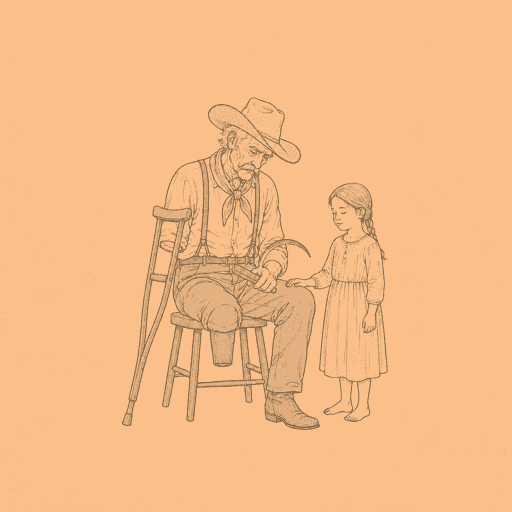
In the aftermath, the survivors return to the Panhandle. Captain Call, now missing an arm and a leg, is consumed by a sense of failure. He goes to live in a small shack on Pea Eye and Lorena’s farm. The Parkers, their own family growing, take in Rafael and Teresa. Call withdraws from the world, finding his only solace in the company of Teresa, who becomes his devoted caretaker. He discovers a new purpose in meticulously sharpening tools for the local farmers. The West continues to change around them. The novel closes on an elegiac note as Charles Goodnight, visiting the farm, sees the once-invincible Captain Call reduced to sharpening a sickle in a barn. Reflecting on the deep change, he remarks to a young cowboy, “Woodrow Call had his time” (536).

Get in-depth, chapter-by-chapter summaries and analysis from our literary experts.
- Grasp challenging concepts with clear, comprehensive explanations
- Revisit key plot points and ideas without rereading the book
- Share impressive insights in classes and book clubs