The Museum of Innocence
The Museum of Innocence
A modern alternative to SparkNotes and CliffsNotes, SuperSummary offers high-quality Study Guides with detailed chapter summaries and analysis of major themes, characters, and more.
Summaries & Analyses
Quizzes
NEWReading Tools
Background
Historical Context: The Republic of Türkiye in the 1970s and 1980s
Pamuk’s novel is largely set in the 1970s and 1980s, a period of widespread political unrest and civil violence across the Republic of Türkiye. This temporal setting is key to understanding the novel’s politics, which explore the social dynamics of the urban bourgeoisie, represented by Kemal and his social circle, and the working class, represented by Füsun and her neighborhood.
The 1960s marked a hard shift from right-wing to left-wing dominance in national politics, due to the 1960 coup d’état that resulted in the banning of the Democrat Party that had united conservatives, Islamic fundamentalists, and bourgeois intellectuals under a consolidated front. The country saw a decade-long period of secularization and industrialization, which encouraged the workers to pursue labor opportunities in urban centers like Istanbul and protest exploitative industry practices. When these domestic policies drove developmental issues, the reformed parties of the political right leveraged the government’s failure to stir civil unrest.
Meanwhile, far-left parties began to advocate for a government shift to socialism or an outright communist revolution, which alarmed the country’s social elite. Throughout the 1970s, there was a marked increase in politically-motivated violence between organizations on the left and right, resulting in 5,000 estimated assassinations (Gil, Ata. “La Turquie à marche force.” Le Monde diplomatique, Feb. 1981). By the end of 1979, General Kenan Evren determined that another military coup was necessary to restore order in Türkiye. Evren’s newly formed National Security Council launched its coup in September 1980, instituting martial law nationwide. The military remained in control for two years, later introducing a new constitution that appointed Evren to the presidency until 1989.
Pamuk depicts the urban bourgeoisie in Kemal’s circle as blissfully detached from the goings-on in Istanbul, even as they comment on the ongoing eruption of violence between the two sides of the political spectrum. Instead, their concerns focus on how to drive their profits, from Kemal’s middling contributions to his family's export firm to Zaim’s struggles to conquer the Istanbul beverage market with his new product, Meltem. By contrast, Füsun and her family are working to claim what labor opportunities are left for them in a crumbling liberal economy. Füsun pursues university education to expand her career options, only to fail after spending the night before the exam at Kemal’s engagement party.
Kemal’s mother, Vecihe, is condescending toward Füsun’s family, lacking sympathy for them. Her classism is echoed in Sibel’s resentment against Füsun when she claims that Kemal is throwing his life away for a “common shopgirl,” implying that he is degrading himself. Beneath his unceasing declarations of love for Füsun, Kemal undermines Füsun’s aspirations toward class mobility, fearing she may use mobility to gain more agency. In this way, Kemal’s obsession with possessing Füsun reflects the broader material domination of the upper classes throughout this historical period.
Authorial Context: Orhan Pamuk and the Museum of Innocence
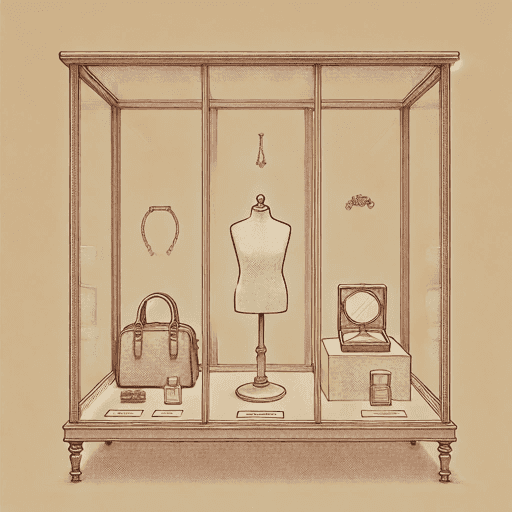
Pamuk wrote The Museum of Innocence parallel to the intention of opening a real-world exhibit that showcased his characters’ belongings. In the 1990s, he started to collect objects from his friends and family, as well as from junk shops. He linked each one to events in the narrative he was planning, so that the reader could connect the exhibits to specific chapters. For instance, Chapter 68 of the novel, entitled “4,213 Cigarette Stubs,” corresponds to a wall display in the museum that presents all the cigarette butts at once. This drives an added layer of verisimilitude to the narrative, inviting the reader to think of the characters as real people, even though none of them are inspired by people in Pamuk’s or anyone else’s lives.
Pamuk published the novel in 2008 before he had completed the collection for the museum. The real-world Museum of Innocence opened in 2012 and is located in Çukurcuma, Beyoğlu district, Istanbul. According to the museum catalogue Pamuk created, entitled The Innocence of Objects, the museum is a way to encourage cultures to invest in the creation of small museums that replace larger histories with individualistic stories. This gives visitors a specific perspective or realm of experience in which to understand larger phenomena. In the case of his novel, the stories of Kemal and Füsun, as told by the real-world museum, reflect a way of looking at Turkish life.

Get in-depth, chapter-by-chapter summaries and analysis from our literary experts.
- Grasp challenging concepts with clear, comprehensive explanations
- Revisit key plot points and ideas without rereading the book
- Share impressive insights in classes and book clubs