The Museum of Innocence
The Museum of Innocence
A modern alternative to SparkNotes and CliffsNotes, SuperSummary offers high-quality Study Guides with detailed chapter summaries and analysis of major themes, characters, and more.
Summaries & Analyses
Quizzes
NEWReading Tools
Themes
Content Warning: This section of the guide includes discussion of emotional abuse, gender discrimination, sexual content, and mental illness.
The Devastating Impact of Obsession
Throughout the novel, Kemal tries to frame his relationship with Füsun as a great love story, spanning many years and sweeping social changes. This framing relies heavily on Kemal’s first-person narratorial voice, however, which renders the depiction of his relationship with Füsun suspect. The narrative gradually reveals Kemal’s failure to truly love, let alone understand Füsun, exposing the devastating impact of obsession.
Kemal’s obsession with Füsun grows out of a desire to satisfy his sexual needs, especially after Sibel commits to abstinence in preparation for their marriage. The more he satisfies these needs, the more he convinces himself that Füsun is a missing element in his life. He becomes dependent on her and experiences psychosomatic symptoms when apart from her that underline that dependence. From a distance, however, there is nothing to suggest that Kemal actually gets anything from their relationship other than sex. He even affirms this when he indicates his desire to hold on to his engagement with Sibel because he sees their marriage as a path to lifelong happiness—something he does not really associate with Füsun.
Kemal’s behavior repeatedly reveals that he has little understanding of Füsun’s needs and feelings. He offers mathematics tutorials as a pretense for continuing their affair, but fails to see that admission into university would greatly impact her and her family’s life and socioeconomic status. After she fails the exam, Kemal only thinks of her absence from his life in terms of how it affects him. He does not take it as a sign that her life has been radically reshaped to fit the new limitations of her potential career. The change in Füsun’s status quo upon their reunion emphasizes this, as Füsun has chosen to pursue her ambitions as an actress and marry an industry insider to guarantee her success. Once again, Kemal sees Füsun’s ambitions exclusively as an opportunity to steal her away from Feridun. He effectively delays the start of Füsun’s career to achieve this purpose.
By the end of the novel, Kemal’s obsession leaves Füsun with no other prospect than to marry him. When she tries to resign herself to this outcome by visiting him in his hotel room during their trip, his failure to recognize the earring that Füsun lost on one of their first sexual encounters signals to her that Kemal does not care about her wants and needs. Kemal’s failure to consider Füsun as someone with needs and wants exposes his failure to love her while also revealing how much his obsession with her has affected her life. Pamuk stresses that the impact isn’t one-sided: In the final chapter, Sibel reports that Kemal looks unhappy, contradicting Kemal’s assertion that he lived a happy life.
Modesty as a Tool of Repression
Pamuk uses the novel to explore the repressive gender dynamics that marked 1970s and 1980s Istanbul. This period marked a gradual shift in Turkish culture, as the country’s various political upheavals ushered in a secularized high society that clashed with traditional gender roles and expectations. Pamuk’s characters wrestle with issues of virginity, promiscuity, and class, revealing ideals of modesty as a tool of repression for women.
At the start of the novel, Kemal reveals that he and Sibel regularly had sex in his office, using the public aspect of the setting to drive a sense of youthful excitement and danger in their relationship. While these sexual escapades have no impact on Kemal’s reputation as a man, Sibel becomes more self-conscious and wary of sex before marriage. Sibel wants to project an image of moral conservatism that cements their status among the society elite. Even though they have had sex in the past, Sibel fears the judgment of her social peers as a threat if she continues to have sex before marriage. Kemal resents Sibel’s reservations because they interfere with his own desires, ignoring the sexual double standards Sibel faces as a woman.
Kemal’s affair with Füsun further threatens Sibel socially. Though the offense primarily belongs to Kemal as the person who initiated the affair, Sibel feels humiliated that Kemal would choose someone with a lower-class background over her: “She’s a common shopgirl” (191). She is not alone in this sentiment as Zaim understands the compromising position it puts her in: “She has no idea how to explain the situation. How is she going to face people? What can she say? ‘My fiancé fell in love with a shopgirl, so we’ve separated’? She’s very upset, she’s heartbroken” (215). Sibel is also well aware that ending the engagement will impact her reputation more than it does Kemal’s, even though Sibel has done nothing wrong. Sibel’s vulnerability, even as the wronged party, reinforces how strictly ideas of feminine “modesty” and respectability are policed in Istanbul society.
Even Füsun acknowledges the value of modesty when she accepts Kemal’s proposal to enter a relationship together. While explaining her resolution to divorce Feridun, she stresses to Kemal that she and Feridun have never had sex—a claim that Kemal finds hard to believe given their eight years of marriage. However, this pretext is important for Füsun to claim that Kemal is the only man she’s ever had sex with, casting herself as a still-desirable, modest marriage partner in an attempt to secure his affection. In these ways, both Sibel and Füsun face disadvantages in their relationship dynamics with Kemal due to the double standards around female sexuality and modesty.
Objects as a Representation of a Lost Past
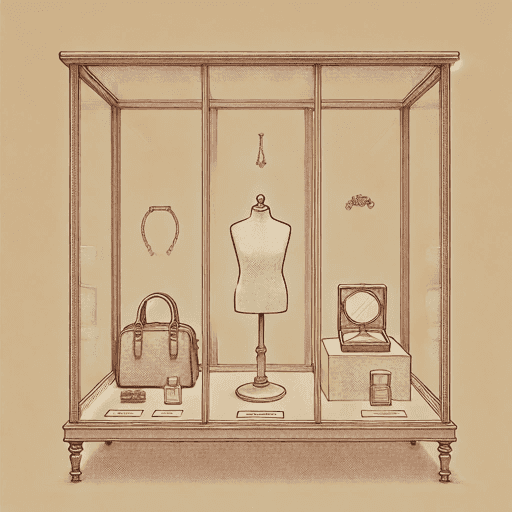
Throughout the novel, Kemal collects objects that he associates with Füsun, arguing that they are powerful enough to evoke her essence. Physical contact with these objects is enough to ease the discomfort of her absence, which sets up the end of the novel where Kemal founds a museum to alleviate the pain of losing Füsun after her death. Through Kemal’s persistent collecting, the novel presents objects as a representation of a lost past.
The lost earring is the seed of Kemal’s material obsession. When it gets lost in the Merhamet Apartments, the earring becomes a piece of Füsun that she leaves behind for Kemal to keep. She cements this idea by stressing the importance of that earring to her, arguing to Kemal that it is not an object he can easily replace. Füsun’s attitude toward the earring imprints the association between essence and form in Kemal’s mind: “One palliative for this new wave of pain, I discovered, was to seize upon an object of our common memories that bore her essence; to put it into my mouth and taste it brought some relief” (156). Though Kemal later returns the earring to Füsun, he comes to depend on the comfort of the objects Füsun has touched to bring him back to a time when he was happy in her presence.
The exploitative nature of this practice reveals itself when Kemal starts spending more time with Füsun’s family, the Keskins, over the eight years between their reunion and Füsun’s divorce from Feridun. Since Kemal finds happiness in Füsun’s presence and cannot divorce that happiness from the moments he spends in communal settings with the whole family, Kemal starts stealing common objects from their house, like the dog ornaments atop the television set. It becomes clear to Kemal that Nesibe and Tarık are aware of his habits, but choose to indulge him because Nesibe prefers Kemal as a potential partner for Füsun. Kemal tries to compensate the family by leaving money after he has stolen one of their belongings, but by this point, his collecting habits have transformed into a form of material exploitation.
This exploitation culminates in Kemal’s offer to buy the Keskin house from Nesibe, and though he rehouses her, he effectively claims and transforms their home into a shrine to his memories of Füsun. In this way, the house stops serving its purpose as a house. It is just another source of comfort for Kemal, something that he can use to alleviate the pain that nostalgia brings while inviting others to indulge him with pity.

Unlock every key theme and why it matters
Get in-depth breakdowns of the book’s main ideas and how they connect and evolve.
- Explore how themes develop throughout the text
- Connect themes to characters, events, and symbols
- Support essays and discussions with thematic evidence