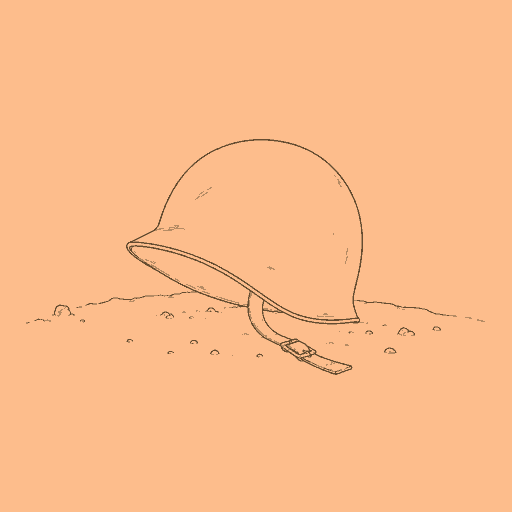
The Naked And The Dead
The Naked And The Dead
A modern alternative to SparkNotes and CliffsNotes, SuperSummary offers high-quality Study Guides with detailed chapter summaries and analysis of major themes, characters, and more.
Summaries & Analyses
Quizzes
NEWReading Tools
Part 1Chapter Summaries & Analyses
Content Warning: This section includes discussion of graphic violence and death.
Part 1: “Wave”
Part 1, Chapter 1 Summary
The night before the invasion of Anopopei, the soldiers aboard ship are aware that the next day, some of them will die. A nervous soldier cannot sleep and climbs out of his bunk to use the heads. Wilson, Gallagher, and Croft are playing poker, and Wilson has won most of the hands. He says he wishes he had liquor and a woman. Gallagher resents the money he has lost because he could have sent it to his wife, Mary, who is pregnant. Croft shouts at a soldier who complains that their game is keeping others awake. Red is restless in his bunk, so goes on deck and looks out to sea. He imagines his platoon will start out on beach detail and the campaign will fall into a rut. He thinks how Hennessey, a young man who had joined them right before the invasion, would be worried about having a life belt. Watching the dark island, Red feels a sudden, sad compassion for men and their wants and striving. Red tells himself there isn’t anything he wants.
Sergeant Brown is lecturing Stanley and complaining that his wife is cheating on him. Brown brags about how he survived Motome and describes being adrift on a rubber boat while the Japanese shelled them. Brown says Croft is made of iron and he’d never cross him. They worry about getting enough replacements to fill out the platoon. Sergeant Julio Martinez lies in his bunk sweating, nervous about the day to come. Every sound fills him with panic.
Part 1, Chapter 2 Summary
The invasion of Anopopei begins at 0400 hours. When the guns from the ships fire, “[f]or one instant the night was jagged and immense, demoniac in its convulsion” (19). The shells start fires on the beach. Mount Anaka rises out of the smoke.
The troops assemble, and Croft gives orders. Martinez is uneasy. The crew quarters remind him of a library in San Antonio where a girl scolded him and made him cry. He’s worried that something will happen to him today. Red is irritable as they gather on deck and wait, then descend into the boats. The men joke and curse about how awkward it is, provoking laughter.
After all the troops are boarded, the boats head toward shore. Gallagher complains that everything in the army is hurry up and wait. Brown thinks they would be safer on ship. Toglio gives him statistics saying that’s not true. Toglio thinks everyone should cooperate to get ahead. Croft wishes they were part of the battle. He notes that Hennessey looks frightened and is suddenly certain that Hennessey will die today. Martinez is shocked to find that they’ve landed without incident.
The men march toward the edge of the beach and sprawl out near a coconut grove. They watch the Navy set up a command post and Task Force Headquarters begin to function. Croft takes some men and marches off. Toglio decides to dig a hole, and the others follow suit. Stanley kicks some sand back into Ridges’s hole, but he simply digs it back out. Red challenges Stanley, and they nearly fight, but Red backs down.
The Japanese forces attack. Brown runs off, and several other men follow him. Hennessey stays with Toglio and Ridges. Toglio advises Hennessey to stay in his hole. The piercing sounds of the mortars and the crashes of impact terrify him. He begins sobbing and screaming. He feels moistness and realizes he has emptied his bowels. The jungle looks dark and ominous, and he is afraid he’s alone. He leaves his hole and is hit by a mortar.
Red finds Hennessey’s body when they return to the beach and feels sick. Martinez is no longer fearful that something will happen to him, but Croft feels a sense of omnipotence.
Part 1 Analysis
This first part of the novel introduces several members of the intelligence and reconnaissance platoon, one of the two main groups of people that the novel will focus on. The invasion is the inciting incident of the story, beginning the chain of events that will comprise the plot of the novel. The night before the invasion provides the exposition that introduces the world and its characters.
The novel introduces the key theme of The Erosion of Moral Agency in War by creating a panorama of characters whose individuality and agency are subsumed by the collective mission they must all undergo. Wilson is good-looking and feckless, from the Southern United States, and his interests follow his two main sources of pleasure: Having sex and drinking liquor. Gallagher has an Irish Catholic background and a wife, Mary, who is seven months pregnant. Croft, as Staff Sergeant, is the leader of the squad and responsible for their discipline. He is combative, craves action, and does not demonstrate gentler qualities like remorse or compassion. Brown is a braggart and Stanley is a conciliatory sort who wants to win Brown’s approval.
Despite their different personalities, which clash and grate on one another at times, they are compelled to work together for their own survival—a fact which Toglio acknowledges and the others only grudgingly accept. While the narrative offers these portraits to humanize and individuate the characters, it also sets up an immediate tension between the personal experiences and feelings of the men and the wider theater of war, as each man must struggle to maintain a sense of self in a situation that treats them as interchangeable and expendable.
These early chapters also introduce The Dehumanizing Impacts of Violence in examining how different characters respond to the trauma of war and combat. Martinez, the scout, is Mexican American and is hiding that he has been traumatized by his prior experiences of combat; he is sensitive to sounds and fearful of getting hurt. He illustrates the impact that the violence of war has on a soldier and the dread of death or injury that many of the characters share. Brown, in bragging about what he survived during the battle at Motome—a battle which killed several of the platoon, leading to the need for replacements—demonstrates a contrasting response to Martinez’s trauma. Brown regards his survival as proof of his toughness and masculinity, a mark of strength he can display before others.
Hennessey, in contrast to the experienced soldiers, represents the innocence of the new recruits. His concern about safety protocols like inflating his life vest proves ironic, as his death shows there is no safety during war. Hennessey’s experience of hiding in his hole undercuts any notions of valor, glory, or even bravery as he reverts in his terror to a small child, screaming his distress and losing control of his bowels. His death bears out Croft’s premonition that Hennessey would be one of the men to die, while the unheroic nature of his end speaks to the wastefulness and ugliness of war.
The information that the American military forces are invading an island held by the Japanese Army puts the setting of the book in the Pacific theater of World War II. The fictional island of Anopopei gives the setting an archetypal quality, which will be developed later. The dense jungle offers a sense of foreboding, representing unknown and possibly unconquerable territory, just as the unanticipated firing of Japanese soldiers hidden in the jungle shows how the invading army does not fully understand the threat.
The fires that burn on the island with the initial shelling signify the destruction of war on a natural setting; it is also a symbolic hellfire that foreshadows the later experiences of the platoon. In contrast, the immense Mount Anaka, which appears unmoved and unaffected even by the American artillery, represents the larger forces of nature that are indifferent to human needs or struggles. The mountain signifies how nature itself can and will become an antagonist as the humans set about their goal of conquest.

Get in-depth, chapter-by-chapter summaries and analysis from our literary experts.
- Grasp challenging concepts with clear, comprehensive explanations
- Revisit key plot points and ideas without rereading the book
- Share impressive insights in classes and book clubs