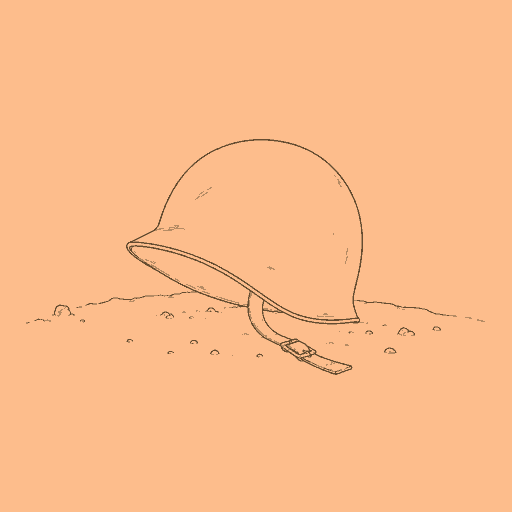
The Naked And The Dead
The Naked And The Dead
A modern alternative to SparkNotes and CliffsNotes, SuperSummary offers high-quality Study Guides with detailed chapter summaries and analysis of major themes, characters, and more.
Summaries & Analyses
Quizzes
NEWReading Tools
Part 3, Chapters 1-6Chapter Summaries & Analyses
Content Warning: This section includes discussion of graphic violence, death, misogyny, antisemitism, and animal cruelty and death.
Part 3: “Plant and Phantom”
Part 3, Chapter 1 Summary
The recon platoon boards the ship that will take them around the island. Hearn is pleased to be given command and to be away from Cummings. He feels uncomfortable as he regards the hardened faces of the men, and he wonders if they will accept him, or if there will be conflicts with Croft. He thinks their mission to march through the jungle, cross the mountain pass, and scout behind the Japanese defenses is far-fetched, but he is glad to be engaged in positive action. He is surprised by how he wants the other men to like him. When he tries to talk with them, however, they are guarded and reserved.
Croft doesn’t like having an officer put in command, but he believes he must do as he’s ordered. He is glad for some activity, and so is Stanley. Gallagher grumbles about the discomfort of the boat and flashes back to when he saw the Japanese soldier dead in the draw. Red thinks they are all just guinea pigs for the Army’s experiment, and he doesn’t trust Hearn; he thinks the officers treat battle like they’re going to a football game. They see Mount Anaka rising in the distance; Gallagher is caught by its beauty; Red feels gloomy at the thought of the misery to come. Croft feels compelled to climb the mountain.
Martinez and Goldstein chat about their lives in America, and Goldstein speaks fondly of his son. The sunset is magnificent, vivid with color, and it makes the island look like a Biblical land. To the men, “It was a vision of all the beauty for which they had ever yearned, all the ecstasy they had ever sought” (454). Then night comes, and the ocean looks dead and black, and it begins to rain.
Part 3, Chapter 2 Summary
At dawn the men land on the beach and watch their boat leave. Hearn consults with Croft about their route, and they decide to follow the river. Croft relays instructions to the men and decides he doesn’t like Hearn’s attempts to buddy up with them. The men find the march fatiguing. The air is damp and their gear heavy; with rations, blankets, and weapons, they are each carrying around 60 pounds of equipment. At some points they need to slog through the water. Brown complains to Martinez, whom they have nicknamed Japbait, and confides that his nerves are shot. Martinez feels contemptuous of Brown. Polack is eavesdropping on the conversation and nods along as Brown explains how he wants to treat his men right.
The river turns into a cascade of rapids that they have to climb, and there comes a point where it will be difficult to cross. Croft ties several vines together to make a rope. Hearn offers to wade across with the vines and is almost taken by the current. He anchors the vine on the other side of the river, and one by one, the men cross. Martinez helps them get their bearings, pleased to be proficient at his job, and starts leading them through the jungle to the foothills of the Watamai range.
The men have to take turns cutting trail, and it is physically exhausting work. Roth and Minetta weary quickly, and Croft scolds them. He continues to worry that Hearn will take over the patrol. Goldstein and Minetta discuss what they will do when they’re done with their Army service. Minetta thinks of the village in Italy where his father was born, and wonders if it has been destroyed by the war.
The Time Machine segment focuses on Joey Goldstein and is called “The Cove of Brooklyn” (480). Goldstein’s parents ran a candy store that failed several times, but they simply moved to a new location and opened another business. His grandfather lectures him that the Jewish people are made to suffer and endure. He wishes to go to college but gets a job in a warehouse. He meets a girl, Natalie, and they marry. He goes to welding school so he can earn more money. Their son is born, and they are happy together. Goldstein doesn’t protest when he is drafted, as he understands that Jewish people in Europe are being persecuted.
Part 3, Chapter 3 Summary
After they ford the stream, Hearn orders the platoon to march on. They are weary and grumbling. They walk through a valley full of kunai grass that grows over the heads, Martinez leading the way. When they halt for the night, they are beyond exhaustion. They set up their bivouac and a guard rotation.
From the top of a hill, Croft regards Mount Anaka and longs to climb it. Hearn hears the artillery firing on the other side of the range as Cummings launches his attack on the Toyaku Line. A Chorus on the subject of rotation has Brown, Red, Minetta, and Martinez discussing the rumor that some of them will be rotated to headquarters.
Part 3, Chapter 4 Summary
Hearn and Croft survey the mountain pass again, and Croft says it’s likely the Japanese will have it guarded. Croft would rather climb over the mountain, but Hearn is his commanding officer.
They set out on the day’s march, and Hearn enjoys chatting with the men. He senses they are still distant with him, and he worries that Croft resents him, and that their whole mission will benefit Cummings. Nevertheless, he enjoys the activity as they hike through the foothills, even though the other men grow tired. Wilson complains about his illness. The sun is hot; the insects annoy them; they grow leaden with fatigue. The men curse at Hearn when he keeps them moving.
When they come to the pass in the afternoon, they split into two companies, one to approach the pass, one to stand guard. Hearn tells Croft he will take the squad through the pass, and he feels excited and alive as they move forward.
Shots are fired, and the men take cover. Hearn is astonished to find himself hiding. He rises and fires back, shouting for the men to retreat. They withdraw to the rock shelf and look around to take stock. Wilson is missing.
Part 3, Chapter 5 Summary
Wilson is wounded in the stomach and lies still in the grass. He hears Japanese soldiers approach, then leave. He drifts in and out of consciousness.
Croft is furious. The Japanese know they are there, and they have to recover Wilson. Several of the men go back into the field to look for him. They make a stretcher and drag him to their makeshift camp. Brown wonders why it had to be Wilson, and Martinez says his number was up. Hearn selects litter bearers to take Wilson back to the beach.
While some men are cutting poles for a litter, Roth finds a small bird with an injured wing. Other men gather around to look at the bird as well. Roth is moved with tenderness as he strokes the feathers. Croft, who is angry and sweaty from making the stretcher, takes the bird and crushes it in his hand. Several of the men are upset. Red confronts Croft, feeling that it’s time he stood up to him, but Croft knows he can’t back down. Hearn makes Croft apologize to Roth, and Croft is furious and humiliated.
Brown, Stanley, Ridges, and Goldstein are appointed to bear Wilson back to the beach. He is in pain and, when he is conscious, he complains incessantly. He is heavy and the men struggle to carry him. For Brown, who grows fatigued, he feels like he has become a raw nerve, upset by every sound. He is afraid, if he breaks up, he will lose his position as sergeant. Goldstein and Stanley talk about their marriages, and Goldstein hopes Stanley likes him. Wilson continues to complain.
The Time Machine section, titled “No Apple Pie Today” (546), looks at William Brown. As a child, he is good friends with his sister, and he is part of the cheerleading team at his high school. He tries to talk his girlfriend into having sex with him. He flunks out of college, gets a job, and marries Beverly. He is shocked when his sister, Patty, gets a divorce due to her infidelity. He goes into sales and takes colleagues out for dinners and often pays women for sex, though he feels guilty for cheating on Beverly.
Part 3, Chapter 6 Summary
Cummings tours his attack lines and feels optimistic. He is glad to see the men in action and feels things are going better than he expected. He is bothered by the slight sense that things might be going equally well without his involvement, and he worries he might yet be relieved of his command. He plans to visit his superiors the next day and ask for naval support for his invasion of Botoi Bay.
He overhears men conversing in their squad tents and thinks about how he has to do everything alone. He asks to fire one of the cannons and is exhilarated by the experience, thinking, “All the deep dark urges of man, the sacrifices on the hilltop, and the churning lusts of the night and sleep, weren’t all of them contained in the shattering screaming burst of a shell, the man-made thunder and light?” (566). Back in his tent, he philosophizes in his journal but feels he cannot entirely put the experience into words. He hears the sound of artillery firing and shudders.
Part 3, Chapters 1-6 Analysis
This section introduces more dramatic movement into the novel in launching the men of the recon platoon on their mission. The goal is for them to cross the island on the south side, move through the mountain pass, and emerge behind the Toyaku Line, where they can survey the state of the Japanese defenses and, if possible, rout the Japanese encampments in Botoi Bay, where General Cummings wants to land attack boats. The General has already begun his attack on the front of the Toyaku Line, where the men were positioned earlier, and their recon work will support this attack by introducing an option to come from behind the lines. Where earlier the island provided the setting for their campaign, now their work is to tackle and subdue the island itself, as an extension of war.
Hearn becomes the physical link between the separate narratives of the officers and the work of the enlisted men while struggling with The Performance of Masculinity and Domination. Hearn, unlike the General, does not wish to dominate others and instead seeks to lead with more compassion and equality, only to find the men are suspicious of his overtures. Hearn’s presence, newly in command of the platoon, shows the difficulty he faces in becoming part of this unit when he hasn’t shared in their previous experience. For the men of recon, this quick change in leadership emphasizes that they are not in control and furthers their suspicions that their lives are expendable, even if they are told their mission is crucial to the success of the campaign. Hearn’s attempts at friendliness thus go unrecognized by men long accustomed to being dominated and abused by their superiors.
These chapters further examine the strategies of assertion and dominance that the men engage in to secure their place and retain authority. While the enlisted men have their squabbles about doing work, they have generally found, as Toglio recognized early on, that they are better off working together. This cooperation becomes more important for activities like cutting the trail and carrying the stretcher bearing the wounded Wilson back to the beach. Working together becomes necessary to their survival when they get attacked in the pass as well. Various conversations show how the enlisted men often share experiences about their families and occupations back home, but there is often an underlying sense of competition as well: They are comparing themselves to the others, measuring their own accomplishments, opportunities, and character. They are also competing to look good to their superiors, which creates a sense of an internally recognized pecking order outside of the authority granted them by the Army.
The officers display various approaches to their use of power and command, adding to the novel’s larger reflections on the exercise of authority and masculinity. Cummings thinks of himself as a kind of master of the universe, in sole command and convinced that this is right. Firing the large gun is evidence of his power, particularly for destruction. Hearn wants to feel that he deserves his command by being an effective and admired leader, but he faces challenges as he doesn’t know any of the men. Brown voices a different philosophy when he speaks of the responsibility that he feels toward the enlisted men he commands, although he does not show a sense of responsibility, only self-advancement and self-preservation, in his own thoughts and actions. Croft shares the General’s attitude that it is best to be feared, though his theory is much less articulated. His need for control is more an extension of his personality, instincts, and strict self-discipline than a need for external validation, which provides another perspective on the qualities that a situation like war brings out in the people involved in it.
The island itself is a source of conflict to the characters as the terrain presents obstacles that test their endurance. In contrast to the intense risk posed by the sudden firing of the hidden Japanese troops, the physical demands of the long march through difficult terrain and oppressive weather put a different kind of strain on their bodies and minds. The island itself seems a hostile force with the insects, the thick jungle, the tall kunai grass, and the brooding presence of the mountain, which comes to symbolize for Croft every oppressive force that he wants to resist and vanquish.
While the discomfort and fatigue further show the action of war as far from heroic or glorious, these activities also call up what the General thinks of as the most raw and elemental forces of human nature. Their survival and endurance are feats in itself, and yet, as Wilson’s injury shows, the human body is a fragile structure, easily hurt. This continued opposition between feelings of omnipotence and vulnerability is one of the paradoxes of human nature that Mailer explores throughout.

Get in-depth, chapter-by-chapter summaries and analysis from our literary experts.
- Grasp challenging concepts with clear, comprehensive explanations
- Revisit key plot points and ideas without rereading the book
- Share impressive insights in classes and book clubs