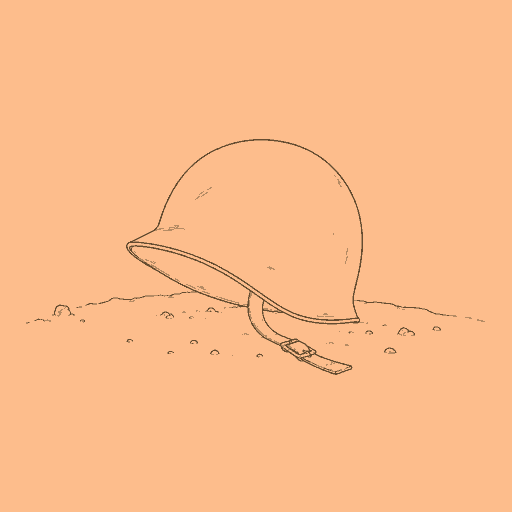
The Naked And The Dead
The Naked And The Dead
A modern alternative to SparkNotes and CliffsNotes, SuperSummary offers high-quality Study Guides with detailed chapter summaries and analysis of major themes, characters, and more.
Summaries & Analyses
Quizzes
NEWReading Tools
Themes
Content Warning: This section includes discussion of graphic violence, death, and racism.
The Erosion of Moral Agency in War
The Naked and the Dead offers a panorama of characters, all of whom are caught up in a larger war effort they often struggle to understand. While the men try to follow orders and do their duty, they are frequently frustrated by the sense that they are denied a meaningful choice in what they do. Through the experiences of the ordinary soldiers, the novel examines the erosion of moral agency in war.
Red’s desire to behave according to his own moral code forms a significant contrast to the other men’s sense of helplessness. Red attempts to assert moral agency on two significant occasions. First, he confronts Croft when Croft deliberately kills the injured bird Roth finds, calling Croft out on his cruelty. Second, he openly voices his suspicions over Hearn’s death and stands up to Croft during the pointless, grueling trek up Mount Anaka by saying the men will refuse to obey. However, on both occasions, the results leave Red feeling conflicted instead of empowered: He is embarrassed by Roth’s emotional show of gratitude and is unsure his intervention was worthwhile, and he backs down on the latter occasion when Croft threatens him with a gun. Red’s experiences suggest that even those who try to maintain moral agency in war are often ultimately thwarted.
Martinez’s experiences speak to how some of the soldiers regain a degree of moral agency by confronting their conscience. While he dreads combat and fears being hurt, he takes pleasure in doing his job as a scout well. He envisions himself as protecting the other men, and this purpose motivates him to make his best effort. When he is scouting the mountain pass and finds himself embedded in the Japanese encampment, Martinez faces the dilemma of having to kill the Japanese soldier on watch so that he can escape undetected. He justifies his act of violence as survival, but he is nevertheless traumatized by the act and continues to relive the event in his mind. Instead of simply denying his moral agency by appealing to the necessities of war—as Croft and the General habitually do—he instead confesses to some of the others about what happened, easing his conscience by admitting to his conflicted feelings and sense of guilt.
The novel thus suggests that, while most enlisted men experience war as an erosion of their moral agency, acts of resistance can provide a potential antidote. While Red remains unconvinced of the worth of his acts, his courage and agency were important in breaking out of the passive obedience men like Croft exploit, even if he was ultimately unsuccessful. Similarly, Martinez’s guilty conscience suggests that, even if men in war have to kill or be killed, a sense of moral responsibility helps to remind one that there is still a degree of individual agency involved. The Naked and the Dead therefore implies that, while moral agency is often eroded in wartime, it does not have to disappear entirely.
The Performance of Masculinity and Domination
In a novel comprised entirely of male characters, expressions of masculinity inevitably become a common thread. Mailer shows how, within the hierarchical structure of the Army, many of the men work to advance themselves by demonstrating superiority or asserting dominance over others. As they jostle for control and respect, their behavior and priorities speak to the performance of masculinity and domination.
Cummings asserts early to Hearn that the most appropriate method of control in the Army is rule by fear. He believes that men will keep to their place in the hierarchy if they hate and fear those who have authority over them. Hearn detests this idea, but he sees it play out in the control that Croft has over the men in the recon platoon. None of the men like Croft, and Martinez is the only one who gets along with him. Nevertheless, the men obey Croft because they hate and fear him, and truly believe he will harm them if they don’t do as he commands. Cummings proves his point and asserts his dominance over Hearn during the confrontation in his tent when he threatens to court-martial Hearn if he doesn’t pick up the discarded cigarette butt. The end of their relationship, which is the closest thing the General has to a friendship, is an acceptable sacrifice to him in order to prove his power. In a similar fashion, Croft retains his control over the platoon by getting Hearn killed in the mountain pass, thus securing his place of authority and, by his own calculation, holding off his own death a while longer.
Other men use masculinity and dominance to cultivate a sense of self-worth in trying situations. Very often, Mailer uses dialogue to show the men are less interested in making connections than in establishing their own worth in competition with others. Brown earns derision from some of the men by speculating aloud about the responsibility he feels in being a sergeant, and Stanley, too, changes the way he relates to the other men once he advances in rank. Goldstein often refers to his Jewish identity to reassure himself that he is favored by God despite the prejudice he experiences and other discomforts he feels. Gallagher is embittered by the frequent feeling that other men are given opportunities denied to him. Wilson is largely concerned with sex with women, as having many partners makes him feel manly, and tends to see other men as little more than romantic competition.
Through the interactions between his characters, Mailer highlights the many different means by which, when in a male-dominated arena, men will establish their own masculinity by dominating, controlling, or simply showing themselves superior to others. The desire to live up to a masculine ideal often leads to tension and emotional alienation within the ranks, and Mailer suggests that masculinity and domination ultimately undermine the Army instead of strengthening it.
The Dehumanizing Impacts of Violence
At the novel’s opening, the men of the recon unit have recently survived an attack they refer to as Motome, where they were stranded on rubber boats on the ocean and shot at by Japanese forces. Several men died in this attack, and even with replacements, their platoon is not at full capacity. The men’s struggles to cope with the violence they have witnessed and must continue to face reveal the dehumanizing impacts of violence during wartime.
The survivors deal with the impact of their traumatic experiences in different ways. Brown deals with his memories by recounting them; Martinez keeps silent about his experiences of post-traumatic stress; Red tells himself not to develop friendships with the new men, like young Hennessey, to avoid being grieved by their deaths. When Hennessey is killed on the beach, the men avoid any expressions of grief—they do not want to confront the idea of death, and so gradually grow desensitized to the violence and killing all around them. They do the same when Hearn is shot, avoiding his body and leaving him as they retreat. The almost casual response to these deaths shows how the men have become numbed to the violence and loss through sheer repetition.
The narrative also highlights the primal response of the men when under fire, revealing how violence often reduces people to pure fear. Their terror at the sudden threat is raw and real, and several, when under attack, respond with the instincts of a child. Hennessey screams with fear, curls into a fetal position, and loses control of his bowels when he is shelled on the beach after first landing on the island. Hearn, facing attack when the recon platoon first encounters the Japanese protecting the mountain pass, finds himself screaming for the terrifying noise to stop. These responses undercut the typical depictions of soldiers as valorous, self-sacrificing, and showing courage under fire. Instead, Mailer shows that being under fire is terrifying, and the instinctive response is to retreat. Violence and combat are thus depicted as ugly and dehumanizing, not heroic or empowering.
The events of Part 4 present an even darker, nihilistic view by portraying the mopping up part of the campaign as a process of extermination, whereby the defeated Japanese soldiers are simply disposed of as efficiently as possible, and sometimes to the amusement of the soldiers. This heartless approach echoes the General’s moral calculus, where he sees the overall campaign in terms of numbers, not individual human lives. There is thus dehumanization at work in the highest levels of military authority, with units of men treated like mere resources instead of human beings.

Unlock every key theme and why it matters
Get in-depth breakdowns of the book’s main ideas and how they connect and evolve.
- Explore how themes develop throughout the text
- Connect themes to characters, events, and symbols
- Support essays and discussions with thematic evidence