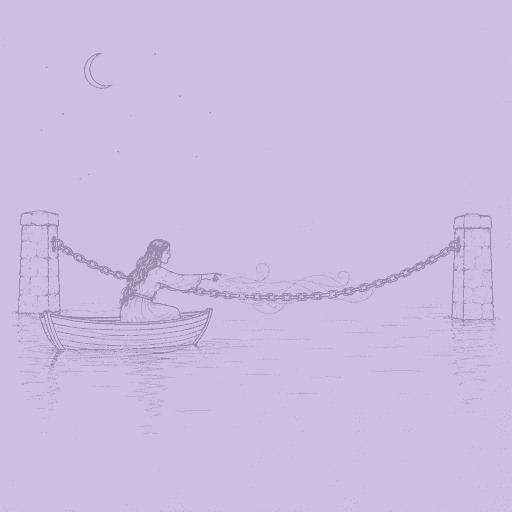
Crossroads of Twilight
Crossroads of Twilight
A modern alternative to SparkNotes and CliffsNotes, SuperSummary offers high-quality Study Guides with detailed chapter summaries and analysis of major themes, characters, and more.
Summaries & Analyses
Quizzes
NEWReading Tools
Background
Historical Context: Robert Jordan’s Vietnam War Experience
Author Robert Jordan, born James Oliver Rigney Jr., served two tours in the Vietnam War as a US Army helicopter gunner from 1968 to 1970. His combat experience earned him numerous decorations, including the Distinguished Flying Cross and the Bronze Star. This military background shaped his approach to writing, with some critics noting a gritty authenticity in the depiction of warfare in The Wheel of Time that distinguishes it from more romanticized epic fantasies. Jordan’s service provided firsthand knowledge of military logistics, the psychological toll of command, and the chaotic reality of battle, often termed the “fog of war.” These elements are represented throughout the series, particularly in its complex military campaigns.
In Crossroads of Twilight, this realism is immediately evident in the prologue through the character of Lord Rodel Ituralde. His meticulous, multi-layered planning and frustration with the incoherent orders from his king reflect the logistical challenges and command-structure friction inherent in real military operations. Ituralde’s experience of having his gains “wasted” by strategically unsound commands from King Alsalam mirrors the well-documented frustrations of soldiers dealing with flawed high-level strategy, a common theme in soldiers’ accounts of the Vietnam War. For example, the frequent and contradictory orders to march and counter-march against supposed “Dragonsworn” gatherings that “never materialized” (19) echo the often confusing and seemingly arbitrary nature of missions arising from General William Westmoreland’s “search and destroy” policy, in which US soldiers were dispatched to hunt down and kill Viet Cong fighters, with success measured by the number of enemies killed rather than by the taking and holding of land as in traditional warfare. This policy led to hundreds of thousands of civilian deaths and endangered US forces without appreciably changing the trajectory of the war. US troops also became frustrated at repeatedly fighting over the same ground. (Bowman, Tom. “‘Clear and Hold’ Showing Results 40 Years Later.” NPR Morning Edition, 2008). Jordan’s experience in Vietnam allows him to portray war not as a glorious adventure but as a grueling, complex, and often frustrating endeavor.
Philosophical Context: Syncretic Mythology and Cyclical Time
Robert Jordan’s The Wheel of Time is built on a syncretic mythology, blending philosophical concepts from different world religions to create a unique cosmology. The series primarily fuses the cyclical worldview common in religions such as Hinduism and Buddhism with the linear, eschatological framework of Abrahamic religions like Christianity. In many traditions, time is not a straight line but a repeating cycle of creation, destruction, and rebirth. For instance, Hinduism conceives of time in vast cycles called Yugas and Kalpas, at the end of which the universe is destroyed and recreated. This concept is the foundational principle of Jordan’s world, embodied by the titular Wheel of Time, which “turns, and Ages come and pass, leaving memories that become legend” (87).
This cyclical model is interwoven with a linear, prophetic narrative characteristic of the eschatological narratives (that is, narratives in which events progress toward an apocalyptic reunion between humanity and the divine) found in Abrahamic, monotheistic religions. The series features a messianic figure, the Dragon Reborn, who is prophesied to return and fight the Dark One in a final, apocalyptic battle known as Tarmon Gai’don. This directly parallels Christian concepts of an Armageddon and the return of a savior figure as foretold in texts like the Book of Revelation. The fictional epigraph to Crossroads of Twilight highlights this element, quoting a prophecy that foretells a climactic moment where “all that is, all that was, and all that will be shall balance on the point of a sword” (xix). By understanding this blend, the reader can appreciate the central tension of the series: characters are bound to an endlessly repeating pattern of history, yet they simultaneously face what feels like a unique and final struggle for the fate of the world.
Series Context: The Wheel of Time
Crossroads of Twilight is the tenth book in Robert Jordan’s sprawling, 14-volume epic fantasy series, The Wheel of Time. The overarching narrative follows Rand al’Thor, a young man discovered to be the Dragon Reborn—a messianic figure prophesied to save the world from the Dark One, a primordial evil, but also destined to “break the world again.” All magic in The Wheel of Time flows from the One Power, a cosmic force divided into a male half, saidin, and a female half, saidar. Some people have the ability to channel the One Power; male channelers access saidin while female channelers access saidar. Three thousand years ago, at the end of the cataclysmic War of Power that ended the Age of Legends, the forces of Light managed to defeat and imprison the Dark One. However, in a final counterattack, the Dark One tainted the male half of the One Power, saidin, leaving all male channelers—called Asha’man—under his sway. Female channelers, called Aes Sedai, hunt these male channelers and capture them so they can be “gentled”—that is, cut off from access to the One Power. The preceding nine books detail Rand’s reluctant acceptance of his role as the Dragon Reborn, his struggle to unite disparate nations against the coming Last Battle (Tarmon Gai’don), and the parallel journeys of his friends who become leaders in their own right. The previous novel, Winter’s Heart, concluded with one of the most significant events of the series: Rand and his companion Nynaeve successfully cleanse saidin of the Dark One’s 3,000-year-old taint.
Crossroads of Twilight is a deliberate narrative pause, exploring the global repercussions of this cataclysmic event. The book’s title and epigraph signify its place as a fulcrum point in the saga, a moment of strategic planning and reaction before the final, world-ending conflict. This function can be compared to that of the pre-climactic lull commonly found in fantasy novels—a period of relative calm that gives both characters and readers a chance to regroup before the final battle. As such, this novel focuses less on advancing the primary plot and more on depicting how various factions—from military commanders to clandestine organizations—realign themselves in a world fundamentally changed by the cleansing. Understanding this context helps frame the book’s slower, more character-focused pace not as a lack of action, but as an important building of tension.

Get in-depth, chapter-by-chapter summaries and analysis from our literary experts.
- Grasp challenging concepts with clear, comprehensive explanations
- Revisit key plot points and ideas without rereading the book
- Share impressive insights in classes and book clubs