Crossroads of Twilight
Crossroads of Twilight
A modern alternative to SparkNotes and CliffsNotes, SuperSummary offers high-quality Study Guides with detailed chapter summaries and analysis of major themes, characters, and more.
Summaries & Analyses
Quizzes
NEWReading Tools
Symbols & Motifs
The Oath Rod
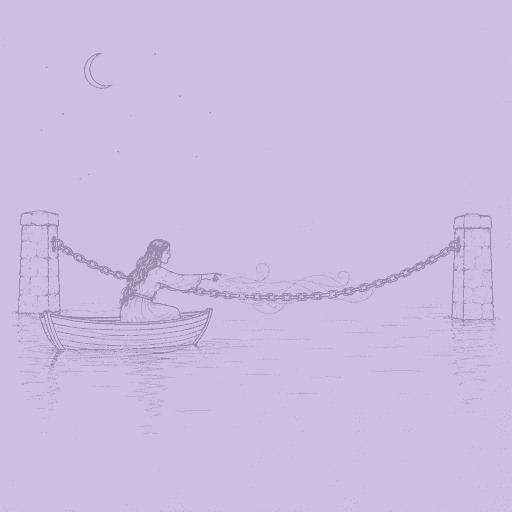
The Oath Rod is a symbol representing the relationships between duty, power, identity, and institutional law. Traditionally, it is the instrument of constraint, binding every Aes Sedai to the Three Oaths. This act defines their collective identity but also tragically shortens their lives, symbolizing how deeply held traditions can become restrictive burdens. However, in Crossroads of Twilight, its function is subverted and re-examined, suggesting its potential as a tool for both coercion and liberation. This duality is central to the White Tower’s internal conflicts, where characters grapple with the morality of using institutional power for personal or revolutionary ends.
The Rod first appears as a tool of coercion in the hands of Yukiri’s cabal. Desperate to expose the Black Ajah, they use it to force rebel spies into a new, secret oath of personal obedience. This act mirrors the tactics of their enemies, turning a symbol of Aes Sedai integrity into a weapon of extralegal control. Yukiri acknowledges the moral and legal transgression, recognizing that an oath sworn under duress “was all too close to Compulsion, which was clearly prohibited if not really defined” (39). This use of the Rod highlights the theme of Information as a Form of Political Power, demonstrating how even revered instruments of law can be manipulated to enforce secrecy and seize authority in a fractured political landscape.
In contrast, Egwene envisions the Oath Rod as a key to reformation. She discovers that it “can unbind as well as bind” (589), a revelation that transforms it from a symbol of limitation into one of potential freedom. Her plan to use the Rod to release sisters from the Three Oaths upon retirement—allowing them to live longer lives by joining the Kin—shows a revolutionary challenge to the White Tower’s foundational laws. By using the Rod to free sisters from their bonds, Egwene may redefine what it means to be Aes Sedai.
Dice
The sound of dice rolling in Mat’s head is a recurring auditory symbol of his ta’veren nature, externalizing the otherwise invisible influence of the Pattern on chance and destiny. The sound begins, stops, and changes in intensity at decisive moments, functioning as a supernatural barometer for the narrative’s high-stakes turning points. The dice signify that Mat is at the center of a gamble being made by the Pattern itself. This unique perception contributes to The Isolating Burden of Leadership, as Mat is forced to interpret these cryptic warnings and make life-or-death decisions based on a phenomenon no one else can experience or understand.
The behavior of the dice is inextricably linked to the moral weight of Mat’s actions. During the desperate escape from Ebou Dar, the dice roll, signaling the high risk. After he makes the grim choice to pursue and kill Renna to protect his secrets, he reflects on the human cost of his victory. He notes, “It hardly seemed to matter that the dice had stopped. That made three” (571). The cessation of the dice confirms that a fated moment has passed, but it offers no relief from the guilt of the act, connecting the symbol to the theme of Desperation as a Path to Moral Collapse. His ta’veren intuition may guide him through moments of crisis, but it provides no absolution for the violence required to survive them.
The behavior of the dice reveals the degree to which Mat’s destiny has become intertwined with that of Tuon. They stop when he makes a bargain with her and again when she acknowledges his courtship by wearing the rosebuds he gave her. This repeated pattern strongly suggests that his luck, and by extension his fate, is now tied directly to her. His earlier, seemingly drunken pronouncements about marrying her are revealed to be a prophecy underscored by the Pattern’s influence. The dice thus evolve from a general symbol of his role as a focal point for fate into a precise indicator of his fated future with the Daughter of the Nine Moons.
Veils and Masks
The recurring motif of veils and masks, both literal and metaphorical, facilitates the novel’s exploration of hidden identities and unreliable appearances. In a world defined by political intrigue and fractured loyalties, characters consistently use facades to conceal their true intentions, affiliations, and knowledge. This constant concealment is not merely a plot device but a fundamental aspect of survival and a primary tool for asserting power. The motif visually reinforces the idea that what is seen is rarely the truth, forcing both characters and readers to question the authenticity of every interaction.
Literal masks and disguises are central to several plotlines. Egeanin’s hated wig and ill-fitting commoner’s dress serve as a mask that erases her Seanchan identity, allowing her to move secretly but also symbolizing her deep loss of status. Her new name, “Leilwin,” is a further layer of this disguise, and Selucia’s mocking addition of “Shipless” cements the persona as a form of punishment and humiliation. The Taraboners, who come from the distant kingdom of Tarabon and, in this novel, often act as enforcers for the violent rule of the Seanchan, wear veils over their faces as a universal cultural custom. These veils symbolize the social performance that masks ambition and violence—concrete representations of the deep deceptions at play throughout the narrative.
The motif extends to the metaphorical masks of identity worn by nearly every political actor. Alviarin wears a mask of loyalty to Elaida while secretly serving Mesaana. The rebel spies sent into the White Tower wear a mask of fealty to Elaida while secretly reporting to Egwene, only to be forced by Yukiri’s cabal into wearing a third mask of obedience to them. This layering of false identities emphasizes the central theme of Information as a Form of Political Power. In a world where direct confrontation is too risky, identity itself becomes a manipulable asset. The prevalence of veils and masks signifies that truth is a hidden commodity and survival often depends on crafting the most convincing and strategic facade.

Unlock the meaning behind every key symbol & motif
See how recurring imagery, objects, and ideas shape the narrative.
- Explore how the author builds meaning through symbolism
- Understand what symbols & motifs represent in the text
- Connect recurring ideas to themes, characters, and events