Crossroads of Twilight
Crossroads of Twilight
A modern alternative to SparkNotes and CliffsNotes, SuperSummary offers high-quality Study Guides with detailed chapter summaries and analysis of major themes, characters, and more.
Summaries & Analyses
Quizzes
NEWReading Tools
Character Analysis
Perrin Aybara
Perrin Aybara, a dynamic protagonist, is defined in this novel by his desperate and increasingly brutal quest to rescue his wife, Faile. His journey exemplifies the theme of Desperation as a Path to Moral Collapse, as he consciously transforms himself from a thoughtful blacksmith into a hardened, single-minded leader. He channels his grief and rage, forging them into a metaphorical hammer, an instrument he believes is necessary to shatter the Shaido Aiel who hold Faile captive. This transformation brings significant internal conflict; Perrin fears the cold, ruthless man he is becoming, particularly the part of him that feels more alive while engaged in violence. This internal struggle is a battle for his moral identity, as he questions whether he can ever return to the man he was and whether Faile would even want him if he did.
The weight of command rests heavily on Perrin, illustrating The Isolating Burden of Leadership. He feels alienated from his Two Rivers followers, who misinterpret his relationship with Berelain and are unsettled by the grim focus he has adopted. Their suspicion and mistrust leave him without a support system, forcing him to bear his responsibilities alone. This isolation culminates in the novel’s most stark moral crisis: the torture of a captured Shaido. Faced with a massive enemy force and no clear path to Faile, Perrin makes the unilateral decision to mutilate a prisoner for information, a complete break with his own principles. His justification is that he must do “what had to be done” (527), a chilling rationalization that marks the nadir of his moral journey. The act yields no useful intelligence, leaving him hollowed out and grappling with the grim reality that his descent into brutality was ultimately for nothing, deepening his despair and isolation.
Elayne Trakand
Elayne Trakand’s arc is a study in the pressures of leadership and political maneuvering as she works to secure the Lion Throne of Andor. As a dynamic protagonist, she is forced to project an image of unshakable confidence and regal authority while contending with a siege, unreliable allies, and the personal vulnerabilities that come with her pregnancy. Her storyline is a primary example of The Isolating Burden of Leadership, as she cannot show weakness or even confide fully in her closest friends for fear of undermining her claim. Her use of secret gateways to supply Caemlyn and her strategic manipulation of the approaching Borderlander armies demonstrate her political acumen, though her arrogance often leads her to miscalculate. For example, she prides herself on her ability to cultivate the love of the common folk, but the text makes clear that the people she believes love her in fact bristle at her condescension.
Elayne’s struggle is complicated by the arrival of four High Seats—three of whom are children—to support her. While their allegiance gives her the numbers to match her rival, Arymilla, it also forces her to treat them as peers, something she finds difficult due to her unwavering belief in her own personal superiority. She must navigate what she views as their petty demands and foolish impulses, intensifying her internal conflict between her ambitions, which demand patience and strategy, and her personal feelings of frustration and fear for Rand. She must constantly maintain a mask of composure, even to her closest friends like Aviendha and Birgitte, further cementing her loneliness at the top. Her leadership requires her to make ethically complex calculations, such as accepting the support of untested youths and using spies within the palace, all while knowing that one misstep could plunge Andor into a destructive civil war.
Egwene al’Vere
As the Amyrlin Seat of the rebel Aes Sedai, Egwene al’Vere is a dynamic protagonist who embodies the complexities of leadership in a time of crisis. Her primary goal is the reunification of the White Tower, a task that forces her to employ manipulation and secrecy, making her a master of Information as a Form of Political Power. She operates on multiple fronts, managing the expectations of the fractious rebel Hall, secretly guiding her sworn advisory council, and concealing her long-term plans for both the Kin and the Oath Rod. Egwene’s leadership style is characterized by a blend of outward deference to tradition and ruthless internal pragmatism, as she orchestrates events to lead the Sitters toward decisions they believe are their own.
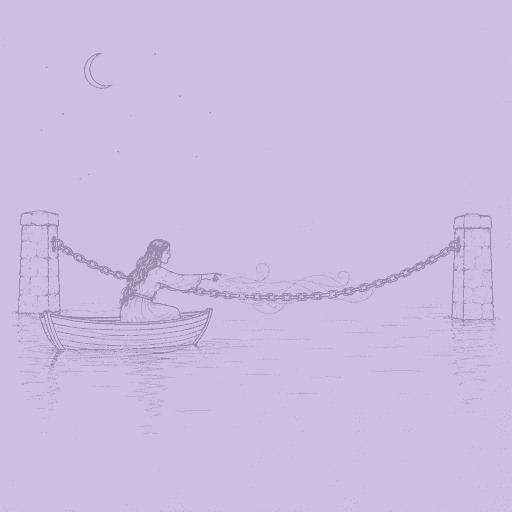
Egwene’s isolation is deep; unable to trust the Hall and unwilling to reveal the full scope of her plans even to her closest allies like Siuan, she carries the burden of her strategy alone. This is complicated by the discovery of a murderer in her camp and the shocking proposal from a faction of Sitters to negotiate an alliance with the Black Tower. Egwene seizes on this proposal, not out of agreement, but as a political tool to buy time and expose divisions. When her prophetic dream about a Seanchan attack is met with disbelief, the rejection further highlights her alienation. The novel culminates in her capture after she personally undertakes a dangerous mission to disable Tar Valon’s harbor chain, a decision born of her conviction that some tasks cannot be delegated, cementing her role as a leader who must act unilaterally to achieve her vision for a restored and strengthened White Tower.
Mat Cauthon
Mat Cauthon’s character arc in Crossroads of Twilight and throughout the series is defined by his entanglement with fate, embodied here by his connection to Tuon, the Daughter of the Nine Moons. As a dynamic protagonist, he grapples with the consequences of his actions and a destiny he actively tries to evade. As one of only three ta’veren—individuals with a unique connection to the One Power—he is a formidable figure and rarely feels intimidated. Each ta’veren’s connection to the One Power is unique; for Mat, the connection revolves around fate and luck, with the sound of Dice rolling in his head a constant symbol of his entanglement with cosmic destiny and of the extraordinarily consistent luck that keeps him safe. with their starting and stopping linked directly to Tuon’s presence and decisions. This connection emphasizes his lack of control, suggesting that his famed luck is now tied to a woman who is both his prisoner and his prophesied wife. He is caught in a complex game of courtship and power, using gifts and games of stones to understand and influence Tuon, only to find she is playing a game of her own with rules he does not comprehend.
Mat also confronts the moral weight of his choices. He is haunted by the hundreds of deaths his escape from Ebou Dar caused, a grim calculation that illustrates his capacity for ruthless pragmatism when cornered. This culminates in his decision to have the captured sul’dam, Renna, killed to prevent her from revealing his secrets to the Seanchan. This act is a significant moment for Mat; he feels “something flicker and die inside him” (571) and resolves never to be responsible for another woman’s death. His arc is one of a reluctant hero trying to outrun a fate that is quickly catching up, forcing him to confront not only his destiny but also the darker aspects of his own character.
Yukiri
Yukiri, a Sitter of the Gray Ajah in the White Tower, emerges as a significant secondary character whose arc is central to the hunt for the Black Ajah. Initially cautious and bound by tradition, she is drawn into a secret conspiracy with other Sitters to root out the Darkfriends within their ranks. Her story is a prime example of the theme of Information as a Form of Political Power. She and her allies are forced to operate outside Tower law, using covert methods and even forcing a captured rebel spy, Meidani, to swear a secret oath of obedience. This act places her in a morally ambiguous position, as she must break the Tower’s own rules in order to save it. Yukiri’s character demonstrates the internal conflict of an Aes Sedai torn between her reverence for law and the pragmatic, often illicit, actions required to fight a hidden enemy. Her methodical and discreet investigation of Atuan Larisett, a known Black sister, highlights her adherence to the principles of her Ajah even while engaging in unsanctioned activities.
Alviarin
Alviarin, the Keeper of the Chronicles, is a secondary antagonist whose story illustrates the precarious nature of power built on secrets. Her authority over the Amyrlin, Elaida, is entirely dependent on blackmail and her position as head of the Black Ajah in the White Tower. When she is absent from the Tower on a mission for Mesaana, she loses her grip on Elaida. Upon her return, she finds that the tables have been turned completely. Elaida, no longer intimidated, strips her of the Keeper’s stole and threatens to expose her for treason. Alviarin’s swift downfall shows the danger of relying on Information as a Form of Political Power: Information travels swiftly and in secret, and no one can control it forever. Her subsequent terror-filled encounter with Mesaana and another of the Chosen reveals her own vulnerability within the hierarchy of the Shadow, reducing her from a master manipulator to a cowering servant marked for a dangerous new task: to find and deliver Elaida’s secret hunters to the Great Lord.
Rodel Ituralde
Rodel Ituralde, a Great Captain of Arad Doman, serves as the protagonist of the Prologue, embodying The Isolating Burden of Leadership. Faced with the chaotic and self-destructive orders of his king, Alsalam, Ituralde must act alone to save his nation from both internal collapse and the external threat of the Seanchan. He orchestrates a complex, high-risk military strategy that requires him to subvert the king’s authority and unite long-standing enemies. His use of the White Ribbon, an ancient symbol of truce, to bring Dragonsworn lords and Taraboner refugees into a fragile alliance demonstrates his desperate pragmatism. Ituralde is a character defined by his strategic brilliance and his deep sense of duty, which forces him to operate in a lonely political space where he must trust that his allies will obey his secret orders over the king’s public ones.
Eamon Valda
Eamon Valda, the newly elevated Lord Captain Commander of the Children of the Light, is an antagonist whose arc highlights the theme of Desperation as a Path to Moral Collapse. Having fled the Seanchan conquest of Amadicia, Valda finds his organization shattered and exiled. Driven by a desperate ambition to survive and seize power, he compromises the Children’s crusade against all who touch the One Power by forging an alliance with the Seanchan, their former enemies. This pragmatic but hypocritical decision is born of a desire to use the Seanchan’s power, particularly their ability to control female channelers, for his own ends. His leadership is marked by ruthless ambition and a willingness to sacrifice principle for power, a path that will lead to his death in the next book in the series, Knife of Dreams, in a duel with Galad Damodred, who challenges him for the murder of Queen Morgase.
Elenia Sarand
A secondary antagonist, Elenia Sarand is a High Seat of Andor whose political ambitions are temporarily thwarted when she is captured and forced to support her rival, Arymilla Marne. Elenia’s response to this predicament showcases her cunning and ruthlessness. In a masterful display of Information as a Form of Political Power, she engineers a secret meeting with another rival, Naean Arawn, and exploits Naean’s fear to coerce her into writing a secret letter pledging the support of House Arawn to House Sarand. This hidden document gives Elenia complete political leverage over Naean, effectively leashing her as an unwilling ally. Elenia’s character is a personification of the brutal, duplicitous nature of the Andoran Game of Houses, where information is the ultimate weapon and loyalty is a commodity to be bought or forced.
Faile ni Bashere t’Aybara
Although a captive for the entire novel, Faile remains a key dynamic character whose ordeal drives much of the plot. As a gai’shain among the Shaido, she is stripped of her status and subjected to constant humiliation and the threat of violence. This experience forces her to adapt, and her chapters reveal a fierce and resourceful mind dedicated to survival and escape. She organizes her fellow captives, engineers the escape of two of them, and begins to manipulate a potential ally among her Aiel captors, Rolan. Her storyline explores the erosion of identity under extreme pressure, as she feels herself becoming more obedient and servile to survive. This internal struggle, coupled with her willingness to use whatever means necessary to get free, shows her own brush with moral compromise born of desperation. Her resilience and strategic thinking demonstrate that despite her captivity, she is an active agent working for her own liberation, not waiting for her husband Perrin to rescue her.

Unlock analysis of every major character
Get a detailed breakdown of each character’s role, motivations, and development.
- Explore in-depth profiles for every important character
- Trace character arcs, turning points, and relationships
- Connect characters to key themes and plot points